Roppongi
Blind Willow, Sleeping WomanRoppongi is a Tokyo district associated in the book with restaurant work, an annual New Year’s Eve party, and the narrator’s domestic ritual of cooking spaghetti. These episodes place polished public life beside repetitive labor and private solitude, giving the district a recurring but varied presence rather than a single continuous story.
Restaurant Work and Routine
One of the better-known Italian restaurants in Roppongi has been open since the late 1960s. Its cooking is not described as cutting-edge, but its reputation is deserved: regular customers return, the atmosphere is calm rather than pushy, and its older clientele includes stage performers and writers. The restaurant’s schedule is exacting. Two full-time waiters work six days a week, while two student waitresses divide three days each; a floor manager oversees the dining room, and a reserved cashier handles payment and telephone calls.
The owner remains unseen by nearly all the staff. Every evening at eight, the manager takes the owner’s dinner upstairs on a hotel-style service cart, leaving during the restaurant’s busiest period; fifteen minutes later he returns with the cart empty, and an hour after that he retrieves the empty plates and glasses. The repetition has the feel of a ritual. The meal itself is just as fixed in its central element: the owner always receives chicken, though the recipe and vegetables change. Chefs try new suppliers, sauces, and techniques, but their experiments make no difference. Eventually they settle on an ordinary chicken dish, the only meal the owner seems to require.
A Birthday in the Dining Room
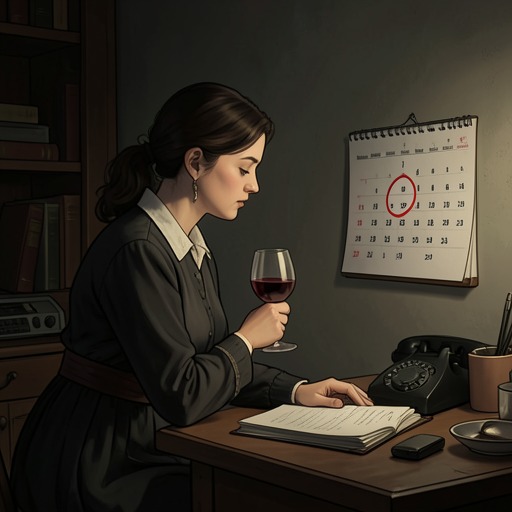
The restaurant’s routine continues on November 17, the twentieth birthday of one of its student waitresses. Rain has been falling intermittently since afternoon and pours heavily by evening. At five, the manager drills the employees on the specials—veal Milanese, sardine-and-cabbage pasta, and chestnut mousse—and then they eat before service. When the doors open at six, the downpour keeps customers away: some reservations are canceled, and only one couple is in the dining room. The waitress listens to harpsichord music and watches the rain-darkened evening settle around the restaurant.
Her birthday is already marked by disappointment of a quieter kind. A bitter argument days earlier with the boyfriend she has known since high school may have ended their relationship; neither has called the other since. When a sick girl phones to apologize for missing the occasion, the waitress reassures her that she had planned nothing special. The restaurant’s measured service and sparse tables thus stand against the personal rupture she is trying not to dwell on.
The Annual Party
Roppongi also hosts the narrator’s required appearance at an annual New Year’s Eve party, held in a bar rented for the occasion. A piano trio plays, and food and drink are plentiful. The narrator dislikes parties but finds this one tolerable: there is no need to mingle with strangers, and he can stand by himself, relax with a drink, and listen to the music. When someone introduces him to a woman, he tries to retreat to his corner; she follows with a glass of whiskey and says she had asked to meet him. The event begins as a familiar professional obligation but opens into an unexpected encounter.
Spaghetti and Private Life
Roppongi’s public sociability contrasts with the narrator’s account of 1971 as the Year of Spaghetti. He buys a kitchen timer and an enormous aluminum pot, gathers spices from supermarkets catering to foreigners, studies a pasta cookbook, and tries different brands of spaghetti and sauces. Garlic, onion, and olive oil seem to permeate his small apartment, reaching not only its walls and ceiling but his clothes, books, records, tennis racket, and old letters. The expansive cooking project belongs to a private, enclosed life: the district’s restaurants and parties offer shared tables and scheduled occasions, while the spaghetti year turns repetition into a solitary occupation.