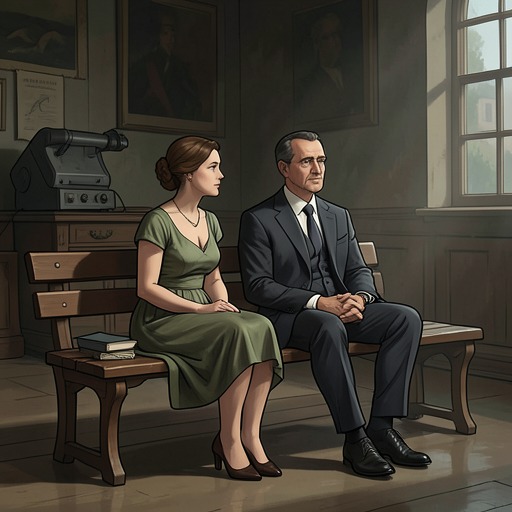
Sachi’s grief over her son’s death
Blind Willow, Sleeping WomanSachi’s grief over her son’s death is a long process of living with an irreversible absence, not a simple movement from shock to recovery. After the nineteen-year-old is killed while surfing at Hanalei Bay, she returns to the scene, watches the surfers, and eventually makes the journey an annual ritual. Years later, a report of a one-legged Japanese surfer stirs the hope that she might see her son again; when that search fails, she leaves with no answer, but with a changed understanding of what it means to accept the island and the loss it holds.
The death and its aftermath
Sachi’s son dies after a shark attacks him while he is surfing far from shore at Hanalei Bay. The shark tears off his right leg, but the official cause of death is drowning: alone in the water, he panics, suffers cardiac arrest, swallows seawater, and drowns. The distinction between the attack and the recorded cause does not soften the loss; it gives the death a stark sequence of contingencies, ending in a young man’s inability to make it back to shore.
When the Japanese consulate in Honolulu informs Sachi, shock leaves her unable to think. She eventually arranges a flight to Hawaii so that she can identify the victim, though there is still a chance he may not be her son. The uncertainty temporarily keeps recognition open as a possibility, even as the journey is already organized around the news of his death.
After the cremation, Sachi takes her son’s ashes in a small aluminum urn to Hanalei Bay. On the beach she watches a handful of surfers paddle out, wait for waves, ride toward shore, and return to the open water. The scene repeats itself, indifferent to the recent death there. Sachi cannot understand why they are willing to surf in a place where her son was killed, and sits watching for an hour in a present detached from both past and future. In that suspended state, she realizes that what she needs most is time.
Making a ritual of return
Sachi stays in Hanalei for a week before going back to Japan, renting a cottage and cooking simple meals. She buys a vinyl chair, sunglasses, a hat, and sunscreen, then spends her days watching the surfers. When the unstable autumn weather brings violent rain, she waits in her car and returns to the beach when it clears. These modest routines give shape to days in which she is trying to recover her former self before returning home.
The week becomes an annual practice. Each year Sachi arrives a few days before the anniversary of her son’s death and stays for three weeks, watching the surfers from a vinyl chair. For ten years she returns to the same cottage and restaurant, reads, and spends her days by the beach. Residents come to recognize her as the Japanese mother whose son was killed by a shark nearby. The recurrence does not undo the death; it makes the place and the date enduring parts of her life, while allowing her grief to persist through familiar actions rather than a final resolution.
Hanalei gradually acquires a life beyond the original shock, though the loss remains its organizing fact. Sachi comes to know a few residents well enough to speak with them about personal matters. Her yearly stay is at once private mourning and a visible local routine: the town knows her by sight, while she continues to return to the same coast where the absence began.
The reported surfer and renewed hope
On one visit, two young Japanese surfers tell Sachi about a one-legged Japanese surfer. The story makes her wonder how someone could surf with one leg, and the description immediately touches the particular loss of her son’s right leg. She responds not by dismissing the report but by searching for the person it describes.
For the rest of her stay, Sachi walks the length of Hanalei’s beach from morning until evening, asking local surfers whether they have seen a one-legged Japanese surfer. They have not; some react with disbelief that anyone could surf that way. The search turns her repeated watching into an active pursuit, but it produces no confirmation and no meeting.
The night before she leaves for Japan, Sachi cries in bed and asks herself why the surfer appeared to two young men who meant nothing to him rather than to her. She recalls her son’s body in the morgue and imagines demanding an explanation from him, but the questions cannot be answered. She also wonders whether she is somehow unqualified to see him. The possibility of a visitation has opened a hope that the search cannot fulfill, intensifying rather than settling her grief.
Acceptance without closure
Sachi finds no answer to why the one-legged surfer appeared to the two young men, or whether he had any connection to her son. What she does take from her time on the island is the necessity of accepting it as it is, including what feels unfair and what she cannot know. The next morning she wakes as a healthy middle-aged woman, packs her suitcase, and leaves Hanalei Bay. Her departure is not proof that she has stopped grieving; it is a decision to return to life without receiving the explanation she wanted.
Eight months later in Tokyo, Sachi unexpectedly meets the stocky young surfer who had told her about the one-legged man. Their encounter renews the connection between her ordinary life in Japan and the story that had drawn her into searching. The report remains an unresolved part of her experience rather than evidence that her son has returned.
Sachi’s grief continues in habits that extend beyond the annual visit. Every night she sits at the keyboard, her fingers moving almost automatically as the piano sounds pass through her mind. When she is not playing, she thinks about the three weeks she spends in Hanalei at the end of autumn: the incoming waves, the trees, clouds carried by the trade winds, and albatrosses in the sky. Her thoughts turn again to what awaits her there. The ending locates her continuing life not in a cure for grief, but in recurring attention: to music, to the island, and to the place where her son’s absence remains present.