Shinagawa Ward Office counseling center
Blind Willow, Sleeping WomanThe Shinagawa Ward Office counseling center is a small, newly opened public service where Mizuki Ando seeks help for a distressing lapse in self-recognition: she can recall other people and practical details, but at unpredictable moments cannot remember her own name. Its low-cost, confidential consultations first offer a setting for her to describe the problem, then become the entry point to a concealed inquiry into the two name tags associated with her identity.
Establishment and Setting
The center is announced in a brief item in the local ward newsletter. It is to open twice a month, offering one-on-one advice from a professional counselor at a greatly reduced rate to any Shinagawa Ward resident over eighteen, with consultations held in strict confidence. Mizuki is uncertain that a ward-sponsored service will help, but decides that trying it cannot hurt. Because the car dealership where she works is busy on weekends, she arranges a weekday day off to fit the center’s schedule, which is described as impractical for ordinary working people.
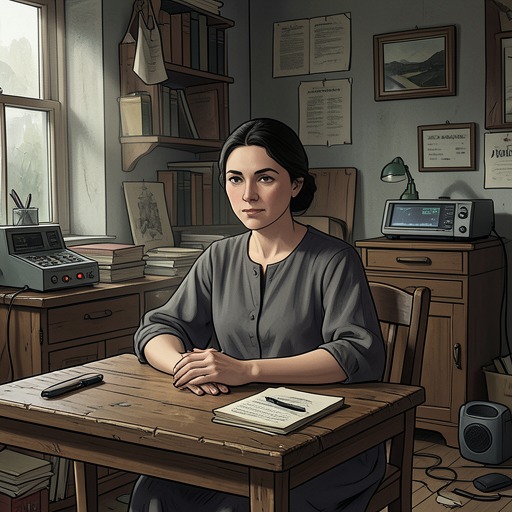
A session costs two thousand yen for thirty minutes, and Mizuki books an appointment for one o’clock the following Wednesday. The center is on the third floor of the ward office. When she arrives, she is its only client. The receptionist explains that the program has started suddenly and is not yet widely known, so the place is still quiet. The sparse attendance makes Mizuki not merely a visitor but the center’s first client.
Tetsuko Sakaki and the First Consultation
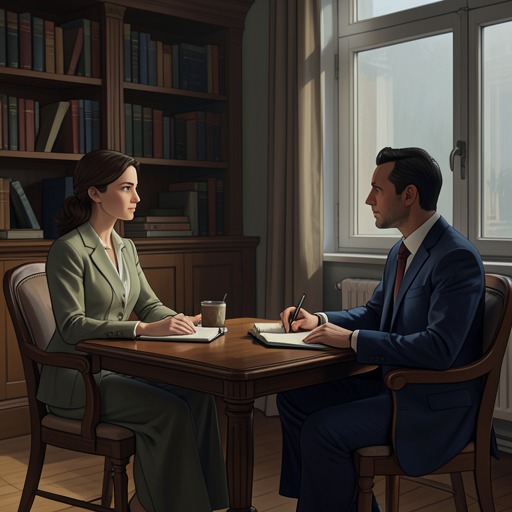
Mizuki’s counselor is Tetsuko Sakaki, a short, heavyset woman in her late forties, with short light-brown hair and a broad, amiable face. Her light summer suit, shiny silk blouse, artificial-pearl necklace, and low heels give her the appearance of a friendly neighborhood housewife rather than the figure Mizuki expects from a counseling service. Tetsuko says she has a counseling degree and considerable experience, and urges Mizuki to leave the matter in her hands. Her manner is notably slow and deliberate.
Tetsuko explains that her husband works in the ward office as section chief of the Public Works Department, and that his position helped secure ward support for opening the center. She welcomes Mizuki as their first client and, with no other appointments that day, proposes that they take their time talking. Mizuki responds politely, while privately wondering whether Tetsuko will be useful. The center’s welcome is warm, but Mizuki’s doubt remains part of the encounter.
The first consultation begins with practical questions about Mizuki’s present circumstances: how long she has been married, what work she does, and how her health is. Tetsuko then asks about her childhood, family, schooling, preferences, and abilities. Mizuki tries to answer honestly, quickly, and accurately. This broad history-taking places the name lapse alongside the texture of an otherwise ordinary life rather than treating it as an isolated failure of memory.
From Symptom to Inquiry
Mizuki’s reason for coming is a pattern that has become more troubling over roughly a year. She has difficulty recalling her name when hurried or asked unexpectedly, although she remembers other names and personal details. Her married name is Mizuki Ando; her maiden name is Mizuki Ozawa. She married Takashi Ando three years earlier and gradually became comfortable with the new name, but at work she continued using Ozawa because changing the dealership’s records would require paperwork she kept postponing. The center therefore receives a problem shaped by more than one name in use: the married name she has adopted at home and the maiden name that remains on her work materials.
At the next week’s one-o’clock appointment, Tetsuko greets Mizuki with an unusually broad smile and announces that she has found the reason for the forgetting and a solution. She says the two name tags were stolen from Mizuki and that recovering them has allowed her to recover her name. Rather than explain the alleged theft herself, Tetsuko suggests that Mizuki ask the responsible person directly. The counseling session has shifted into a confrontation organized around a physical object: the name tags whose continued use had linked Mizuki to her maiden name at work.
The Basement Meeting and the Center’s Narrative Role
Mizuki follows Tetsuko from the counseling office down the hallway and into an elevator. They descend to the basement, walk along a long, deserted corridor, and stop at a door at its far end. Tetsuko knocks; after a man inside invites them in, she opens the door. The route through the ward office leads away from the familiar consultation room and into an unexpected meeting.
Inside are Yoshio Sakaki, Tetsuko’s husband and the Public Works Department section chief, and Sakurada, a younger coworker. Both wear light khaki work clothes; Sakurada holds a black nightstick. Yoshio addresses Mizuki as Mrs. Mizuki Ando and introduces himself and his colleague. The scene connects Tetsuko’s explanation of the center’s ward-office backing with the people now waiting in the basement, while withholding the full account of the name tags and the alleged culprit from Mizuki until they meet.
The center thus serves two functions in Mizuki’s story. It is a municipal counseling service, with a published schedule, a fixed fee, and a promise of confidentiality; it is also the doorway through which her private anxiety is redirected into an investigation involving the name tags. Its movement from a quiet third-floor office to a deserted basement corridor gives the consultation a sharp change of atmosphere, turning a search for help into a face-to-face encounter.