Shozaburo Takitani’s jazz record collection
Blind Willow, Sleeping WomanShozaburo Takitani’s jazz record collection is a material thread linking his musical life after the war to his son Tony Takitani’s later experience of loss. First a resource through which Shozaburo rebuilt a livelihood and pursued music, the collection eventually became an inheritance Tony could neither comfortably keep nor treat as merely valuable property.
Origins in Shozaburo’s postwar life
After returning to Japan in the spring of 1946, Shozaburo had to find a way to live with what remained: his parents had died in the Great Tokyo Air Raid, and his brother had disappeared during the war. Because he knew only one line of work, he gathered former companions and formed a small jazz band that played at American military bases.
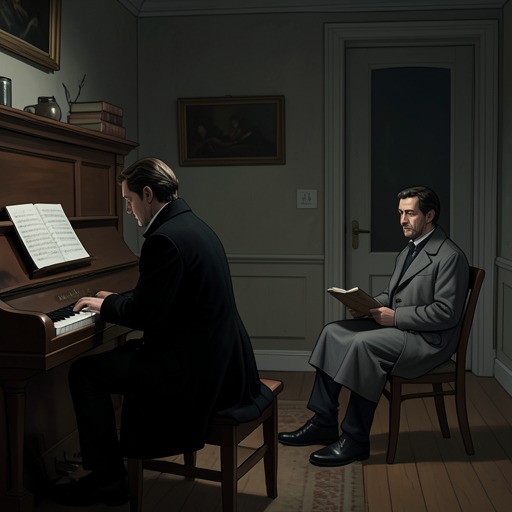
A jazz-loving American army major helped him obtain records directly from the United States. The two musicians sometimes played together in the major’s quarters, where Shozaburo listened to Bobby Hackett, Jack Teagarden, and Benny Goodman and learned their musical phrases. The records were thus not simply possessions: they belonged to a working and social world through which Shozaburo resumed life after wartime imprisonment and bereavement.
Inheritance and the empty room
After Shozaburo died of liver cancer, the collection was among the few things he left. Alongside his instrument, it was the principal substantial inheritance; otherwise, his estate amounted to some cash and stock certificates. Tony placed the records in the cartons supplied by the moving company and stacked them in the room that had previously held his dead wife’s clothes.
For a year, the cartons remained there. Because the records smelled of mold, Tony periodically opened the windows to air the room, but otherwise avoided entering it. The collection’s physical presence made the room difficult to leave entirely behind: the records occupied the space, and their continued presence kept the weight of memory close even as Tony’s recollections had grown indistinct.
Sale and consequence
As the year passed, the accumulation increasingly troubled Tony. The thought of the records sitting in the house sometimes made it difficult for him to breathe; at other times he woke in the middle of the night and could not return to sleep. He called a used-record dealer to make an offer. The collection included valuable discs that had long been out of print, and the payment was enough to buy a small car.
Its market price, however, had little meaning to Tony. He sold the records to remove them from the house, not to realize their worth. Once the mountain of records had gone, he was, in the story’s stark formulation, truly alone. The collection’s passage from Shozaburo’s musical resource to Tony’s burdensome inheritance gives it a double significance: it carries the father’s postwar life into the son’s home, then disappears at the moment Tony tries to clear that home of the past.