The Ice Man's marriage
Blind Willow, Sleeping WomanThe Ice Man’s marriage is a private union formed between two people who love one another without needing a shared past or a conventional public recognition. The couple marry despite the narrator’s family opposing the match, and begin a quiet life together; their happiness is real, but the social divide around them remains.
Love and the decision to marry
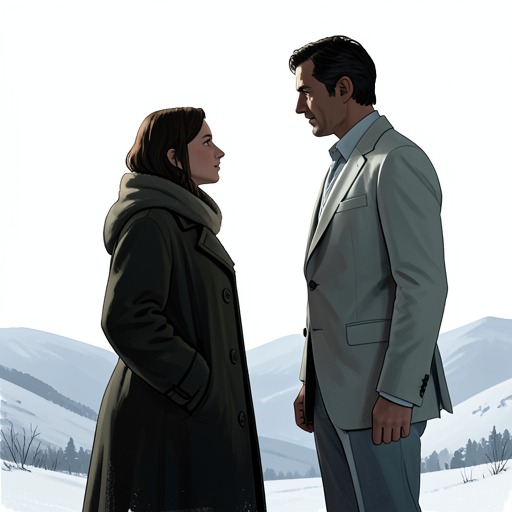
The narrator has just turned twenty when she falls deeply in love with the Ice Man, and he comes to love her as she is in the present, apart from any past or future. She, in turn, loves him for who he is now. She recognizes that she does not yet understand what loving him means, but sees that this uncertainty would accompany any first love. The two begin discussing marriage, making their commitment a response to their present bond rather than to a history they cannot share.
The narrator’s mother and older sister oppose the marriage on several grounds. They regard her as too young, point out that they know nothing about the Ice Man’s background—not even where or when he was born—and worry about how to explain the match to relatives. Their objections also turn his identity into a practical question: as an Ice Man, might he melt, and could he fulfill a husband’s responsibilities? Their reasoning exposes the strain between ordinary expectations of marriage and a partner whose origins and nature resist familiar explanation.
A marriage without public ceremony
The family’s fear that the Ice Man might melt is unfounded: he is not literally made of ice, though he is as cold as ice. His coldness does not threaten to take another person’s body heat. The distinction answers the most immediate physical concern without making him conventional or resolving the family’s broader objections to the match.
The couple marry without anyone celebrating. Friends, relatives, and the narrator’s family are unhappy about their decision, and there is no wedding ceremony. Because the Ice Man has no family register, even a civil ceremony is impossible. Instead, the two decide for themselves that they are married, buy a small cake, and eat it alone. The cake becomes the entire ceremony: a modest, shared act standing in for the public acknowledgment they do not receive.
Shared work and domestic life
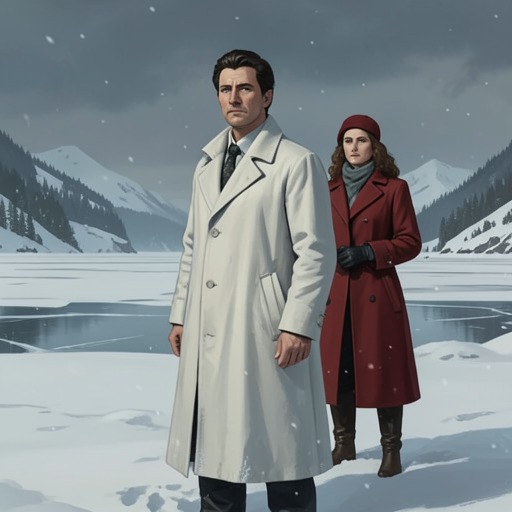
After marrying, the couple rent a small apartment. The Ice Man takes a job at a refrigerated meat warehouse, where the cold does not trouble him and hard work does not tire him. He eats very little, and his employer likes him enough to pay him more than his fellow workers. His unusual physical qualities thus shape his working life without preventing him from earning a place within it.
Their home life is quiet. The two live together without bothering anyone or causing anyone trouble, and their marriage is described as fine: they love one another, and are left alone. The simplicity of this arrangement contrasts with the difficulties surrounding the marriage’s recognition. Private contentment is possible, but it does not mean that the people around them have accepted them.
Intimacy and social distance
The narrator’s experience of physical intimacy is bound to an image of immense, solitary ice: a silent, distant clump, hard and vast, somewhere in the world. She imagines that the Ice Man knows where it is and conveys its memory. At first this experience confuses her, but she grows accustomed to it and comes to love being held by him. The image gives their intimacy a form particular to their relationship, while linking it to a past neither of them explains in ordinary biographical terms.
The Ice Man never tells her why he became an Ice Man, and she never asks. Their closeness therefore does not depend on his supplying an origin story or on her solving the mystery of him. They hold each other in darkness and share the imagined ice, which preserves the world’s past across millions of years. Their bond joins immediate tenderness to a vast, inaccessible history.
Other people initially find the Ice Man difficult to understand, but eventually begin speaking with him and conclude that an Ice Man is not so different from anyone else. The narrator nevertheless knows that this familiarity has not become acceptance: people consider the couple different from themselves, and the gulf between them unbridgeable. The marriage’s central contrast is therefore between the couple’s mutual recognition and the continuing social separation around them.