The Ice Man’s Lack of a Personal Past
Blind Willow, Sleeping WomanThe Ice Man’s Lack of a Personal Past is the defining asymmetry in the Ice Man’s understanding of time: he can see the past of other things with startling clarity, yet cannot recover a past of his own. His missing origins isolate him from ordinary biography, even as they help make possible a love founded on the present rather than on a shared history or imagined future.
Knowledge Without a Future
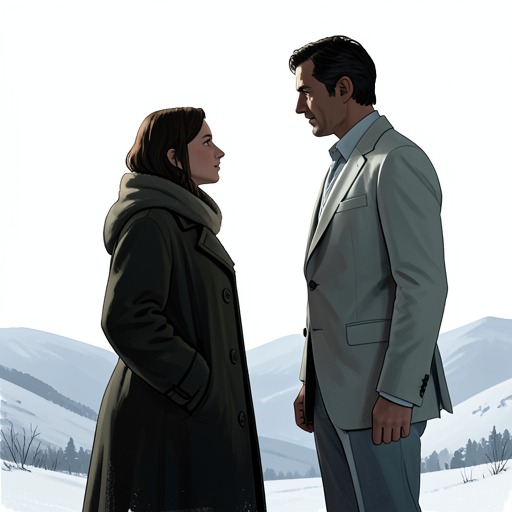
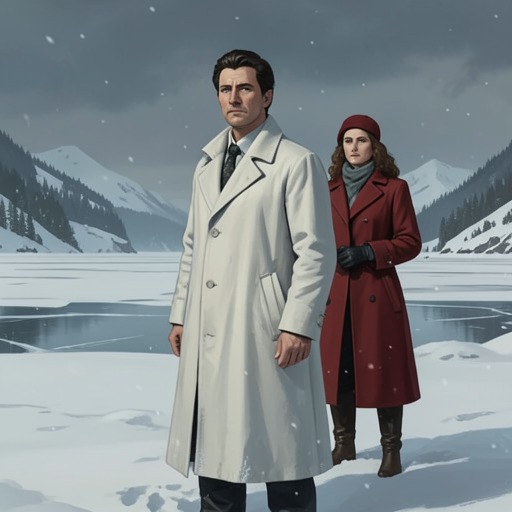
When the woman asks whether he can see her future, the Ice Man says he has no concept of it. Ice, he explains, contains no future; it seals the past inside, preserving things clearly and distinctly. His ability is therefore not prophecy but a kind of custody over what has already happened. The image makes his knowledge precise and bounded: he can look through a clear block of ice, but it shows what is sealed within, not what lies ahead.
That distinction matters to the woman. She is relieved that he cannot tell her future, because she does not want to hear it. Their exchange establishes a limit that is at once a feature of his nature and a protection for their intimacy: neither can make the future known in advance.
A Life Without Origins
After they return to Tokyo, the two meet repeatedly and eventually spend every weekend together. Their dates are deliberately unceremonious: they do not go to movies, sit in coffee shops, or eat out. The Ice Man hardly ever eats. Instead they sit side by side on a park bench and talk about many subjects. Yet he never talks about himself, leaving their conversations rich in topics but silent about his own history.
When she asks where he was born, what his parents were like, and how he came to be an Ice Man, he answers quietly and decisively that he does not know. He cannot say where he was born, whether he had parents, or how old he is—or even whether age applies to him. He knows and preserves the past of everything else, but has no personal past to offer as his own.
Isolation and Intimacy
The narration figures the Ice Man as isolated and alone, like an iceberg floating in darkness. The comparison extends the story’s image of ice beyond his power to preserve: what remains clear and distinct is also cut off. His lack of a past is not simply a mystery for the woman to solve; it is an absence he himself cannot cross, and the relationship cannot fill it with an account of origins.
Nevertheless, the woman falls deeply in love with him, and he comes to love her as she is in the present. She likewise loves him for who he is now, apart from any past or future. Their acceptance makes the present a genuine basis for intimacy rather than a temporary substitute for conventional biography. They begin discussing marriage when she has just turned twenty and he is the first person she has truly loved, though she recognizes that she does not yet understand what loving him entails.
The Limits of a Shared Future
The woman’s mother and older sister oppose the marriage. They point to the Ice Man’s unknown background and the family’s inability to explain when or where he was born to their relatives; they also question whether an Ice Man could fulfill a husband’s responsibilities, asking what would happen if he melted. Their objections translate his untraceable past into practical and social uncertainty. The couple’s love rests on present recognition, while marriage demands answers about history, continuity, and future obligations that the Ice Man cannot supply.
The state thus connects the story’s temporal imagery to its central relationship. The Ice Man can preserve other lives’ pasts, but cannot provide the personal history conventionally used to establish identity or assure a future. His beloved’s acceptance offers a different kind of recognition—love for the person before her—without erasing the isolation or the unresolved questions that his condition brings into their plans.