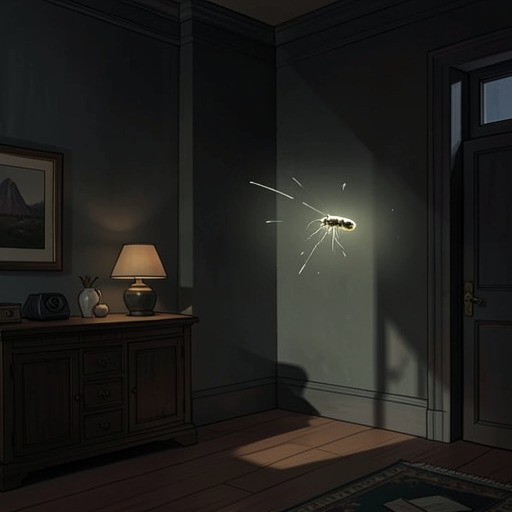
The woman's departure for a sanatorium
Blind Willow, Sleeping WomanThe woman’s departure for a sanatorium is the quiet, decisive ending of a relationship that has offered the narrator closeness without certainty. After he writes to her asking to see her again, she replies that she will take a year away from college, move out the next day, and stay at a sanatorium in the mountains near Kyoto. She says she must handle what has happened on her own, thanks him for being with her, and says goodbye. The letter closes their immediate connection while preserving the possibility—never a promise—that they might meet again.
The Letter and Its Circumstances
A week after the narrator left her room, she had not called. He tried to reach her by phone, received no answer, and wrote her a long letter instead. He attempted to set out his feelings honestly, while admitting that he did not understand everything that had happened or know where he was going. He said he wanted to see her again but could not tell whether that was the right thing to do. His letter asks for renewed contact without claiming certainty about what it would mean.
At the beginning of July, her reply arrived. It was brief, but it settled several practical matters at once: she would take a year off from college, move out of her apartment the following day, and go to a sanatorium in the mountains near Kyoto. She described the leave as a formality and doubted she would return to school. The speed of the announced move makes the separation immediate, even as her wording suggests that the decision had been forming for some time.
Her Decision and Its Limits
The woman presents the leave as her own decision, one she had considered repeatedly but had been unable to discuss with the narrator. She says she was afraid to talk about it and asks him not to blame himself or anyone else. Whatever had happened between them, she insists, is something she must handle on her own. Her letter acknowledges that he has suffered while she put the decision off, but suggests that this period may now be behind them.
The sanatorium is described not simply as a hospital but as a place where she will be free to do what she wants. She does not provide further details about her condition, her plans there, or how long she will stay. Instead, she says that she cannot find the words to explain more and has rewritten the letter ten times. The repeated revisions make the message feel carefully composed but incomplete: she can state the separation and express gratitude, yet cannot supply the fuller account the narrator might want.
Gratitude, Farewell, and the Record
The woman’s thanks are specific to their shared year. She tells the narrator that she is grateful for his being with her and asks him to believe that, even though she cannot say more. She also singles out the record he gave her, saying she will always treasure it. The object gives the farewell a tangible point of connection: it is something from their time together that she can carry into her departure, even as the relationship itself recedes from daily life.
She leaves open only a distant possibility of reunion. Someday, somewhere in what she calls a precarious world, they may meet again, and she hopes then to say more than she can now. That hope is qualified by distance and uncertainty; it does not ask the narrator to wait or offer a plan for renewed contact. The final word of the letter is goodbye, making the immediate separation unmistakable even while the imagined future remains unresolved.
The Narrator After the Departure
The narrator reads the letter hundreds of times, and each reading grips him with sadness. He recognizes in it the same disconcerting feeling he had experienced when the woman looked deeply into his eyes. The emotion seems to resist containment: he compares it to wind, formless and weightless, impossible to wrap around himself. In the days that follow, scenery moves past and people speak, but their words do not reach him.
On Saturday nights he continues to sit in the same chair in the dormitory lobby, although he knows she will not call. He turns on the television and pretends to watch baseball, then fixes his attention on the space between himself and the screen. He divides that space in two again and again until it becomes small enough to fit in his palm. The ritual does not restore contact; it gives his waiting a repeated, almost measurable shape. Her departure therefore ends the possibility of an ordinary next meeting without immediately ending his attachment to her.
Narrative Function
The separation is conveyed through exchanged letters rather than a final face-to-face conversation. The narrator first writes from uncertainty, leaving his desire to see her beside his fear that renewed closeness might be wrong. Her reply supplies a clear decision but withholds a complete explanation, so the reader encounters her departure through the boundaries she sets and the gratitude she chooses to express. The difference between his searching letter and her concise farewell preserves the unequal knowledge between them.
The closing movement from her carefully revised message to his repeated rereading shifts attention from the decision itself to its aftermath. The record remains a small, concrete token of their shared past; the Saturday-night chair and the empty interval before the television turn the absence into a recurring present. The farewell is complete as an act of separation, but not as an account of what the woman has endured or what their relationship meant to her. That unfilled space is part of the event’s significance: she leaves on her own terms, and the narrator must live with both the goodbye she gave him and the explanation she could not.