The young man’s airplane monologue is recorded
Blind Willow, Sleeping WomanThe young man’s airplane monologue is recorded when a woman writes down the words he has been saying to himself, then gives them back to him. He remembers none of it. The scene’s significance lies in that gap: speech rises from somewhere beyond his conscious thought, while the woman becomes its attentive witness and the written page makes the hidden utterance tangible. His airplane, he suggests, may be taking shape deep in a forest within his heart.
The Request to Record
The conversation begins with the young man asking what he talks about when he speaks to himself. The woman answers that he talks about airplanes. Her observation shifts their exchange from speculation about the unknown depths of a person’s heart to a concrete proposal: he points to the yellow plastic ballpoint pen on the table and asks her to write down what she hears next time. When she checks whether he truly wants to know, he nods.
The request is more than a way of collecting an oddity. It gives the woman a role as listener and recorder, and makes the young man’s private, unremembered speech available for examination. The scene does not offer a clinical explanation for the monologue. Instead, its method is intimate and modest: listen, write, and let the speaker encounter his own words from the outside.
The Woman’s Written Record
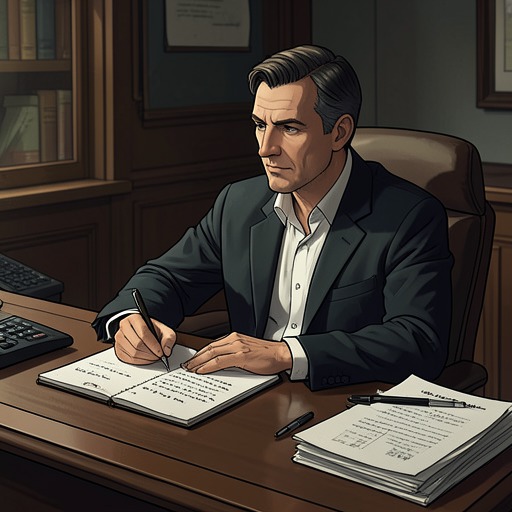
She writes on a piece of notepaper without stopping, moving the pen slowly but never getting stuck for a word. As she writes, the young man watches her long eyelashes, which had been wet with tears only moments before. His attention to her and his uncertainty about what sleeping with her means converge in a sudden fear of loss: he imagines that he may never be able to go anywhere else, and that his very self will melt away.
When she finishes, she pushes the paper across the table. She says she knows the words by heart and identifies them as what he said to himself about airplanes. The page turns an ephemeral spoken fragment into a record that can be read aloud and questioned. Yet the act of recording does not make the speech familiar to its speaker: the woman can reproduce it, while he remains unable to recall saying it.
The Airplane Monologue
The written sequence begins with “AirplaneAirplane flying” and proceeds through “I, on the airplane,” “The airplane,” and “Flying.” It then hesitates over the contrast between flight and the sky, ending with “The sky?” The arrangement is fragmentary rather than explanatory. The repeated airplane word and the broken movement between a plane, its flight, and the sky preserve the sound of thought arriving in pieces.
Reading the words aloud, the young man is stunned by the length of the passage and says he has never once thought about airplanes. He cannot remember any of it, and asks why an airplane would suddenly come out of him. The woman insists that these are indeed the words he said in the shower. Her account establishes a recurring utterance, but not its cause: the record confirms that he spoke, while leaving him estranged from the speech.
The Forest Within
The woman answers his puzzlement by distinguishing conscious thought from what may be happening deeper within him. He may not have been thinking about airplanes, she says, but somewhere deep in a forest, far away, his heart was thinking about them. The young man takes up her image and wonders whether he might be making an airplane somewhere in that forest.
The episode therefore leaves the monologue suspended between the ordinary fact of overheard speech and an image of concealed inner activity. The airplane is not explained or completed; it is something the heart may be making beyond the speaker’s awareness. The woman’s transcription gives that hidden process a visible trace, but neither the page nor their conversation resolves what it means. The scene ends with her setting down the pen and looking at him, while the airplane remains an unanswered fragment of his inward life.