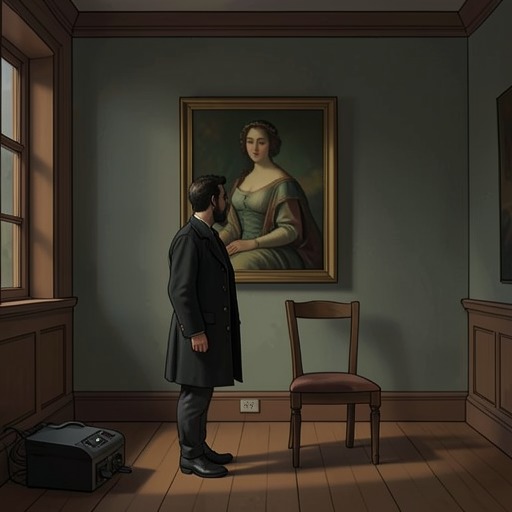
Tony Takitani sells his record collection
Blind Willow, Sleeping WomanTony Takitani sells his father’s jazz-record collection after the records, stored in the empty room once filled with his wife’s clothes, become an oppressive presence. The sale brings him substantial money but no comfort: when the records are gone, he is left alone with the memories they had helped keep in the house.
The Room After His Wife’s Death
Tony’s wife had accumulated so many clothes that he had made a walk-in closet to contain them. After she died, he remained in that room among her dresses, unable at first to decide what to do with them. He eventually gave the clothing to a used-clothing dealer for less than a twentieth of what it had cost, accepting the loss because he wanted the things taken somewhere he would never see them again. He then left the room empty for a long time.
The room did not immediately become an ordinary empty space. Tony sometimes sat there for an hour or two, looking at the bare walls and letting his mind go blank. As the months passed, his memories of his wife’s clothes and their colors and smells faded. What remained most tangibly was absence, alongside the difficult memory of the assistant who had wept at the sight of the dresses.
His Father’s Records
Two years after Tony’s wife died, his father, Shozaburo Takitani, died of liver cancer. Among the few things he left was a large collection of old jazz records. Tony stacked the records, still in the moving company’s cartons, in the empty room. Their musty smell meant he had to open the windows regularly to air it, but otherwise he avoided the room.
For a year the records stayed there. Their presence increasingly troubled Tony: merely thinking of the pile made it difficult for him to breathe, and sometimes he woke during the night and could not fall asleep again. His memories had grown indistinct, but had not vanished; they remained with the weight of the past.
The Sale and Its Consequence
Tony called a used-record dealer and asked for an offer. The collection included valuable discs that had long been out of print, so the dealer paid him enough to buy a small car. The amount made no difference to Tony. He sold the records to remove them from the house, not to gain from their value.
Once the collection was gone, Tony was truly alone. The sale completes the clearing of the room that began with his wife’s clothing, but it does not restore what has been lost. The objects had occupied space and carried associations with the people who had left them behind; removing them changes the house while making the absence they once surrounded unmistakable.
Narrative Significance
The sale is a quiet turning point in Tony’s bereavement. His wife’s clothes and his father’s records are different inheritances, but both become burdensome through their presence in the house. He disposes of them in sequence, first accepting a negligible return for the clothes and later receiving a substantial sum for the records, without either transaction reversing his losses. The final emptiness is not consolation: it clarifies the loneliness the stored belongings had partly concealed.