Tony Takitani’s wife’s clothing collection
Blind Willow, Sleeping WomanTony Takitani’s wife’s clothing collection is the material trace of her intense attachment to beautiful clothes and, after her death, the focus of Tony’s attempt to reckon with her absence. Built up through habitual, increasingly expansive purchases, it fills a custom walk-in closet and outlives the woman who wore it. Tony first keeps the garments, then tries to make their use part of his grieving, and finally has them removed; in the end, what remains is not a wardrobe but an empty room and a persistent sense of loss.
Growth and Use
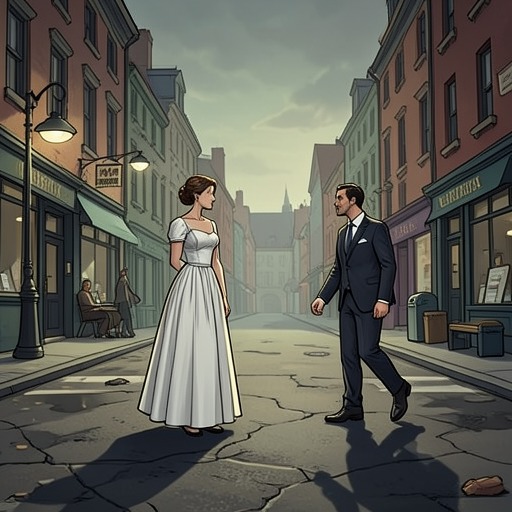
Tony and his wife share a contented married life: they do not fight, travel together, and enjoy ordinary outings. Her clothes-buying is the exception to this ease. Tony had noticed the tendency before their marriage, but it becomes pronounced on their European honeymoon. In Milan and Paris, she spends her days moving from boutique to boutique, buying from designers including Valentino, Missoni, Yves Saint Laurent, Givenchy, Ferragamo, Armani, Cerruti, and Gianfranco Ferré. They do not visit the Duomo or the Louvre; the stores dominate Tony’s memory of the trip, while he follows her and pays the bills.
Back in Japan, she continues to buy clothes almost daily. Tony commissions several large armoires, a cabinet for her shoes, and eventually an entire room converted into a walk-in closet. The purchases do not immediately become a source of marital conflict: she wears them well and is happy in new clothes, and Tony chooses not to complain. The balance changes when the collection outgrows even the special room. Counting her dresses while she is away, he works out that she could change twice a day for almost two years without repeating an outfit. The clothes are accumulating faster than she can wear them, and he begins to wonder whether the habit has become a problem.
When Tony raises the matter after dinner, he makes clear that money is not the issue and that he likes seeing her look beautiful. His concern is the number of expensive dresses. She agrees that she does not need so many, but explains that knowing this does not enable her to stop: when she sees a beautiful dress, she feels compelled to buy it. Her explanation makes the collection more than a matter of practical use. Its growth follows an impulse she recognizes but cannot control.
After Her Death
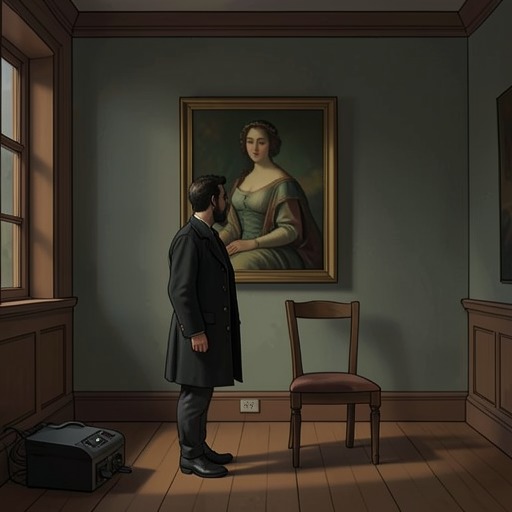
After his wife dies in a car accident, Tony is left with a room full of size 7 dresses and 112 pairs of shoes. He sells some accessories to a dealer for the first offer, disposes of stockings and undergarments, and leaves the large remainder in place because there is too much to sort through. After the funeral, he shuts himself inside the walk-in closet and spends the day looking at the rows of clothes. The garments have changed function: once chosen and worn by his wife, they now stand in for the person who is gone.
Ten days later, Tony places an advertisement for a female assistant, specifying a dress size of 7, a height of approximately 161 centimeters, and a shoe size of 22 centimeters. He offers unusually high pay, and thirteen women come to his studio-office in Minami-Aoyama. After rejecting five who are evidently misrepresenting their size, he selects a woman in her mid-twenties whose build is closest to his wife’s. He explains that she would perform ordinary office duties but wear his wife’s clothes and shoes as a kind of uniform. He presents the arrangement as a way to give himself time to adjust to his wife’s death, hoping that having the woman nearby in the clothes will make the loss real to him.
The assistant agrees to start the following day and selects six days’ worth of dresses and matching shoes, along with a light gray cashmere coat. Once she has gone, Tony returns alone to the clothing room. He sees the dresses as shadows left by his wife: garments that once moved with her body but are now detached from the life that gave them meaning. Their abundance, once an extension of her pleasure, has become difficult for him to bear. His attempt to place them on another person cannot make them his wife again or provide the period of adjustment he imagined.
Abandoned Plan and Disposal
Tony calls the woman and tells her the job is no longer available. He gives no further explanation, asks her not to tell anyone about the arrangement, and lets her keep the clothes, shoes, and suitcases she took home. She is initially angry and bewildered, but concludes that the peculiar job may have been better left undone. The garments enter her wardrobe, where they contrast sharply with her worn clothes and shoes; when friends wonder how she can afford such sophisticated outfits, she says she promised not to tell.
The collection’s transfer to the assistant does not resolve what it means to Tony. In the end, he has a used-clothing dealer take every remaining item. The dealer pays him less than a twentieth of what the clothes had cost, but the price is immaterial: Tony wants them taken somewhere he will never see them again. He leaves the emptied room unused for a long time, although he occasionally sits there for an hour or two, looking at the bare walls and the shadows he associates with his dead wife.
The Room and the Work of Memory
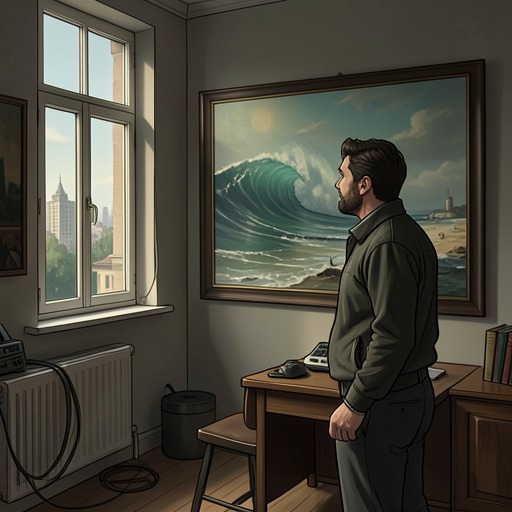
As the months pass, Tony loses the ability to recall the clothes’ colors and smells, and even the emotions he once connected with them recede. His memories alter and fade; what remains tangible is the absence itself. He sometimes struggles to recall his wife’s face, yet the image of the assistant crying at the sight of the dresses persists. The woman’s unremarkable face and worn patent-leather shoes become more memorable to him than the collection’s former abundance. The objects do not preserve the person intact: their removal leaves a vacancy, while the unsuccessful attempt to give them a new wearer creates another memory that survives their disappearance.
The room later holds another inheritance of the past. Two years after his wife dies, Tony’s father, Shozaburo Takitani, dies of liver cancer, leaving an instrument and a large collection of old jazz records. Tony stacks the records in the empty room. Their musty smell makes him open the windows from time to time, but otherwise he avoids the space. After a year, the records themselves begin to weigh on him; the thought of them in the house sometimes makes it difficult to breathe, and he occasionally wakes during the night unable to return to sleep. He sells the collection to a used-record dealer, receiving enough to buy a small car, though the money means nothing to him. Once the records are gone, Tony is, in the story’s closing formulation, truly alone. The clothing collection’s history thus belongs to a larger pattern: possessions first carry lives and memories, then become burdens Tony tries to remove, without removing the absence they have come to represent.