Unnamed Greek Island Near Turkey
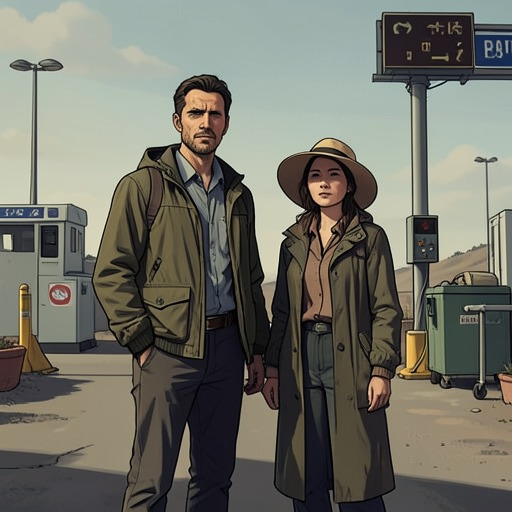
Blind Willow, Sleeping WomanUnnamed Greek Island Near Turkey is the remote setting in which the narrator and Izumi live after fleeing Japan, a landscape of cheap rent, Turkish hills across the water, and an eerie quiet that makes their separation from their former lives feel almost complete. The island offers a peaceful interval of shared routines, yet its remoteness also intensifies the narrator’s estrangement: he can take in the scenery without feeling that he belongs to it.
Setting and Geography
The island lies near the Turkish border, closer to the Turkish shore than to the next-nearest Greek island. From it, the greenish mountains of Asia Minor are visible on clear days; the narrator even recalls local jokes that on windy days the smell of shish kebab carries over from Turkey. The couple had never heard of the island before arriving, and its quiet off-season economy makes an efficiency apartment affordable. Its geography is not merely a backdrop: the Turkish coast stands close across the water, while the island remains distant from the couple’s old life in Japan.
In the harbor square stands a weather-beaten statue of a Greek independence hero. The man had led an insurrection on the Greek mainland and planned an uprising against the Turks, who then controlled the island. After capturing him, the Turks killed him by impalement on a sharpened stake beside the harbor. The statue marks the supposed site of his death, but sea wind, dust, and gull droppings have worn away its features. Locals barely notice it; the hero seems to have turned his back on the people and the world. The monument’s faded presence makes the island’s history of conflict feel both visible and neglected.
Life at the Edge of Europe
The narrator and Izumi sit at an outdoor café, drinking coffee or beer and looking toward the boats, gulls, and distant Turkish hills. He experiences the place as Europe’s edge, where the wind seems to come from the edge of the world. An inescapable retro cast makes the island feel like an alien reality that is foreign and just out of reach, yet strangely gentle. Its shadow seems to color the faces, eyes, and skin of the people gathered in the harbor.
That atmosphere does not become belonging. The narrator sometimes cannot grasp that he is part of the scene; however much he absorbs the air and scenery, he feels no organic connection to them. The contrast is sharpened by his recent past: only two months earlier he had lived with his wife and four-year-old son in an apartment in Tokyo, taking weekend walks along the Tama River. The island’s distance is therefore both geographic and personal, separating his present life with Izumi from the ordinary family life he has left behind.
The Couple’s Daily World
The island’s off-season quiet leaves the couple with little to do and no work or friends. There are no movie theaters, tennis courts, or books for the narrator to read. They left Japan so abruptly that he brought no books; after reading twice the two novels he bought at the airport and a copy of Aeschylus’ tragedies that Izumi brought, he has little else to turn to. The harbor kiosk offers a few English paperbacks, none of which attracts him. The place gives him abundant free time but frustrates his passion for reading.
Izumi studies Greek from a textbook, carrying a chart of verb conjugations and reciting them aloud. Her efforts let her speak broken Greek with shopkeepers and café waiters, helping the pair make a few local acquaintances. The narrator, by contrast, dusts off his French, only to find no one on the island who speaks it; they get by in English, while some older residents know Italian or German. Their differing language efforts reflect how each tries to occupy the unstructured days.
They walk everywhere and try fishing in the harbor, without success—not because fish are scarce, but because the water is so clear that the fish can see the bait, hook, and angler. The narrator buys a sketchbook and watercolors, then roams the island drawing scenery and residents while Izumi studies beside him. People gather to watch; he draws their portraits, sometimes receiving a beer in return, and once a fisherman gives them a whole octopus. These small exchanges turn the couple’s idleness into a modest contact with island life.
Intimacy, Isolation, and Narrative Significance
Their life together settles into a peaceful routine. They eat simply, sip inexpensive wine, and climb a nearby hill each day to a village from which other islands can be seen. Exercise soon brings the narrator into good shape. After sunset the island becomes so quiet that no sound can be heard; within that silence, he and Izumi make love and talk without worrying about catching the last train or inventing lies for their spouses. He describes this interval as the most peaceful time of his life, even as autumn deepens, early winter arrives, and the wind raises whitecaps on the sea.
The island’s remoteness also underlies the couple’s sense that returning to Japan is impossible. When the narrator suggests that they may have to go back, Izumi tells him that he does not understand: they can never return. Their temporary refuge thus carries an irreversible weight. The island can shelter their daily intimacy, but it cannot restore the lives they left or guarantee a settled future.
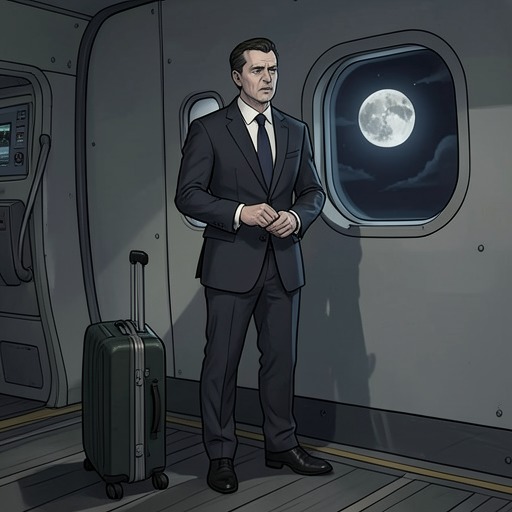
The setting’s quiet becomes especially charged when Izumi disappears from the apartment one night. The narrator wakes at twelve-thirty, finds her absent from the bedroom, living room, kitchen, and bathroom, then checks the yard, where two vinyl lounge chairs sit in brilliant moonlight. He calls her into the silence and hears no answer. Two bent Salem cigarette butts and an empty crumpled pack remain in the ashtray. As a faint sea breeze stirs the pampas grass, he pours half a glass of wine to calm himself; the moonlight throws strange shadows through the kitchen and recalls a childhood night when his cat vanished up a pine tree. The island’s familiar quiet is suddenly transformed into uncertainty, linking its isolation to the narrator’s earlier experience of unexplained loss.