Ice Man
Blind Willow, Sleeping WomanIce Man is a man defined by an apparent contradiction: he can see the past of everything around him, yet knows nothing of his own origins, and he has no concept of the future. His marriage begins as an unusual but intimate bond between two people who accept one another in the present. Their eventual journey to the South Pole sharpens the story’s central contrast: the ice that sustains his sense of belonging becomes the setting of his wife’s estrangement and anticipated confinement.
Identity and First Encounter
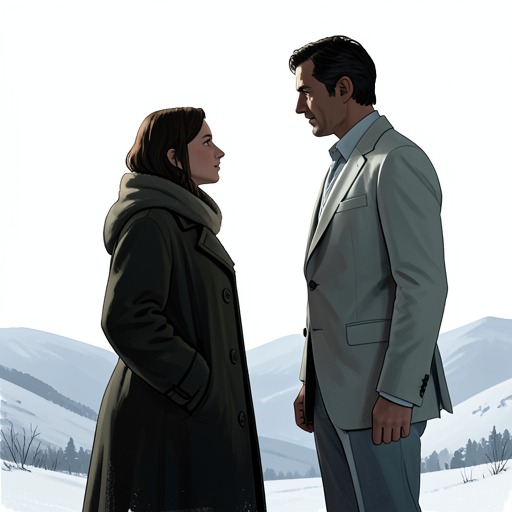
The narrator of the story introduces Ice Man as her husband and recalls first seeing him in the crowded lobby of a ski-resort hotel. He sat apart from the fireplace, quietly reading, while her friend identified him as an Ice Man. He looked young, though white strands ran through his stiff hair; he was tall, with sharply defined features and a stillness that set him apart from the noisy room. His fingers seemed frosted, and his eyes gave the impression of a life held at a distance. The narrator watched him from across the lobby, absorbed in a book and apparently intent on remaining alone.
On the fourth afternoon, with the others out skiing, the narrator stayed in the hotel and finally approached him. He said he did not ski and preferred reading and looking at the snow. When she hesitated, he invited her to sit and acknowledged her curiosity about what an Ice Man was like. Their conversation began awkwardly, with the weather and the hotel, and neither had much to say about ordinary shared interests. He did not explain himself, but he turned the conversation toward her.
Knowledge of the Past, Absence of a Past
Ice Man knew details of the narrator’s family, age, interests, health, school, and friends, including matters she herself had forgotten. When she asked whether he could read minds, he denied it: he simply knew what he saw in her, as if looking into a clear block of ice. But his insight did not extend forward. He said he was not interested in the future and had no concept of it; ice, in his account, held the past, preserving what had happened clearly and distinctly.
Their relationship developed through repeated meetings after they returned to Tokyo. They spent weekends together, usually sitting on park benches and talking rather than going to movies, cafés, or restaurants. Ice Man hardly ate, and he still did not discuss himself. When the narrator asked about his birthplace, parents, and how he had become an Ice Man, he said he did not know. He could preserve the past of everything else but had no past of his own: he did not know where he was born, what his parents looked like, or even his age. His knowledge of the world therefore had a boundary at the self; the figure who seemed to contain other lives’ histories could not supply a story of his own.
Marriage and Shared Life
The narrator fell in love with Ice Man, and he came to love her as she was in the present, apart from either person’s past or future. She had just turned twenty and had never truly loved anyone before. Her mother and older sister opposed the marriage because they knew nothing about his background and doubted that an Ice Man could fulfill a husband’s responsibilities. Their concern that he might melt in hot weather was mistaken: he was cold, but not made of ice, and his coldness did not deprive other people of their body heat.
The couple married without family approval, a public celebration, or even a civil ceremony. Ice Man had no family register, so they simply decided they were married, bought a small cake, and ate it together. They rented a small apartment, and he worked at a refrigerated meat warehouse. The cold suited him, he did not tire even when working hard, and he ate very little; his employer valued him and paid him more than his fellow workers. Their daily life was quiet and self-contained. Although other people gradually began talking with him, the narrator sensed that they did not truly accept him or her marriage to him, and that a gulf remained between the couple and the people around them.
The narrator understood their intimacy through the image of a solitary, immense mass of ice holding the world’s past. At first, this private sense of sharing Ice Man’s nature confused her, but she grew accustomed to it and came to welcome his closeness. He continued not to explain his origins, and she stopped asking. Their marriage rested not on a recovered biography or a shared social world, but on the present bond they had chosen and on a vast, silent past that neither could make into ordinary conversation.
The Journey to the South Pole
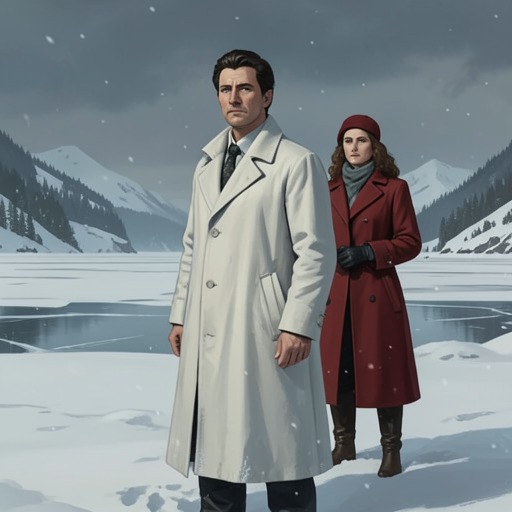
The couple eventually flew to the South Pole. The journey brought little of the anticipation associated with a holiday: clouds obscured the view, ice covered the plane’s windows, and Ice Man quietly read throughout the flight. Yet when they stepped onto the South Pole, his body trembled for an instant. His expression barely changed, and others did not notice, but his wife saw the reaction. He looked at the sky and his hands, breathed deeply, and asked whether this was where she had wanted to go. The moment suggested a powerful recognition, even though he offered no explanation for it.
The settlement was small and featureless, with a single hotel and few inhabitants; it offered neither the penguins nor the natural spectacles the narrator expected. Outside the town stretched ice without trees, flowers, rivers, or ponds. Ice Man, by contrast, moved tirelessly through the place. He learned the local language and spent hours talking with its people, while his wife could not understand their conversations. His evident absorption in the South Pole first made her feel left behind and betrayed, a sharp change from the private companionship of their earlier life.
Isolation, Pregnancy, and Ending
As the long winter closed in, the narrator’s strength and bearings gradually failed. She lost her sense of direction, time, and self, and became emotionally numb in the isolated frozen world. She recognized that her husband was no longer the Ice Man she had first met—not because he ceased to be thoughtful or kind, but because something in him had changed through his encounter with the place. The other inhabitants liked him, while they could not understand her. She stayed in her hotel room, tried to learn their language, and knew she would never master it. After the plane that had brought them departed, no more arrived; the runway froze over, and Ice Man told her that the long winter meant they could only wait for spring.
Three months after their arrival, the narrator realized she was pregnant. She became certain that the child would be a little Ice Man, with the father’s characteristic eyes and frosted fingers, and that their new family would never leave the South Pole. The belief turns her isolation into a vision of inheritance: the past that Ice Man preserves, and the frozen world that has claimed his attention, seem to have closed around the family’s future as well.
The narrator remains deeply lonely, but she knows Ice Man loves her. He kisses her tears, which freeze, and removes the frozen drops. His care is still present, even as his words seem to recede into the past and her former warmth becomes difficult to remember. The ending holds affection and abandonment together: the marriage has not become loveless, yet love cannot restore the narrator’s lost bearings or bridge the distance opened by the South Pole. Ice Man’s defining relation to the past, once the strange basis of their closeness, now figures the force that binds them to a place and a future she fears they cannot escape.