Ice Men
Blind Willow, Sleeping WomanThe Ice Men are defined less by a known origin or a fully explained nature than by their cold bodies and unusual relation to time. In the account of one woman who marries an Ice Man, he can preserve the past of everything around him yet has no memories of his own beginnings. Their relationship makes that contradiction intimate: a love founded on accepting him as he is becomes, after their move to the South Pole, a life sealed into the very past he embodies.
Identity and Nature
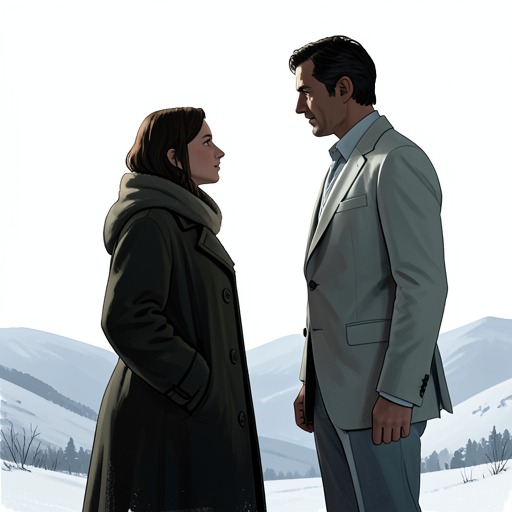
The woman first encounters her future husband in the lobby of a ski-resort hotel, where he sits apart from the crowd and away from the fireplace, absorbed in a book. A friend identifies him as an Ice Man, although she cannot explain the name beyond guessing that he is made of ice. His appearance is otherwise human: he is tall, with white strands in stiff hair and sharply defined features. His coldness, rather than any literal icy composition, is what distinguishes him.
The Ice Man explains that ice preserves things from the past, holding them clear and distinct; it contains no future. This is not simply an image he uses to describe the world. He says that he knows and preserves the past of everything else, but has no personal history: he cannot say where he was born, whether he had parents, or how old he is. His self-description gives the species its defining paradox. An Ice Man may be a keeper of memory without possessing a recoverable origin or a future-oriented sense of time.
Relationship and Marriage
After returning to Tokyo, the woman and the Ice Man begin meeting every weekend. Their dates are quiet and unlike conventional courtship: they sit together on park benches and talk, while he rarely speaks about himself. She asks about his birthplace and family because she wants to know him, but his answer is that he cannot know those things. His lack of personal history remains a limit in their intimacy, not a mystery the story resolves.
The woman falls in love with him, and he loves her as she is in the present. At twenty, she has never before truly loved anyone, and she does not yet understand all that such a commitment will mean. Her mother and older sister oppose the marriage because the Ice Man has no known background and because they doubt he can meet a husband’s responsibilities. Their concern that he might melt is mistaken: he is cold, but is not literally made of ice and will not melt in warm weather.
The couple marry without family approval, a civil ceremony, or a wedding celebration. Because the Ice Man has no family register, even the formal civil procedure is unavailable to them. They buy a small cake and eat it together as their entire ceremony, then rent an apartment. He works at a refrigerated meat warehouse, where the cold does not trouble him and hard work does not tire him. His employer values him and pays him more than his fellow employees. The couple live quietly, largely apart from the people who regard them as different.
A Shared Life and Its Limits
At first, married life is peaceful. The people around the couple gradually grow accustomed to the Ice Man and talk with him, but the wife senses that this everyday familiarity does not amount to acceptance. Others continue to see the couple as different, and she feels that the distance between them and the surrounding community will remain.
Their private intimacy also carries his defining image of ice. The wife imagines a solitary, immense mass of ice whose ancient past is preserved inside it; she understands her husband as conveying the memory of that ice. At first the experience confuses her, but she grows accustomed to it. Neither the image nor the husband’s silence supplies an explanation for how he became an Ice Man. She stops asking, and their life together rests on closeness without a shared account of his origins.
The couple try to have a child but fail. The wife considers that a genetic difference between humans and Ice Men may make pregnancy difficult, though the account does not establish this as a medical explanation. Without a baby or employment outside the home, her days become repetitive. She has few social ties, knows no one in the neighborhood, and remains estranged from her mother and sister over the marriage. She reads or listens to music while her husband works, but the monotony gradually becomes more oppressive than solitude itself; she begins to feel reduced to a shadow within the routine.
The South Pole and the Ice Man’s Future
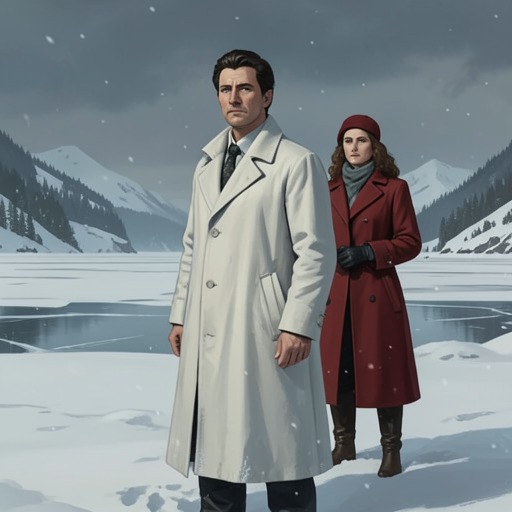
To break the routine, the wife proposes a trip. At the South Pole, however, the journey becomes a departure from ordinary life rather than a temporary escape. Three months after their arrival, she realizes that she is pregnant. She believes the child will be an Ice Man, imagining the baby with its father’s cold traits. She also becomes certain that their family will never leave the South Pole: the enduring past seems to have taken hold of them.
The onset of winter makes that fear concrete. The runway is covered with hard ice, no more planes land, and the Ice Man tells his wife that no ships or aircraft will arrive until spring. Their immediate circumstances are thus shaped by isolation and waiting. For the wife, the long winter is also emotional: she feels the warmth she once had receding and sometimes struggles to remember that it existed.
The ending does not disclose whether spring comes or whether the family eventually leaves. It shows the wife alone with her husband and their expected child in a frozen home. The Ice Man tells her he loves her, and she believes him; yet his words seem to travel farther into the past, while she continues to cry. The story leaves the family’s future unresolved, making that uncertainty part of the Ice Men’s central significance: their power to preserve what has been is inseparable from the human cost of living without a secure past, an open future, or a world beyond the ice.