Japanese invasion
Blind Willow, Sleeping WomanJapan’s invasion of China is named as part of the war that forms the background to Shozaburo Takitani’s life in Shanghai. In the account, the event matters less as a military narrative than as a measure of the gulf between public catastrophe and one man’s largely unreflective pursuit of music, food, and companionship.
Shanghai during the war
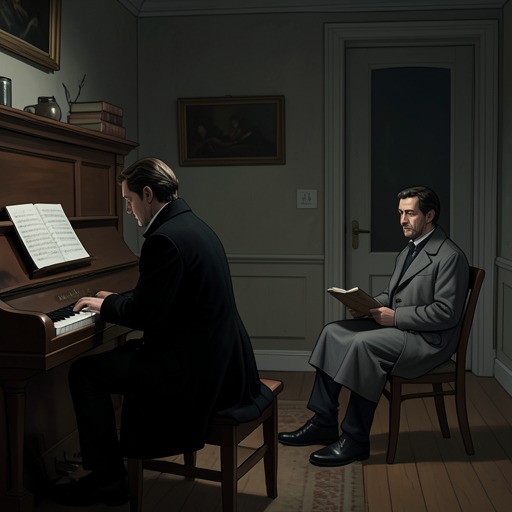
Four years before the Second World War began, Shozaburo Takitani had left Tokyo for Shanghai, taking only his trombone. He found the city immediately appealing and made a life playing in its nightclubs. When Japan invaded China, he remained there, continuing to play as the surrounding conflict unfolded.
The invasion belongs to a sequence that the narration moves through from China to the attack on Pearl Harbor and the atomic bombings of Japan. For Shozaburo, however, these events seemed to be happening somewhere far away. He showed little interest in history or introspection, and wanted to keep playing, eat regularly, and have women around him. The contrast establishes how the war’s scale and consequences could recede from the consciousness of someone whose immediate life still seemed to be going well.
A life insulated by connections
Shozaburo’s musical talent and affable manner brought him close to powerful people in wartime Shanghai, including Japanese Army officers, Chinese millionaires, and other influential figures profiting from the war. They opened doors for him when problems arose, helping make his life appear easy even amid upheaval. His success in that environment did not amount to political understanding: the account presents him as self-centered and indifferent to the historical forces around him, while also noting that he treated people kindly and was widely liked.
That apparent insulation ended when the war did. After its conclusion, Shozaburo’s wartime associations attracted the attention of the Chinese Army, and he was imprisoned. The invasion is therefore part of the setting for a reversal: the connections that had helped him prosper in Shanghai became a liability once the political order changed.
The event’s place in a longer aftermath
Shozaburo was one of only two Japanese prisoners to leave the prison alive and return to Japan. He came back in the spring of 1946, emaciated and without possessions, and learned that his parents had died when their home was destroyed in the Great Tokyo Air Raid and that his brother had disappeared on the Burmese front. His survival of wartime imprisonment thus led not to a return to his former family life but to the discovery that he was alone.
The book also places the invasion within a generational recollection of the 1960s, which the narrator names “A Pre-History of Late-Stage Capitalism.” That later reflection describes the decade’s youth as absorbed in sex, music, films, and political movements, while acknowledging their ignorance and limited grasp of life. The juxtaposition links public history to private experience across generations: the invasion and its aftermath shape Shozaburo’s survival and losses, while the younger narrator recalls another charged historical moment through the vivid but incomplete perceptions of those who lived through it.