Shinagawa Ward
Blind Willow, Sleeping WomanShinagawa Ward is both the setting of Mizuki’s adult life and the civic landscape of the episode in which a name-stealing monkey is found in its sewers. The ward connects the everyday structures of work, housing, and public administration with a crisis of identity: Mizuki lives and works there, seeks help at a ward-sponsored counseling center, and eventually learns that the monkey who stole her name tag had made an underground hideout beneath Takanawa.
Setting and Everyday Life
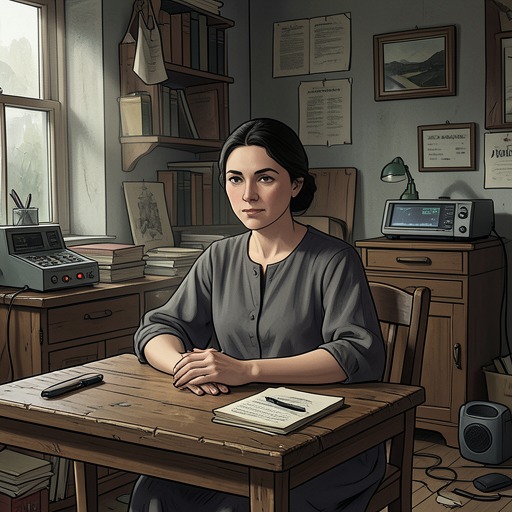
Two years after marrying, Mizuki and her husband bought a condominium in a new building in Shinagawa. At the time, her husband was thirty and worked in a pharmaceutical-company laboratory; Mizuki was twenty-six and worked at a Honda dealership. Her life in the ward therefore included both a shared home and a job in which she answered phones, welcomed customers, served coffee, copied documents, and maintained files and the computerized customer list.
Her dealership work extended beyond routine reception. Although she was not formally responsible for car sales, she learned the models’ technical details and mileage ratings by watching the salesmen. She could explain how the Odyssey handled more like an ordinary sedan than a minivan, adapt her approach to a customer’s personality, and put people at ease with conversation and a winning smile. Yet she could not authorize discounts, negotiate trade-ins, or include options without charge. Even when she had done most of the work of persuading a customer, a salesman took over the final negotiation and received the commission; sometimes Mizuki’s only reward was a free dinner from a salesman sharing his windfall.
Shinagawa also framed the household around her work. Her husband’s habit of theorizing about everything, and his tendency to talk at length once he began, made her reluctant to tell him about her problem. She expected him to interpret it as evidence that she was unhappy with their marriage. She did not share that view: she had no serious complaint about their life together or her in-laws, and her husband’s excessive logicality was, in her estimation, a personal trait rather than a sign of marital trouble.
The Ward Office Counseling Center
After she began forgetting her own name, Mizuki feared that the lapses might be an early sign of a serious disease. A hospital doctor dismissed her concern because she could not report forgetting anything else and suggested she return only if her symptoms expanded. The experience left her without an answer to a troubling problem that seemed too slight to command medical attention but too disturbing to ignore.
A small item in the local ward newsletter offered another route: Shinagawa Ward would open a counseling center where residents over eighteen could speak confidentially with a professional counselor at a greatly reduced rate. The service was scheduled to operate only twice a month, an arrangement difficult for ordinary workers, but Mizuki could adjust her dealership schedule to attend on a weekday. She booked a thirty-minute session for two thousand yen and went to the third floor of the ward office the following Wednesday.
Mizuki was the center’s only client when she arrived. The receptionist explained that the program had begun suddenly and was not yet widely known, so the center was still quiet. The scene makes the ward office more than a backdrop: it is a local institution offering a modest, private alternative after the hospital has treated Mizuki’s fear as insignificant. Its accessibility is real but limited by its sparse schedule and its newness.
The Sewers Beneath Takanawa
The ward’s public infrastructure acquires a more unsettling role when Mizuki confronts the monkey that stole her name tag as well as Yuko’s. The monkey apologizes and describes stealing names as an uncontrollable illness: when a name moves his heart, he snatches it despite knowing the act is wrong. His explanation links Mizuki’s personal loss of her name to a creature whose own compulsion has made him an urban fugitive.
Mrs. Sakaki says the monkey had been hiding in the sewers in Shinagawa. Because her husband was section chief of Public Works, she asked him to have younger colleagues catch it; he notes that young Sakurada did most of the work. Sakurada explains that the department had to respond to a suspicious character living in the sewer system and that the monkey used a hideout beneath Takanawa as a base for foraging across Tokyo. The discovery is therefore not simply a chance encounter: it is made possible by the ward’s responsibility for its sewers and by the employees who pursue the problem through that system.
The monkey describes why he hid underground. Aboveground, he says, the city offered few trees and shady places; people tried to catch monkeys, children threw things or shot BB guns, dogs chased them, and television crews disturbed their rest with bright spotlights. The sewers were a refuge from a city in which even a tree could not guarantee safety or privacy. Shinagawa’s underground geography thus contrasts with its inhabited surface: public works infrastructure becomes shelter for an animal pushed out of ordinary urban space.
Names, Institutions, and Urban Space
The ward’s roles converge around the question of whether a name can be separated from the person who bears it. Mizuki’s inability to recall her own name frightens her, while the monkey’s theft of her name tag gives that private symptom a concrete counterpart. His confession offers an explanation for the stolen tags, but not a medical resolution to Mizuki’s lapses. The story keeps those matters distinct even as it places them in the same civic setting.
Shinagawa is rendered through linked, specific places: the condominium where Mizuki and her husband live, the dealership where she performs skilled but under-credited work, the ward office where she seeks confidential counsel, and the sewers beneath Takanawa where the monkey has established a base. These locations make the ward a network of ordinary systems, each with different limits. Work gives Mizuki competence without authority over the final sale; the hospital declines to investigate a symptom it considers minor; the counseling center offers a low-cost appointment but only twice a month; and Public Works can reach a hidden resident of the city through its control of the sewer system. The place’s significance lies in how those systems meet around a disturbance that the visible surface of everyday life cannot contain.