Takanawa
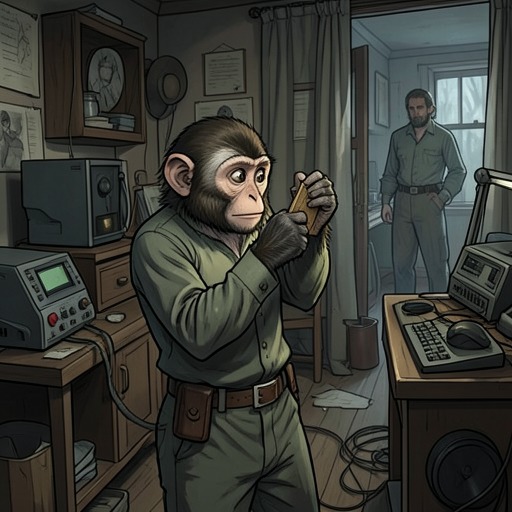
Blind Willow, Sleeping WomanTakanawa appears in the name-tag theft story as the site of a monkey’s underground hideout, a concealed base from which it foraged across Tokyo. Its narrative significance lies in the contrast between the city’s visible routines and the uneasy, largely unseen life beneath them: the sewer becomes both refuge for the monkey and the starting point of the investigation that returns Mizuki Ando’s name tags.
The Monkey’s Underground Base
After the missing name tags are recovered, Mrs. Sakaki explains that the monkey had been hiding in Shinagawa’s sewers. Her husband’s Public Works colleagues help catch it, and Sakurada reports that its base lay beneath Takanawa. From there, the monkey had ranged around Tokyo in search of food. The location is thus presented not as a fully described neighborhood but as a specific point in the monkey’s hidden urban territory.
Concealment and Exposure
The monkey describes why it lived underground: the city offered few trees and shady places, while aboveground it faced people trying to catch it, children throwing things or firing BB guns, dogs chasing it, and television crews shining spotlights when it rested in a tree. The sewer beneath Takanawa was a practical refuge from that pressure, even as the concealment made the monkey an object of suspicion when it was discovered there.
Role in the Name-Tag Story
The hideout connects Takanawa to the theft that disrupted Mizuki’s sense of identity. Mrs. Sakaki tells her that the stolen tags were the reason she had trouble remembering her name, and that recovering them would allow her to recover it. Takanawa therefore marks the point where the investigation’s explanation of Mizuki’s recurring blankness meets the monkey’s own account of life beneath the city: a hidden place becomes the key to restoring two objects that anchor her public identity.