The 1979 vomiting and harassing phone calls
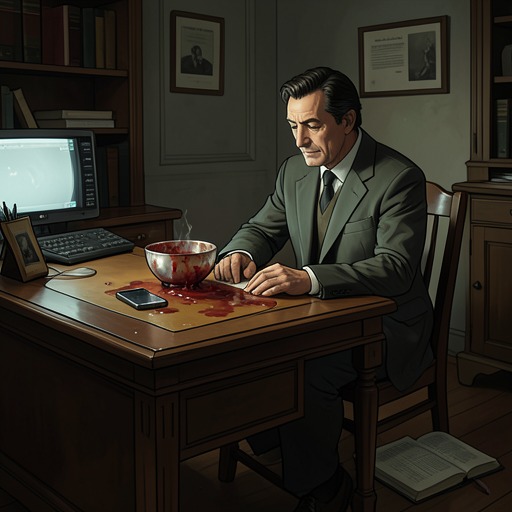
Blind Willow, Sleeping WomanThe 1979 vomiting and harassing phone calls is an episode recounted by a first-person narrator about a young illustrator whose body and telephone became subject to the same unexplained daily disturbance. The symptoms began on June 4, 1979, and ended on July 14: during that span he vomited every day while receiving one call a day from an unknown man. Neither doctors nor police could account for or resolve what was happening, and the caller’s final question left the apparent connection between the two events open.
Background and First Symptoms
The narrator knew the illustrator from the time he had drawn for a story published in a magazine. A few years younger than the narrator, he shared his interest in collecting old jazz records. Their exchanges of LPs brought them together to drink, listen, inspect records, and strike swaps; the narrator’s collection leaned toward lesser-known West Coast musicians, while the illustrator preferred later recordings by performers such as Coleman Hawkins and Lionel Hampton.
The illustrator also had a history of sleeping with friends’ girlfriends and wives, sometimes during visits when the friend was in another room or out buying beer. The narrator knew of these exploits, and when the illustrator first described a telephone call, he suggested that a boyfriend or husband might be responsible. But the illustrator said he recognized the voices of the people involved and knew the caller’s voice did not belong to any of them. His sexual history offered a possible source of retaliation, not an answer.
The illustrator was able to date the episode precisely because he kept a diary every day. The vomiting began on June 4, a clear day, and stopped on July 14, a cloudy one. He later told the narrator about it during a conversation in his apartment after one of their record-trading sessions. His account gives the strange episode a firm calendar frame without providing a causal explanation.
The first morning did not initially seem extraordinary. On the night of June 3, the illustrator had drunk a great deal of whiskey and beer and slept with a friend’s wife. At eight the next morning, he vomited the contents of his stomach into the toilet. Since he had overindulged, the sickness could pass for an ordinary hangover; he had not vomited from drinking since college. He flushed, returned to his desk, and worked with unusual vigor. By noon he had a healthy appetite and did not feel ill.
Two Daily Intrusions
After brushing his teeth, he answered the telephone. A man said the illustrator’s name, then hung up. The next day the calls began recurring: once a day, every day, from June 5 through July 14. The caller did not identify himself or explain why he was calling. At first, the illustrator could not see how the anonymous calls had any connection to his vomiting, and the narrator shared that skepticism.
The bodily pattern was just as relentless. Nausea and vomiting continued without a day’s break, and the illustrator said he brought up almost everything he ate. Hunger drove him to eat again, only for another bout to empty his stomach; he described it as a vicious circle. He estimated that he managed to keep down about one meal in three, probably enough to remain alive. The symptom did not fit his general sense of his health: he was often hungry, but otherwise felt well, and his mind remained clear.
The illustrator went to a substantial neighborhood hospital. Its staff took X-rays and tested his urine, considering cancer a real possibility, but found nothing wrong. They prescribed medicine for what they called chronic stomach fatigue or perhaps stress, and advised him to go to bed and get up early, cut back on liquor, and avoid letting small things bother him. He rejected the explanation: in his view, the usual signs of chronic stomach fatigue—such as heaviness, heartburn, and loss of appetite—had not preceded his sudden vomiting.
The telephone offered no more usable evidence. The illustrator later stayed two nights in a hotel and asked the front desk whether a call had come through to his room. The hotel could track outgoing calls but had no record of incoming ones. After he returned to his apartment, both the vomiting and the calls continued. Friends put him up, but the caller still reached him when he was alone in their houses. He felt watched by something invisible, as if it knew both when to call and when to make him vomit.
Seeking an Explanation
The coincidence gradually became harder for the illustrator to set aside. The hotel stay marked a turning point: he began to consider seriously whether the nausea and calls might be linked, wholly or partly, even though he did not know how. He had initially treated each as a separate nuisance; now their shared duration and daily recurrence made that detachment difficult to maintain.
He sought psychiatric help at a university hospital, but the psychiatrists told him there were no known cases linking schizophrenia and vomiting. They did not examine him, saying they treated patients with unmistakable symptoms and lacked the capacity to see everyone with less definite problems. They directed him toward an internist for the vomiting and the police for the calls. The division left the central question untouched: neither referral could address the possibility that the two disturbances belonged together.
The police, too, declined to intervene. They regarded prank calls and bicycle thefts as too numerous and minor for police operations to handle routinely. Because the caller said only the illustrator’s name before hanging up, they offered a form and asked him to return if something worse happened. They did not take seriously his concern that the caller always knew where to reach him. The illustrator worried that insisting would make him seem crazy, yet concluded that the doctors, police, and other institutions would not solve the problem. By the twentieth day, he felt it was beginning to wear him down and decided he would have to deal with it himself.
Ending and Unanswered Question
The illustrator’s diary preserved the exact timing of the final day. At 9:30 in the morning on July 14, he vomited his toast, tomato salad, and milk. At 10:25 that night, while listening to Erroll Garner’s Concert by the Sea and drinking Seagram’s VO, he received the final call. As before, the caller said his name, but this time added, “Do you know who I am?” He then waited in silence for ten or fifteen seconds. The illustrator said nothing, and the caller hung up; only the dial tone remained.
The next morning, both phenomena were gone. The illustrator never vomited again and never received another call. He compared the sudden disappearance to opening a door and finding that everything had vanished. He returned to his former weight of 140 pounds, while the suit and two pairs of pants he had ordered to fit his thinner body stayed in his closet as souvenirs of the episode.
The last question did not reveal the caller’s identity. The illustrator could not recognize the voice among those of people he had dealt with in the previous five or six years, and he could think of no one from his childhood or more distant past who might have had a reason to hate him. He acknowledged that his conscience was not entirely clear about his love life, but remained certain that he would have recognized the voices of the men connected to those affairs. The episode therefore ends not with discovery but with a question that makes the apparent coincidence more pointed: the symptoms stop, yet the caller’s identity and the relationship between his calls and the illustrator’s body remain unknown.