The narrator’s friend’s suicide
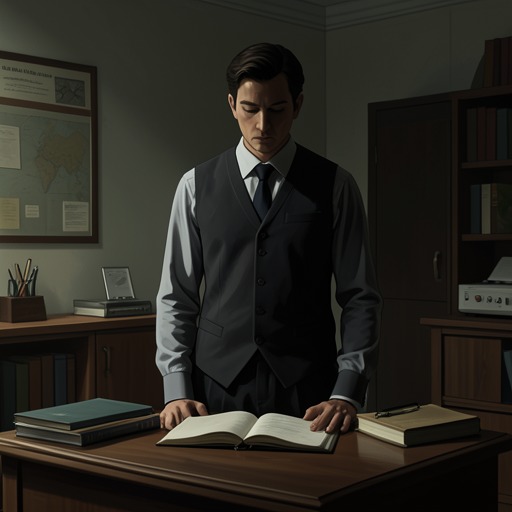
Blind Willow, Sleeping WomanThe narrator’s friend’s suicide is the sudden death that changes the narrator’s understanding of mortality and remains a source of unresolved grief. The two boys spend an ordinary afternoon together playing pool; that night, the friend dies by suicide in his garage. Because the narrator was the last person to see him alive, the death turns an uneventful farewell into a memory the narrator repeatedly revisits, without ever discovering why his friend died.
The Last Afternoon
After school, the narrator and his friend skip class and stop at a pool hall. They play four games: the narrator wins the first, and his friend wins the remaining three. As they had agreed, the loser pays. Nothing in this small contest signals a crisis. The afternoon is recalled through its concrete details—the games, the green-felt tables, and the settlement between friends—whose ordinariness becomes painful in light of what happens later.
That night, the friend dies in his garage. His parents return from visiting a sick friend and find him dead. He has left no note and no clue to his motives. The narrator cannot say how long the death took, and the available account offers no explanation for it. The contrast is stark: only hours after an afternoon of shared games, a life ends without an account that might make the change understandable.
Discovery and Questioning
The police question the narrator because he was the last person to see his friend alive. He tells them that his friend had seemed as usual. The narrator also remembers the apparent contradiction that his friend had won three consecutive games: the police’s suspicion, as he understood it, seemed to rest in part on the idea that the sort of student who skipped class to play pool might also be capable of suicide. The narrator offers no evidence that resolves the investigators’ uncertainty.
The death receives only a brief newspaper notice. The family gets rid of the friend’s car, while white flowers appear on his desk at school for a few days. These limited public traces stand beside the narrator’s private questioning. The car and flowers mark the aftermath, but neither explains the friend’s decision or offers the narrator a way to settle what the afternoon meant.
Grief and the Persistence of Memory
When the narrator graduates from high school and moves to Tokyo, he tries to forget. He deliberately turns away from memories of the pool tables, the friend’s red car, the flowers on the school desk, the crematorium chimney, and the paperweight in the police interrogation room. These objects and scenes remain bound to the death even as he attempts to put distance between himself and them. Forgetting initially seems possible, but something persists beneath the effort, not yet graspable or fully formed.
In time, what remains takes the shape of a thought: death is not separate from life but already present within it. The narrator’s friend was seventeen when he died, and the narrator, still only eighteen, experiences the loss as more than knowledge that death is inevitable. He comes to feel that the death has also taken hold of him. The understanding does not give him a safe distance from grief; he recognizes its force while resisting the temptation to think about it too much.
Aftermath and Narrative Significance
The narrator later meets the friend’s girlfriend for coffee, three months after the funeral. Their conversation ends once they have discussed what brought them together, and they say goodbye without resolving what remains between them. The narrator wonders whether she may resent that he, rather than she, was the last person to see the friend alive. He admits wishing he could have exchanged places with her, while recognizing that what has happened cannot be reversed. This meeting extends the aftermath beyond the narrator’s private memories: the death also shapes the surviving relationship between the friend’s girlfriend and the narrator.
The event is presented retrospectively, with the last afternoon’s simple sequence set against the narrator’s later attempts to understand it. Its unresolved center is not a discovered motive but the absence of one. The narrator’s memory returns to ordinary objects and details, while his understanding of death changes from an abstract division between life and death to a sense of their intimate connection. The suicide thus remains both a particular adolescent loss and the beginning of a lasting, unsettled reckoning with mortality.