Virginity and its social meaning in 1960s Japan
Blind Willow, Sleeping WomanVirginity and its social meaning in 1960s Japan is presented as a contested social value rather than a rule shared uniformly by a generation. The narrator describes young people negotiating sex, commitment, and adulthood amid the era’s sense of possibility, then gives that broad picture intimate form through Yoshiko Fujisawa’s relationship with her high-school boyfriend. Her decision to remain a virgin until marriage is a personal boundary that he must learn to respect, even as he hopes sex and marriage will secure their future together.
The 1960s and a spectrum of attitudes
The narrator frames the sixties as a time of momentum and promise. Born in 1949, he reached twenty during the student movement and remembers feeling immersed in a lively, immediate culture. Looking back, he struggles to define precisely what made the period distinctive; what he can name is its energy and the sense that differences might eventually be overcome. His account of sexuality belongs to this retrospective portrait, not to a survey or a claim that everyone shared one outlook.
He estimates that roughly half the girls he knew had lost their virginity by twenty, while the other half had not. He explicitly qualifies this as a general impression, not measured evidence. Many girls, he recalls, agonized over the question without treating virginity as either sacred or obsolete; their choices depended on circumstances and partners. At the ends of the spectrum were girls who treated sex casually and those who intended to remain virgins until marriage. Some men, too, insisted that the woman they married must be a virgin. The account’s point is not that one position prevailed, but that a generation contained sharply different values alongside a belief that those differences could be overcome.
Yoshiko’s boundary and her boyfriend’s response
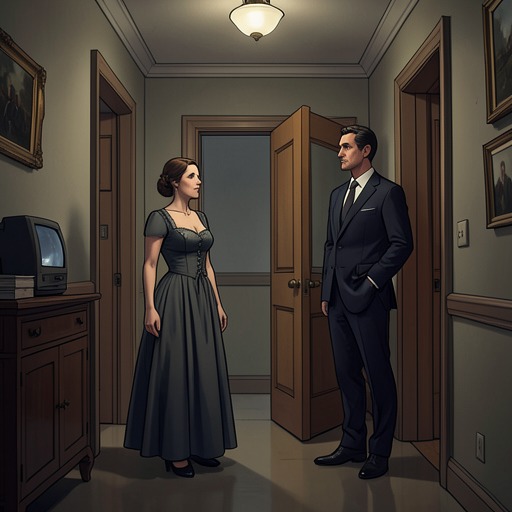
Yoshiko Fujisawa’s relationship makes the abstract debate concrete. She and her boyfriend enjoy studying together and are closely attached, but he wants their relationship to include physical intimacy. He believes that taking this step would make them feel more united and help them understand each other. Yoshiko refuses: she loves him, but intends to remain a virgin until marriage. She tells him that the two things are different and asks him not to treat love as a reason she should change her mind.
Her boyfriend says he has to respect her choice as the way she wants to live. He does not consider a future wife’s virginity essential, and regards mutual understanding between partners as more important. But his comparatively relaxed view does not remove the tension: he still wants a closeness she does not consent to on his timetable. They continue their relationship with affection and limited physical intimacy, while her boundary remains firm. The story gives Yoshiko a clear voice in stating that boundary; the disagreement is not resolved by the narrator’s general account of what young people believed.
Adulthood, separation, and marriage
Their different understandings of adulthood become clearer when the boyfriend proposes marriage after college. Yoshiko is pleased by the proposal but says she cannot marry him. She expects to marry a man a few years older, while he will marry a younger woman; in her view, their sheltered youth and unequal maturity make an immediate marriage unlikely to last. She loves him, she says, but love and the practical demands of marriage are not the same. Her repeated distinction between those ideas becomes a refrain in the relationship.
During a period apart, he tells her that loneliness has intensified his wish for a bond that would reassure him they belong together. Yoshiko again refuses to give him her virginity and asks him not to raise the matter again. When he speaks of engagement, she stresses that marriage involves work, independence, responsibility, and accepting another person into one’s life. The boyfriend understands the principle but is speaking about their own future, not an abstract rule. Yoshiko’s insistence that commitment requires more than love places her sexual boundary within a larger judgment about readiness and responsibility.
In a later conversation, Yoshiko tells him that if they separate, she will remember him as her first love. She then makes a promise that turns their disagreement into a lasting paradox: if he needs her to promise, she will sleep with him someday, but only after she has married someone else. He cannot understand what she means at the time. The narrator interprets the promise as consistent with her determination to remain a virgin until marriage: after marriage, she would no longer be preserving that status, and could imagine an affair with him. The promise therefore offers emotional reassurance without changing the conditions she has set for their relationship.
What the promise means over time
The boyfriend and Yoshiko do not marry. After graduating, he begins work at a trading company, spends part of five years overseas, and hears from his mother that Yoshiko has married. He does not ask whom she married. His first thought is whether she managed to remain a virgin until the wedding; sadness follows, deepening the next day into the sense that a door on his youth has closed. He had been with her for four years and had continued to hope that they might marry. He also remembers her as fragile and hopes she is happy.
The question of virginity thus persists after the relationship itself is over. In his first response to her marriage, he returns to the boundary that once divided them, while the narrator’s wider account places that concern among the era’s varied sexual expectations. The story does not establish whether Yoshiko fulfilled her intention, nor whether the promised affair ever took place. What it does show is how her choice shaped the relationship: it required her boyfriend to confront the difference between his desire for reassurance and her account of what love, sex, and adult responsibility meant. Their history gives the social debate its human scale, while leaving Yoshiko’s later life beyond the narrator’s knowledge.