A haven for the Taltos
Blood CanticleA haven for the Taltos is Lorkyn’s proposed protected community within the hospital compound: a place where Taltos can live, study, work, and be safe without simply being confined as objects of research. Her plan answers the danger of sending the Taltos into the wider world while giving them a degree of self-direction, and it becomes a concrete proposal for protection shaped by the people who would live there.
Definition and Setting
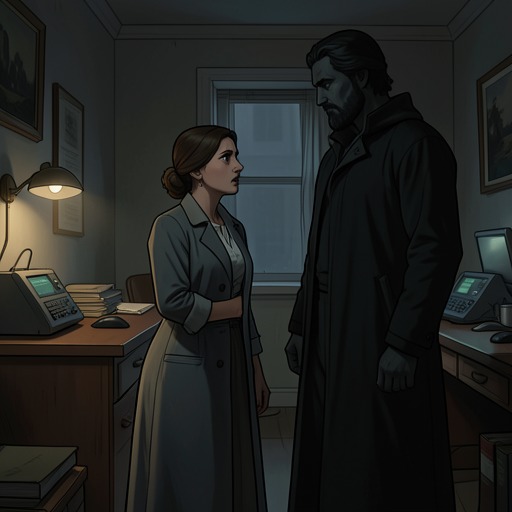
Lorkyn describes the haven as an environment, community, and world in which Taltos can live, function, and thrive. Its setting is not an isolated island or a laboratory: she points to apartments connected to the hospital, ordinarily provided for visiting families of patients. The apartments would let the group live within an established compound while studying and working there.
The proposal does not promise unrestricted movement. The Taltos would not need to leave the compound except to pursue a preordained goal. Lorkyn presents this limit as a way to protect them without conspicuous constraints; the community would be sheltered and supervised, but its members would also have a place to conduct meaningful activity rather than remain in a cage.
Lorkyn’s Plan and Purpose
The proposal grows out of Lorkyn’s own studies and her relationship with Rowan. Lorkyn says she has studied medicine extensively, wants to become a doctor, and has been accepted by Rowan as a pupil. Rowan has seen evidence of her efforts, as have Mona and Lestat; Lorkyn adds that she has also given Rowan oral evidence of her studies. Her place in the proposed community therefore includes a personal educational and professional aim, not only a role as someone to be protected.
Lorkyn sees useful work for Oberon and Miravelle as well. In her account, study, work, safety, and communal life belong together: a protected environment can allow Taltos to develop their capacities while limiting exposure to the dangers outside. Her description reframes protection from simple containment into the conditions for living and functioning as a community.
Debate, Consent, and Practical Limits
Mona initially distrusts the plan. She fears that Rowan will put the Taltos in laboratory cages and questions whether they should trust someone who once rendered Lorkyn unconscious near an aircraft. Lorkyn’s reply distinguishes her proposal from that feared outcome: she is advocating a community and environment, not a collection of research subjects. The disagreement makes the ethical tension explicit. Safety and medical study may support one another, but protection could become confinement if the people protected have no meaningful say in their conditions.
Lorkyn asks Oberon and Miravelle whether they agree that the group needs a haven because they cannot simply go out into the world. Miravelle plainly prefers not to do so. Oberon accepts the need for shelter, but also identifies a concrete reason for remaining at the hospital: the possibility of discovering contraception that would allow Taltos to couple without immediately producing another child. The concern connects the haven to the group’s reproductive circumstances and to the possibility of managing them through study rather than unplanned exposure or enforced separation.
Resources and Significance
Oberon asks whether the group has money from the accounts Lorkyn managed to transfer. Lorkyn answers that they have substantial inherited wealth, discovered by the Mayfair family, and Rowan tells them not to feel beholden. Financial independence matters to the proposal: the Taltos need not understand the refuge as charity that places them under an obligation to those providing it.
The haven thus remains a proposed arrangement, not a completed community with an established record of success. Its significance lies in the terms Lorkyn sets out: a bounded refuge, access to study and work, protection from the outside world, and a measure of autonomy for those who will live there. The plan also leaves an important tension unresolved. Supervision and restricted movement are presented as safeguards, while Mona’s objection warns that the language of protection can conceal institutional control. Oberon’s acceptance and Miravelle’s preference to remain sheltered give the proposal support from within the group, but its promise depends on whether the community can preserve both safety and agency.