Angels
Blood CanticleAngels are an unsettling supernatural presence in Lestat de Lioncourt’s account of the afterlife and his own moral crisis. Their claimed holiness does not reassure him: after confronting divine and sacramental realities, he describes faith as a psychic shock, fears that he remains bound to evil, and questions whether the beings who intervene in mortal affairs are truly beneficent. The uncertainty matters because it leaves spiritual goodness both intensely desired and difficult for him to trust.
Encounters and Uncertainty
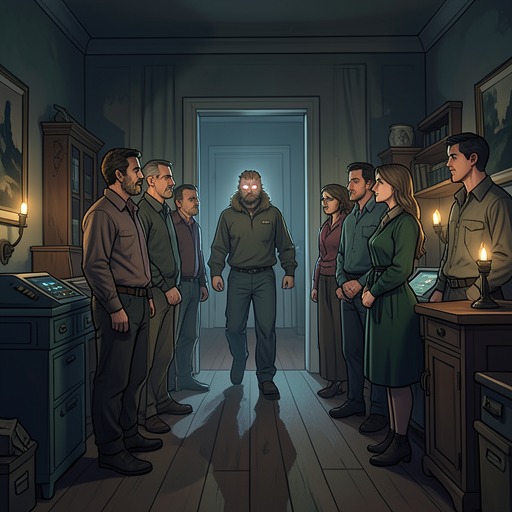
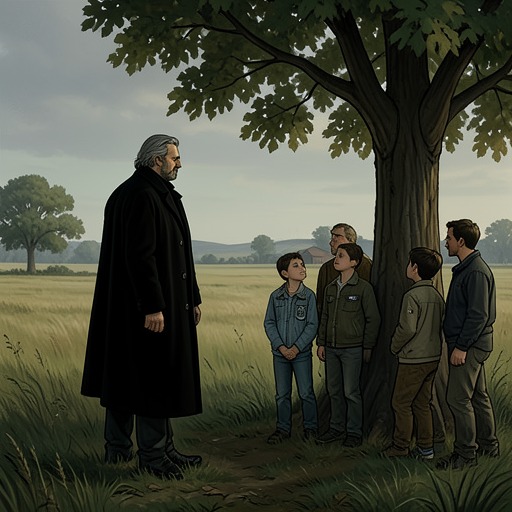
Lestat says that ghosts frighten him and that angels do too, even though he has encountered entities claiming to be angels. Speaking with Michael Curry, he declines to confirm their identity: their claim is all he can report. He also questions the conduct of ghosts and angels, finding something wrong in the way such beings act when they descend to interfere with the living. His doubt is not a simple denial of an afterlife; he explicitly leaves open the possibility that one exists while distrusting the apparent motives or soundness of its visitors.
This hesitation places angels in a different position from the conviction Lestat has about his own condition. He knows himself to be a vampire sustained by blood and considers himself spiritually impure, yet he cannot confidently classify the supernatural beings who appear to him. Their power and religious associations do not, by themselves, establish that their actions are good.
Religious Crisis and the Saintly Ideal
Lestat’s account of confronting the divine and sacramental describes the experience as violence to his psyche rather than a consoling gift of faith. He says that, at intervals, he no longer wants to be evil. The declaration is at once sincere and uneasy: he recognizes the desire for moral change but continues to identify himself with the role of the bad actor.
His fantasy of becoming Saint Lestat gives that conflict a vivid religious form. He imagines himself in the Sistine Chapel, wanting to lie prone as a priest at ordination and to consecrate the host. But he then recognizes that this scene is imagined, and that the public canonization he pictures never occurred. The saintly identity collapses under his awareness that he remains a vampire who has lived by drinking blood for more than two centuries. Angels belong to this crisis not as a settled promise of salvation, but as part of a spiritual realm Lestat has encountered and still cannot interpret securely.
Goodness, Guilt, and the Limits of Judgment
The uncertainty about angels accompanies Lestat’s struggle to assess his own actions. After transforming the gravely ill Mona Mayfair, he is overtaken by contrition and doubts whether anything he does can escape the taint of his dark powers. Yet he also knows that Mona had suffered for years and chose the transformation in search of relief. Her response complicates any easy division between a monstrous act and a merciful one: the change brings her a temporary release from pain, even as it makes her a vampire.
Lestat formulates the theological problem as a question about good rather than evil: the difficulty, he says, is explaining the existence of goodness. His actions later provide a concrete test of that doubt. When he helps Patsy Blackwood’s spirit depart, he wonders whether he has done good, and his encounter with the ghost of Oncle Julien turns the moment into a dispute over pride and moral responsibility. The scene does not settle the status of angels, but it shows why Lestat cannot treat spiritual authority as a substitute for judging what an action does.
Spiritual Motifs and Narrative Significance
Angels recur alongside the Light, ghosts, sacramental imagery, and Lestat’s wish to stop doing evil. These associations make them a measure of his longing for a benevolent order, but his reported encounters resist becoming proof that such an order is readily understood. He can imagine holiness, desire it, and still suspect the entities that claim to represent it.
That tension shapes the narrative’s treatment of faith and moral knowledge. Lestat’s vampire nature does not erase his desire for goodness, while supernatural visitation does not guarantee reliable guidance. Angels remain significant precisely because they occupy that unsettled boundary: they make the possibility of transcendence present, but leave Lestat—and the reader—to weigh the difference between a claim to holiness and an action that is genuinely good.