Big Ramona
Blood CanticleBig Ramona, Jasmine’s grandmother, is a commanding presence in the Blackwood household: she scolds, investigates, interprets the family’s hauntings, and insists on feeding and caring for those around her. Her importance is clearest when she turns a household crisis into an account of the ghosts’ message and the documents hidden in William Blackwood’s desk, then returns, without losing her brisk authority, to the ordinary work of looking after Lestat.
Identity and Presence
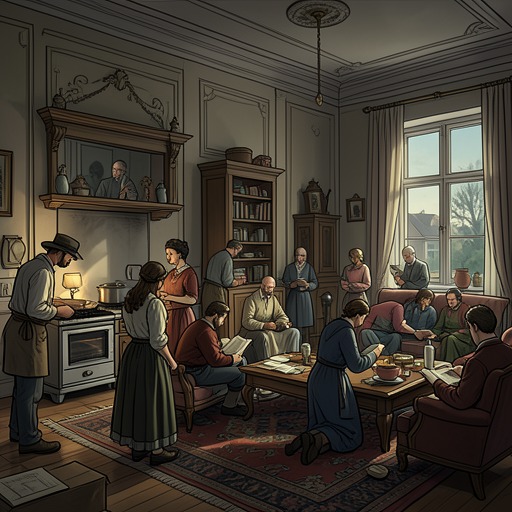
Big Ramona appears among the Blackwood household’s gathered family and staff in a somber wine-colored gabardine dress, an ornate diamond pin at her shoulder, her hair arranged in a twist, and stockings with black shoes. The careful description gives her a composed, formidable appearance; her speech confirms the impression. When Jasmine protests that she can speak, Big Ramona orders her to sit up straight and stop talking like a fool. Her authority is personal and immediate, expressed in commands about posture and conduct rather than in any formal office.
That discipline does not mean she is indifferent to Jasmine. Big Ramona recognizes that Jasmine is distressed and later holds the household’s attention long enough to insist that the story be told in a form relevant to the legal papers. She can rebuke Jasmine one moment and take her testimony seriously the next. Her manner is blunt, but she is attentive to what the family needs to establish and to what its members have experienced.
The Hauntings and the Desk
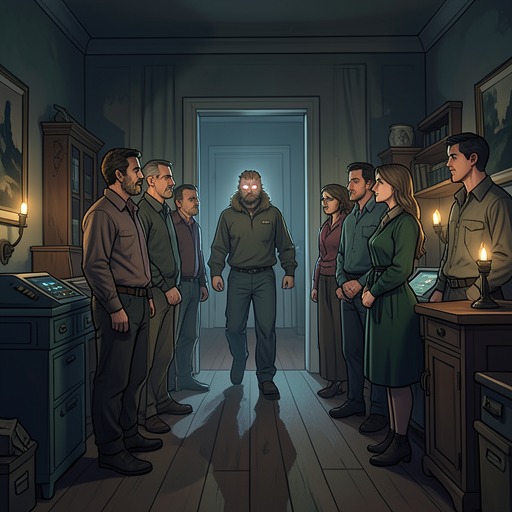
When the family gathers to discuss the discovery of papers, Grady Breen suggests that Big Ramona explain the events because Jasmine is too upset to do so. Big Ramona starts with the recurring ghost of William Blackwood. For years, she says, he appeared in the room and pointed at the French desk between the windows. Quinn had seen him there, as had Jasmine; Big Ramona herself had also seen the apparition. Her response had been to say a Hail Mary, after which the ghost vanished as quickly as a candle flame being pinched out. Each time the desk was opened, however, it seemed to contain nothing, and the family would lock it again, returning its key to a cup in the kitchen.
The pattern changed after Quinn took Mona away and Patsy went missing, leaving her medicine behind. William’s ghost began appearing again, day and night, pointing at the desk. Big Ramona emphasizes that it was no longer an occasional visitation: entering the room was enough to find him there. Jasmine, unable to work and unable to reach Quinn, was troubled by the renewed appearances. Big Ramona says that even her son Clem saw the ghost, strengthening the family’s sense that the repeated summons could no longer be ignored.
The haunting of Jasmine made the threat more immediate. Big Ramona recounts that Patsy appeared outside Jasmine’s bedroom window, soaked in swamp water, calling Jasmine’s name and scratching at the glass with her long, painted fingernails. Jasmine was in bed with her infant son, Jerome; frightened that he would wake, she seized him and ran from the house screaming. Jasmine, still shuddering as the story is told, confirms that the dead woman had come to the window. Big Ramona underscores why the apparition might have sought her out: Jasmine was the only person on the property who had been kind to Patsy. She adds that Cyndy the Nurse had also been kind, but lived far away in Mapleville.
Big Ramona connects these apparitions to the desk rather than treating them as unrelated terrors. Once Jasmine and the others decided they had to search it again, they found the key was no longer in its accustomed place in the kitchen cup. With Quinn absent and no permission to wait for, they summoned Grady Breen because the desk was locked and the matter involved legal documents. The family had to use a knife to force it open. The desk’s repeated emptiness, William’s persistent pointing, and the later disappearance of the key form the chain of circumstances that brings the hidden papers into view.
Family Witness and Interpretation
Big Ramona’s account establishes her as more than an observer of the household’s supernatural disturbances. She has seen William’s ghost herself, knows the family’s habits around the desk, and recognizes that the renewed haunting began after Mona left and Patsy disappeared. She does not present every cause as settled, but she gives the group a concrete chronology: the ghost’s long history, its return, the repeated failed searches, Jasmine’s encounter with Patsy, and the decision to open the desk despite the missing key.
Her own religious response also shapes the way she describes the events. Saying a Hail Mary made William’s ghost disappear, in her experience, but it did not explain why he pointed at the desk or why the apparitions returned. She treats the supernatural as real enough to report and the papers as important enough to involve Grady Breen. Her account therefore holds household belief and practical procedure together: the dead may be directing attention, but the living must still open the desk and handle the legal documents.
Care and Household Authority
After Lestat has helped Patsy’s spirit depart, he asks to be left alone to sleep. Big Ramona supports that request through Jasmine, who tells Quinn and Mona to leave him be and offers to bring him a blanket. Her household authority here protects the exhausted guest rather than keeping him at the center of the family’s attention. Jasmine also reports that Patsy is gone and that she feels the child is no longer lost, turning the conclusion of the haunting into a moment of relief within the household.
Later, Big Ramona comes barreling down the hall in a black cotton uniform and white apron to correct Lestat for failing to offer Stirling Oliver coffee. She will not let the visitor leave without grits, biscuits, scrambled eggs, bacon, and ham, and she insists that Lestat remove his muddy boots before going into Aunt Queen’s room. She has Allen polish them again. The practical details—food on the stove, boots at the door, an instruction not to track mud—give her care its characteristic form: emphatic, specific, and impossible to mistake for ceremony alone.
Big Ramona has been watching for Patsy’s ghost at four o’clock, and she notes with satisfaction that it has not appeared. She also tells Lestat that she dreamed Patsy was in Heaven. The dream and the absence of the apparition offer her a way to understand the night’s outcome, but her attention immediately returns to the present needs of the household. Lestat, now in stockinged feet with his boots neatly set outside the bedroom, recognizes the welcome in her ordinary acts of attention. Through Big Ramona, the haunting narrative ends not only with a spirit’s departure, but with food, rest, polished boots, and the feeling of being at home.