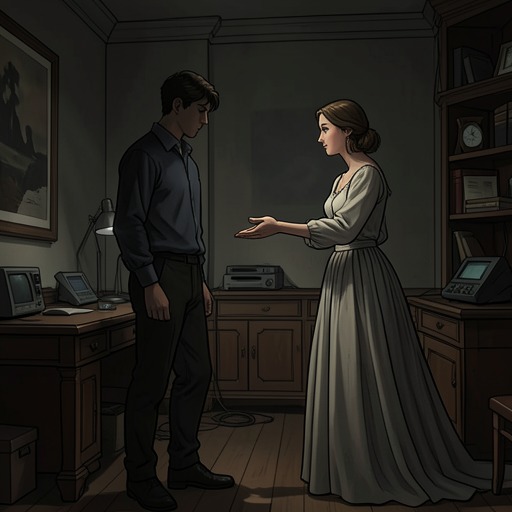
Queen(Aunt Queen)
Blood CanticleQueen, known as Aunt Queen, is Quinn Blackwood’s beloved aunt, a world traveler whose death becomes a defining loss for the people gathered at Blackwood Manor. Her influence persists in Quinn’s grief, in the household’s mourning, and in the account of the fall that killed her: Goblin deliberately startled and pushed her while she was in her stocking feet.
Identity and Place in the Household
Aunt Queen is remembered as a great lady of the household and a companion who shaped Quinn’s life. When the narrative returns to Blackwood Manor after her death, the household is still painfully mourning her. Tommy Blackwood, who had traveled throughout Europe with her for three years, grieves openly; that journey is described as formative for him. The shared loss makes her absence tangible among the people who remain at the house.
A Journey with Quinn
Aunt Queen had insisted that Quinn accompany her on what she called her very last trip. The journey lasted three years, and Quinn returned to find Mona Mayfair isolated at Mayfair Medical Center, beyond his reach. The trip therefore marks a consequential separation: while Quinn was away with his aunt, the life he had shared with Mona changed, and he came home to a painful distance between them.
Death and Its Circumstances
The narrative recalls Aunt Queen’s fondness for striking high-heeled shoes, including a pair she wore when Lestat de Lioncourt first met her. Her death sharply contrasts with that remembered image: she was in bare stocking feet when she fell. The fall was not simply an accident; Goblin had deliberately startled and pushed her. This disclosure connects her death to the supernatural danger surrounding Quinn and makes the household’s continuing grief part of a wider conflict.
Memory and Narrative Significance
Aunt Queen’s characterization is carried through others’ recollections rather than through an extended account of her own actions. Her journey with Quinn helps explain the separation between Quinn and Mona, while Tommy’s mourning shows the depth of her bond with the younger members of the household. The contrast between her remembered glamorous shoes and her stocking feet at the fatal fall gives her death a particular poignancy: an emblem of her distinctive presence is set against the vulnerability of her final moments.