Quinn Blackwood
Blood CanticleQuinn Blackwood is a young vampire whose life is shaped by the persistence of family ties after transformation: he remains a son, father, partner, and heir even as he learns to survive on blood. A seer and dreamer described as kind and drawn to what is loving and uplifting, he is also burdened by Goblin, the ghost that has haunted him since childhood and contributed to the death of his great-aunt Queen. His relationships with Lestat and Mona help him make a life beyond that haunting, while his choices reveal the strain between affection, guilt, and responsibility.
Identity and Background
Quinn was twenty-two when he was baptized in the Blood. The transformation did not free him from Goblin; according to Lestat, the ghost became stronger and more hostile after Quinn became a vampire. Quinn had sought Lestat’s help, and Lestat brought in Merrick Mayfair, a scholar and sorceress who had herself joined the Undead, to resolve the haunting. Merrick identified and removed the spirit, but died in the flames she had prepared for the rite. Her death ended Goblin’s presence, not the grief and family consequences surrounding Quinn.
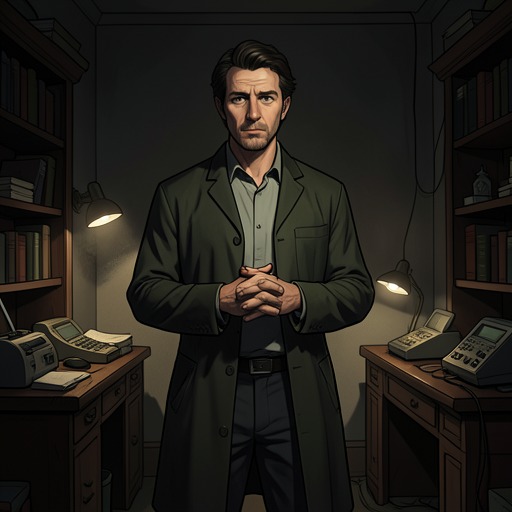
The narrator describes Quinn as a visionary and dreamer, unconsciously charming and unfailingly kind, and as a nocturnal hunter who thrives on the blood of the damned and the company of loving people. Those qualities do not make him free of anger or sorrow. The account stresses both his tenderness and his capacity for hatred, particularly toward his mother, Patsy. That conflict gives his kindness weight: it is a quality he can extend to others even when he cannot reconcile himself to every member of his family.
The Haunting and Its Aftermath
Quinn’s history with Goblin is tied to the death of Queen, his eighty-five-year-old great-aunt. Lestat says the ghost caused Queen to fall, and Merrick’s intervention was intended to end the danger permanently. After her death, Lestat could have left Blackwood Farm, but chose to remain because Quinn was still caught among the mortals in his life and needed support. The end of the haunting therefore does not serve as a simple release; it leaves Quinn coping with bereavement and with the human household around him.
Patsy’s death remains a separate and more painful wound. When Jasmine worries that Patsy has disappeared and asks after her medicines, Quinn tells her plainly that he killed Patsy, that she is dead, and that he disposed of her body in the swamp. He says there is no longer any need to worry about her medicines and goes to fetch Queen’s clothes for Mona. The disclosure joins a practical act of care to an admission of violence: Quinn is trying to make room for Mona in Queen’s household legacy while the fact of his own crime remains present between them.
Later, when Tommy asks whether Quinn killed Patsy, Quinn denies it. He tells the child that he was unkind to Patsy and feels sad that she is gone, but the narration identifies this as a deliberate lie, told out of love for Tommy. Quinn’s hatred of Patsy has not disappeared; the ghost’s continued presence angers him. The lie is therefore not a confession of remorse or a reconciliation with his mother. It is a protective choice shaped by his affection for Tommy and by his wish not to burden the child with the truth.
Mona, Family, and Blackwood Farm
Quinn’s relationship with Mona Mayfair begins under the pressure of separation. After becoming a vampire, he had sworn never to see her again because she was dying and he feared she would recognize what the Blood had done to him. He did not want to contaminate her with the knowledge of his changed existence. Mona nevertheless came to Blackwood Farm of her own free will, arriving from Mayfair Medical Center in a family limousine she had taken from its driver. Her visit overturned Quinn’s attempt to protect her through absence.
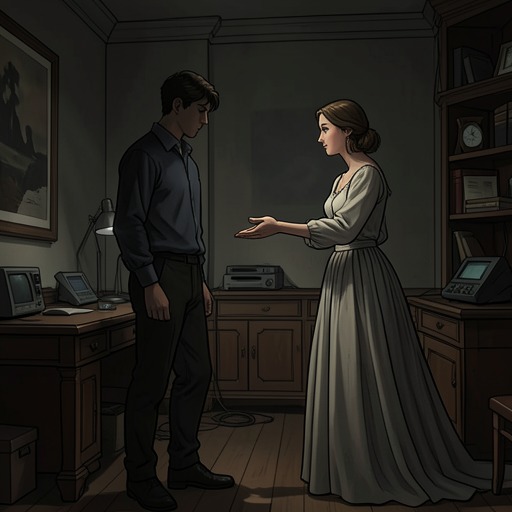
Quinn subsequently describes Mona as his partner and treats her as part of the family life he wants to preserve. He proposes that she become Queen’s heiress to some of the late woman’s belongings: the silk dresses, glittering shoes, and shell cameos Queen had not already given to Jasmine. Quinn reasons that Queen would have wanted Mona to have them if she had known the truth of his transformation and the two of them being together. The inheritance is modest in scale but emotionally significant: it gives Mona a place in the household’s continuing story and imagines Queen’s affection reaching her through the things she left behind.
Mona also becomes a mother to Quinn’s daughter, Morrigan. The narrator later recalls Quinn’s fulfillment in Mona as something finer than blood lust. Their bond does not erase their losses, but it gives Quinn a shared future and a family relation beyond the old conflicts at Blackwood Farm.
After Queen’s death, Quinn worries about who will provide the household with a continuing Blackwood presence. He recognizes that Jasmine and Big Ramona can manage the estate, host its gatherings, and care for its daily needs; they have both the ability and financial independence to leave. His concern is not that they are incapable, but that they want Blackwood Farm to remain their home and feel insecure without a member of the Blackwood family present. The question makes his responsibility broader than personal grief: he is considering what his absence would mean to the people who sustain the place.
Relationships and Change
Lestat’s attachment to Quinn is unusually intimate but not possessive. Lestat remembers meeting him beneath an oak near the cemetery after Quinn had killed Patsy and giving him his blood to drink. He describes the exchange as a sad and thrilling conveyance of power, and recalls seeing a trusting, complex person altered by the Dark Trick into a bold survivor determined to understand what had happened. Lestat’s love for Quinn is presented as generous rather than exclusive: he can rejoice in Quinn’s fulfillment with Mona without demanding that Quinn belong to him.
Quinn is uneasy when people who know he is a vampire gather with mortals who know the truth. He has rarely been in such company; before that meeting, the only person in his experience who knew what he was was Stirling. He also senses an old presence in the back house and dislikes it. His discomfort registers how newly exposed he remains, even after his transformation, and how little familiarity he has with a life in which his nature is openly known.
His role in the family changes as he accepts that the past cannot simply be hidden or undone. He has to live with the death of Queen, the truth about Patsy, and the responsibilities of his relationship with Mona and his children. Yet the story also gives him practical, forward-looking acts: he considers how to honor Queen’s wishes, tries to protect Tommy from a truth the child is not ready to bear, and worries about the people who call Blackwood Farm home.
Later Direction and Significance
Quinn and Mona are invited to spend time with Maharet among the immortals, visiting her archives and meeting others who come and go there. Maharet believes the retreat may give them perspective on their gifts and their future, and help insulate them from the shocks of remaining too deeply embedded in mortal life. She is concerned that Mona does not understand the full sacramental power of the Blood and notes that Quinn, who was transformed against his will, does not understand it either. Their invitation thus marks neither a rejection of their mortal connections nor a completed acceptance of vampirism, but an opportunity to learn what their new existence entails.
Quinn’s arc holds together several forms of inheritance: the Blood passed to him by Lestat, Queen’s belongings and household legacy, the harm of his relationship with Patsy, and the family he builds with Mona. His transformation is described as a theft that left a survivor determined to make sense of what happened. By the end of the account, that effort has not resolved every conflict, but it has become creative rather than merely defensive: through love for Mona and care for those around him, Quinn makes a future from a life he did not choose.