Rowan and Lestat loved each other but delayed their union
Blood CanticleRowan Mayfair and Lestat’s love reaches an intimate turning point beneath the oak at Blackwood Farm, yet ends not in union but in a promise to wait. Rowan asks for a life with Lestat and the Blood; he loves her, but refuses to make that choice for her while her work, family, and Michael Curry remain bound up in the life she has made. Their parting makes restraint—not consummation—the decisive proof of their attachment.
The confession beneath the oak
Rowan comes to Lestat beneath the oak in her white medical coat, and he embraces her as she rises to meet him. Their closeness brings the relationship into the open, but the scene’s focus is not simply on mutual desire: Rowan explains that she has repeatedly tried to reason herself away from him, invoking moral arguments and the responsibilities that fill her days, while recognizing that her longing has endured. She wants Lestat himself, including the Blood, and describes her love as a force that has unsettled the ambitions and plans that once organized her life.
Her confession does not erase her other attachments. Rowan says that she still loves Michael and will always do so, but believes that love requires her to set him free. She sees their shared life as shaped by grief over what might have been after they were both harmed by forces beyond their control. Her desire for Lestat therefore emerges alongside, rather than in place of, her marriage and its history. The scene gives her competing loyalties room to remain real at the same time.
The life Rowan would have to leave
Lestat listens to Rowan’s appeal but answers it with questions about what leaving would mean. He asks whether she can walk away from the people who rely on her, including those looking to her for a future they cannot yet imagine, and whether the work at Mayfair Medical Center can reach its full potential without her guidance. His challenge is concrete: Rowan has plans not yet recorded, and the Medical Center could grow to twice or even three times its size under her direction. He also asks whether Lorkyn Mayfair, Oberon, and Miravelle can flourish if Rowan is no longer present to guide their care and work.
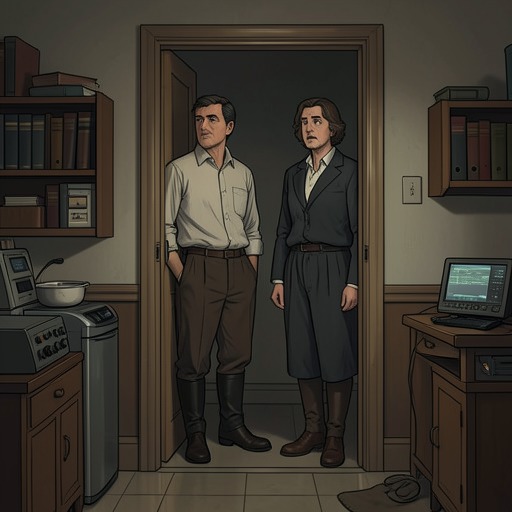
Those obligations have been made visible in Rowan’s recent conduct. At Mayfair Medical Center, she has worked to the point of exhaustion, and Michael describes that vocation as both a commitment and an escape from an inner life that has come apart. After a night in which she would not speak, dress, or eat, he found her barefoot in the back garden, digging beneath the oak where the remains of Emaleth and Lasher had been. The earlier wound of that history remains part of the life Lestat is asking her to leave, just as the hospital and its dependents remain part of the life he insists she must reckon with.
Lestat’s concern for Rowan also connects to the unresolved history of Mona Mayfair. When Rowan tells him that she had nearly used her power to kill Mona in the hospital, he acknowledges that Mona had wanted to come to Quinn instead. Rowan was frightened by the knowledge that she could have caused a stroke and by Mona’s awareness of that danger. Lestat’s later insistence that Rowan return to her own life thus comes against a background of illness, family trauma, and a crisis in which Rowan’s power nearly became lethal—not merely against a rival claim on her affection.
A choice deferred, not denied
Rowan asks Lestat to let her fall into eternity, saying that she is tired. He does not treat exhaustion as a sufficient reason to abandon everything she has built, or as permission for him to decide her future. He tells her that she must make the sacrifice herself by stepping back from the brink and returning to her responsibilities. When he says that the time is not right, he distinguishes postponement from rejection: Rowan has not lost what he can give her, but she cannot receive it now.
His refusal is sharpened by the fact that he wants the life she proposes. He admits that he has never wanted anything so much and that he would gladly slip away with her from the people who could divide them. But he argues that Rowan’s human life cannot be disregarded: she has made it significant through the work and commitment she has given it. The scene therefore turns on a conflict between desire and responsibility, rather than on uncertainty about whether the love is shared.
Parting and promise
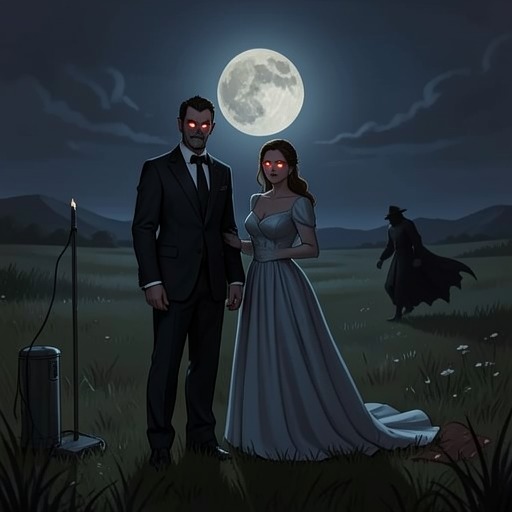
As dawn approaches, Lestat reminds Rowan that daylight is his mortal enemy and that he cannot stay to watch the sunrise with her. Before leaving, he promises that he will continue to guard her, though at times he may be beyond her reach, and that he will come when she can genuinely draw back from her existing life. He promises that the Dark Gift will be hers and tells her that he belongs to her. Rowan leaves by the front drive; Lestat returns to his room, unhappy and briefly astonished by his own restraint.
The promise gives the separation its shape: Rowan returns to her life rather than becoming Lestat’s vampire companion, while Lestat accepts the delay without withdrawing his love. Their relationship remains unresolved, but not suspended in a simple lack of choice. Rowan has confessed what she wants; Lestat has named the costs he believes she must confront; and both leave the possibility of a future transformation open. The event makes his decision to let her go, for now, the measure of his attachment.