Taltos mother's milk
Blood CanticleTaltos mother's milk is the necessary nourishment through which a Taltos infant reaches its full stature, but it is also described as a possible cure for human illness. That double significance makes the milk more than a biological detail: it joins the demands of Taltos development to the human desire to turn unfamiliar life into medical benefit, while the story’s births and losses expose the cost borne by mothers and children.
Definition and biological role
Rowan explains that a Taltos infant craves its mother’s milk in order to grow and cannot develop properly without it. The first hour after birth is decisive: without the milk, the infant risks being stunted for life; with it, together with the mother’s full telepathic nurture, the baby reaches its full height within that hour. Rowan gives six and a half feet as the usual adult height and says males may reach seven feet. Nursing may continue for weeks, months, or years, and Rowan stresses that this extended dependence exacts a heavy toll on the mother.
Milk therefore signifies more than ordinary feeding. It is bound to a narrow developmental window, sustained maternal care, and the extraordinary speed with which a Taltos infant grows. The infant’s need is not presented as something that can simply be separated from its mother: nourishment and telepathic nurture work together, making the relationship itself part of the process of development.
A medical promise and its ethical pressure
Rowan says the milk has curative properties and can work a cure in humans, while also acknowledging that nobody knows what it might ultimately do. Its potential is thus substantial but unresolved: the narrative establishes the prospect of healing without claiming a complete account of its effects. That uncertainty places the milk at the intersection of care and research, where a possible medical benefit can invite scrutiny of a species whose needs and vulnerabilities are not yet understood.
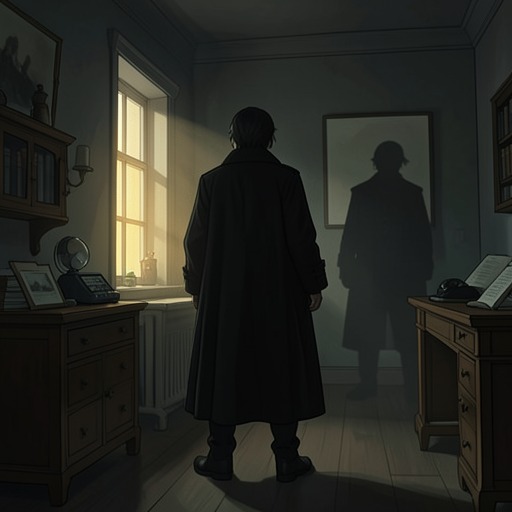
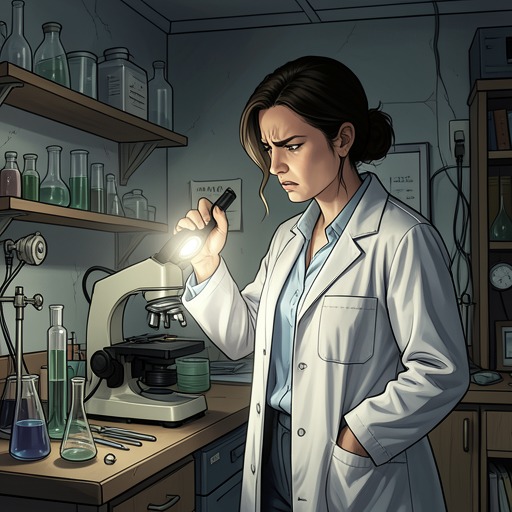
Mona gives that prospect a personal history. During her long illness, she imagined that her daughter might be somewhere in Mayfair Medical, confined in the building, and that Rowan might be testing what Taltos flesh, breast milk, or blood could do for human beings. Mona calls this a fantasy, not an established account of what Rowan did. She recalls Rowan making her drink medicines and imagined that her daughter’s milk had been mixed into them. The distinction matters: the fear is not proof of an experiment, but it shows how the possibility of medical use becomes entangled with Mona’s experience of illness, dependence, and uncertainty about her child.
Even after recognizing that her imagined scenario was not fact, Mona connects the milk and the Taltos mystery to the questions she still needs answered. She wants to learn the truth from Rowan and find her daughter herself. The milk’s medical promise therefore does not resolve the family’s crisis; it sharpens the need to know what happened and who has the authority to decide how Taltos bodies may be used.
Birth, loss, and conflicting needs
The story places the rule of maternal nourishment beside a devastating exception. Rowan recounts waking to discover that she had given birth to a Taltos daughter and was nursing from her. Horrified and disoriented by what she saw, Rowan killed the child. The episode makes the milk’s role inseparable from the mother’s encounter with a radically unfamiliar infant: the same nursing that sustains Taltos development is experienced by Rowan as an event she cannot bear, ending the possibility of the daughter’s growth.
Mona’s account of her own illness carries a different but related weight. She was dangerously wasted, and her sickness followed a traumatic birth that remained unclear even to Lestat. She describes years in which dying seemed to have become the central obligation of her life, and recalls how others spoke to her as someone whose former beauty belonged to the past. Against that history, her wish for even one hour of wholeness and relief from pain explains why questions about her daughter and the milk’s curative potential are not merely scientific speculations. They arise within a life marked by prolonged treatment, suffering, and the loss of a child.
Narrative significance
Taltos mother's milk gathers the novel’s competing meanings of bodily difference into one substance. It is necessary to a child’s growth, costly to the mother, and potentially valuable to human medicine; these meanings do not neatly coincide. The milk invites hope for cures, but the story also shows how medical curiosity can be experienced as confinement and how the language of benefit can obscure the dependence and agency of the beings under study.
The theme extends beyond speculation about Mayfair Medical. Lorkyn later describes a protected Taltos community where its members could live, work, and thrive, and where medical study could continue. His vision presents study and protection as compatible aims, but it leaves the milk’s central question intact: whether knowledge of Taltos biology can be pursued without reducing Taltos lives to resources. The milk’s significance lies in that unresolved tension between healing and appropriation, maternal care and biological demand, and the promise of understanding and the risk of treating another life as an instrument.