The Mad Scientist
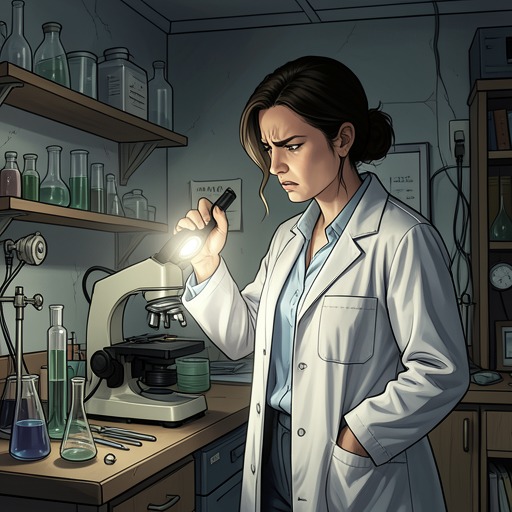
Blood Canticle“The Mad Scientist” is a recurring label for Rowan Mayfair, but it names more than scientific ambition: it condenses the fear that her formidable medical authority and her hidden knowledge of the supernatural may be inseparable. Rowan invokes the figure as a danger she must resist, while the people closest to her use it to describe the secrets and power that divide them. Against that dark image stands Mayfair Medical Center, the vast institution she built to keep herself committed to work that serves ordinary patients.
The Label and Rowan’s Authority
The expression enters a conflict over who gets to define Rowan. Mona associates the Mad Scientist with the doctor who held the keys to magic and kept secrets from her, while also controlling her medications during years in a hospital. From Mona’s perspective, Rowan’s care is entangled with unequal access to knowledge: she could make decisions about treatment without telling Mona what was happening. The title thus carries an accusation of paternalism as well as a fear of occult power.
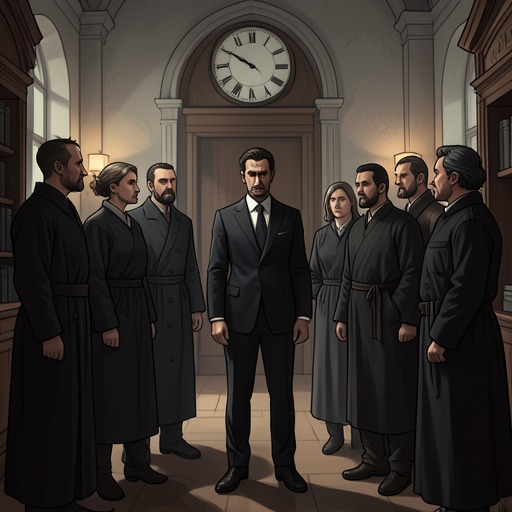
Michael’s account reveals a different but related strain. He says Rowan could not accept his understanding of the events surrounding the excavation, including his insistence that the remains were cartilage of an exceptionally elastic species and that the site was not a crime scene. In his telling, Rowan spoke of retiring into the Talamasca as though it were a convent and imagined that the Order might take in the Mad Scientist. He understands her wish to leave as evidence that she does not believe in his capacity to understand or forgive her; in his words, she still regards him as a moral child. The label becomes part of a struggle over whether Rowan can be known and judged by those closest to her.
Mayfair Medical as an Answer
Rowan gives the phrase its clearest personal meaning when she explains why she built Mayfair Medical Center. She says she did not build it in order to become the Mad Scientist. Instead, she created an immense medical institution to commit herself to being good and to prevent her from slipping into madness. Its work demanded contracts, blueprints, recruitment, and visits to Switzerland and Vienna to interview physicians for a center intended to surpass others in equipment, laboratories, staff, comforts, protocols, and projects.
That project also gave Rowan a way to remain among people whose lives did not revolve around the extraordinary. She lists patients and workers who had never given birth to Taltos, seen ghosts, buried bodies in a Savage Garden, or encountered Blood Children. Mayfair Medical could help them; its reality to them mattered because it kept her attached to a shared, ordinary world. She describes personal responsibility toward interns, residents, laboratory assistants, and research teams, and insists that she could not be absent or fail them. The institution is therefore both a major achievement and a deliberate counterweight to the private history she fears will consume her.
The Secrets Behind the Persona
Rowan’s fear is rooted in events she cannot reduce to professional identity. She recalls the birth of a child that was partly Taltos and partly human, conceived with Michael and, as she understands it, fitting Lasher’s design. At about five months in the womb, the child was transformed at birth by Lasher’s force into a rapidly growing infant male. Rowan remembers her scientific knowledge as implicated in the event: she says the Mad Scientist knew the circuitry and cells and knew how to guide the monstrous offspring. The phrase is troubling precisely because it joins scientific competence to a supernatural birth she could neither make ordinary nor forget.
Her knowledge also reaches beyond the birth itself. Rowan explains that Taltos depend on their mother’s milk to develop properly, and that the milk has curative properties capable of working a cure in humans. She admits that no one knows what it might do. The disclosure connects medical curiosity, the Taltos’ needs, and the prospect of treatment, while leaving the limits of that knowledge unresolved. In this context, Mad Scientist names not simply a person who pursues knowledge, but the danger of knowledge gained under extraordinary circumstances and carried into a medical world with real responsibilities.
A Life Divided Between Worlds
Rowan describes her commitment to the medical center as a defense against a shadow world of dreams about Taltos and strange beings she had seen and lost. She says that after the center’s plan was under way, she could not afford to descend into madness; work, institutional responsibilities, and care for patients held her to the sane world. Yet the effort does not erase what she fears. As she explains this purpose, she breaks down, closing her eyes and making a fist on the table. The gesture exposes the cost of the boundary she has tried to maintain: the institution can organize her days, but it cannot settle the history that gives the Mad Scientist its force.
The label also illuminates Mona’s experience of illness and dependence. After years as an invalid, Mona says she moved from childhood directly into being sick, without knowing what it meant to be a mortal woman. When Lestat turns her into a vampire, she chooses the transformation after a long period of suffering and says she wants it. Later she acknowledges that her resentment toward Lestat was shaped by the thought that he loved Rowan, and that she may have wanted to reveal herself as a woman too. These episodes do not establish that Rowan caused Mona’s illness, but they clarify why Rowan’s role as doctor and keeper of knowledge remains charged: medical authority stands within a family history where care, secrecy, and extraordinary change overlap.
The Label’s Reversal
Mona later challenges the idea that protection must mean confinement. When Lorkyn describes a protected community where Taltos can live, work, and thrive, Mona objects that Rowan might instead study them or place them in cages. Lorkyn answers that she wants to continue her medical studies and become a doctor, and says Rowan has accepted her as a pupil. She presents the community as a place for fruitful work, protection, and peace, with room for Oberon and Miravelle as well. Rowan’s medical authority can therefore also support another person’s education and the possibility of a protected life.
The expression remains deliberately unsettled. Rowan uses the Mad Scientist as a figure of what she must not become, Michael hears it in her wish to withdraw from a world he believes she cannot trust him to understand, and Mona remembers a doctor whose control of information shaped her experience of care. Yet Rowan’s medical center serves people beyond the supernatural family, and her acceptance of Lorkyn as a pupil offers a different consequence of that authority. The phrase holds these competing meanings together: achievement and fear, treatment and secrecy, a commitment to ordinary human needs and the extraordinary history Rowan cannot leave behind.