Totality of Salvation
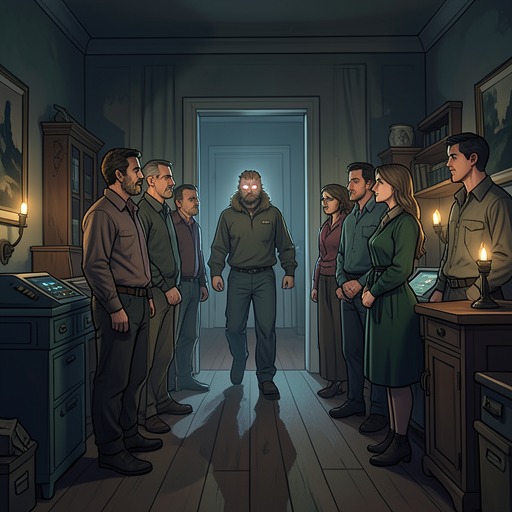
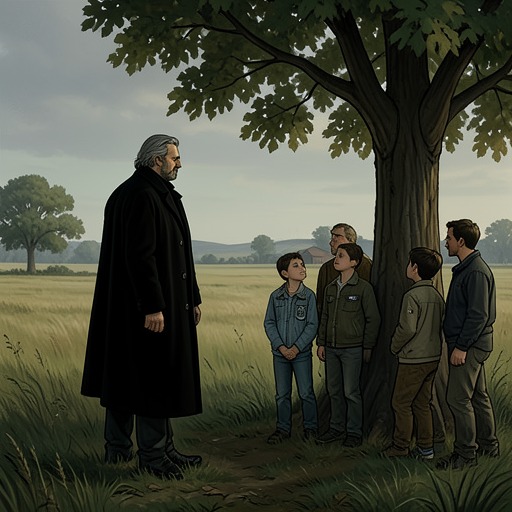
Blood CanticleTotality of Salvation is Lestat’s name for the heavenly knowledge that ghosts may leave behind when they return to Earth on an errand. The idea gives him a way to explain why a haunting is not automatically a full revelation of the divine, while underscoring a persistent uncertainty in the novel: supernatural contact may offer a glimpse of salvation without making its nature fully knowable.
The Idea and Its Limits
Michael proposes that ghosts leave behind the totality of salvation when they come on an errand. Lestat immediately recognizes the implication: if a ghost retained the whole of heavenly knowledge during every earthly appearance, each haunting would become a theophany. He responds with delight at the explanation, treating it as an insight that makes sense of the limits of contact between the living and the dead.
The idea is not presented as a confirmed rule spoken by a ghost. Michael offers it as his own account, and Lestat adopts it as a compelling possibility. He wonders whether Oncle Julien, when Lestat encountered him, knew anything about the Totality of Salvation. Lestat’s own imagined descent to Earth as Saint Lestat supplies a parallel: he believes he, too, had to leave behind some heavenly knowledge. The concept thus links the limitations of ghostly appearances to Lestat’s uncertain experience of a spiritual realm.
Ghosts, Memory, and the Unseen
The discussion takes place amid questions about what ghosts are able to communicate and why they appear. Rowan says that the dead people she saw, including her parents, seemed to be waiting to take her across, but they would not speak to her; Father Kevin had told her that it was not yet her time. Her account makes the encounter with the dead a threshold experience rather than a complete disclosure of what lies beyond it.
Michael does not regard the concept as grounds for trusting every ghost. He says that Oncle Julien tries to do good and has the family’s welfare in mind when he appears, but his unfinished thought leaves open whether good intentions are sufficient. Lestat’s questions about Julien likewise combine suspicion with recognition that the ghost may act on behalf of the family. The Totality of Salvation offers a possible explanation for what a ghost cannot bring back from the beyond; it does not guarantee that every message, motive, or appearance is benevolent.
Salvation and Lestat’s Moral Conflict
Lestat’s reflections on salvation are inseparable from his struggle to understand himself as a vampire. In the Sistine Chapel, he imagines wanting to become a priest, consecrate the host, and do no evil. The fantasy then collapses: he recognizes that he is a vampire who lives by blood and considers himself ritually impure. His yearning for holiness therefore coexists with a self-image shaped by guilt, not with any certainty that he can act as a saint.
That conflict returns when Lestat thinks about the difference between good and evil. He argues that the harder theological problem may be explaining the existence of good, rather than explaining evil. The Totality of Salvation belongs to this unresolved inquiry: it names a possible limit on what can be known through supernatural encounters, but it does not resolve Lestat’s doubts about whether his own actions can genuinely be good.
Patsy and the Passage into the Light
The concept gains emotional force when Lestat helps Patsy’s spirit depart. He tells her that the Light wants her and appeals to the songs she leaves behind, while Quinn vows to give those songs lasting life. Lestat then feels a connection as Patsy begins to rise and believes that, through a kiss, he sends a force into her that carries her away. Mona cries out for Patsy to go into the Light. The scene presents passage into salvation as an act of care and connection, but not as something Lestat can explain with certainty.
Afterward, Lestat cannot say exactly what happened. He allows that some force may have wanted to take him with Patsy because they were connected as she rose. He says that he sometimes sees angels, finds the experience frightening, and does not want to revisit it; what matters to him is that Patsy has gone on. Quinn says he saw the Light but did not see Patsy’s spirit, while another witness says she saw the Light and heard Lestat cursing in French and calling out to Oncle Julien. Their different accounts preserve the scene’s ambiguity: the Light is witnessed, but the mechanics of Patsy’s passage and Lestat’s connection to it remain uncertain.
Narrative Significance
Totality of Salvation brings together three distinct questions: what ghosts can carry between worlds, whether their appearances can be trusted, and whether a being who regards himself as morally compromised can help another soul. The phrase first functions as a theory about why a haunting does not reveal everything. In the episode with Patsy, the boundary between the earthly and the heavenly becomes an immediate personal risk for Lestat, yet the outcome he values is clear to him: Patsy is gone on.
The novel keeps certainty and uncertainty side by side. Lestat understands the Light as a destination and believes his action helped Patsy reach it, but he cannot fully explain what he saw or felt. The concept therefore does not turn salvation into a system he controls; instead, it marks the limit of his knowledge while giving shape to his hope that a vampire’s actions can, at least sometimes, serve the good.