Vampirism (Undeath)
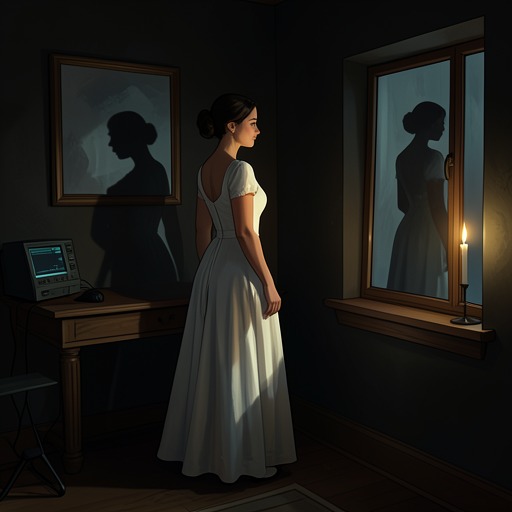
Blood CanticleVampirism (Undeath) is the condition of being among the Undead: an existence sustained by blood, freed from ordinary mortality, and confined by a vulnerability to daylight. The Dark Trick can preserve a dying person and transform the body, but the story refuses to treat that power as an uncomplicated miracle. Through Lestat’s self-accusation and Mona’s transformation, immortality becomes both a reprieve from suffering and an ethically troubling bond to earthly existence.
Nature and Conditions
Lestat describes the vampire’s condition through two defining enemies: daylight, which leaves him lifeless and vulnerable to the sun’s burning rays, and conscience. He calls himself an inhabitant of eternal night and a blood seeker, giving the state both a physical limit and an inward burden. The dependence on blood is not incidental to his identity: he understands himself as living by the blood of others, and regards that dependence as ritual impurity.
The condition also entails an estrangement from ordinary human measures of time and bodily decline. Lestat presents himself as more than two centuries old while fixed in the form of a young man; death, disease, and time no longer operate on him as they do on mortals. Yet this freedom does not amount to invulnerability. Daylight remains a decisive danger, while conscience makes continued existence a source of moral distress rather than simple triumph.
The Dark Trick and Physical Transformation
The Dark Trick is the means by which Lestat makes another person Undead. Its power is demonstrated in his memory of transforming his mother: about two centuries earlier, in a bedroom on the Île Saint-Louis, the Dark Blood restored her from the effects of old age and consumption. Lestat had acted for the first time as a postulant, driven by love and fear, before he even knew the transformation’s name. The memory establishes the Dark Trick as a power that can reverse bodily decline, while also linking its use to intimate obligation and uncertainty.
Mona’s condition makes that possibility urgent. At Blackwood Manor, Lestat sees that she is near death after prolonged illness: her kidneys have failed, her heart is faltering, and she cannot draw a full breath. He believes the Dark Trick can reverse the damage and make her one of the Undead. The choice, however, comes after years of hospital treatment and suffering, when Mona has only begun to grasp what is being offered. Her consent is expressed in a brief affirmation, while Quinn pleads for Lestat to save her. The scene presents the transformation as a decision made under the pressure of imminent death, not as a choice detached from circumstance.
Mona’s Transformation and Its Cost
Lestat explains that Mona can choose the Light on another night, but recognizes how little room illness has left her to imagine a future. She has endured years of needles, medication, fever, pain, and hospital confinement; what she hopes for first is not an abstract eternity but a single hour of wholeness and pain-free breathing. Lestat’s account makes the appeal of vampirism concrete: it answers the immediate bodily misery that has consumed her life.
After the transformation, Lestat questions whether Mona was capable of consenting in a meaningful sense. He concludes that she had not truly consented and thinks of his act as having murdered her soul: he has bound her to Earth as the vampires are bound. The consequence is not only that Mona must learn the unfamiliar state into which she has been brought; Lestat believes he must also help her become the vampire he glimpsed in a dream. He fears that when she understands what has happened, she may lose her sanity. The transformation thus carries forward an unresolved tension between rescue and imposition: it ends the bodily suffering that threatened Mona’s life, while leaving her with a new existence she has not yet fully comprehended.
Learning to Live as Undead
Lestat tells Mona that she is born to darkness and encourages her to experience the changed sensations of her new state. He contrasts her past pain with the present possibility that it cannot return, but his instruction also underscores her vulnerability: she is newly transformed and must learn what her body and perceptions now mean. Immortality is not presented as an effortless arrival at freedom. It requires adaptation, and Lestat takes responsibility for guiding her through that transition even as he remains troubled by the way it began.
The effect of the Dark Trick appears in sharp contrast to the human limits exposed by Mona’s illness. She had spent years among treatments that did not cure her, yet vampiric transformation promises the end of that bodily decline. The contrast does not erase the ethical problem; it intensifies it. The very circumstance that makes the transformation merciful—the imminence of death and the prospect of relief—also makes it difficult to separate Mona’s expressed wish from the desperation created by her suffering.
Moral and Narrative Significance
Lestat’s account places the vampire’s power under the pressure of conscience. He has lived by blood for over two centuries, but the prospect of using that power to save Mona does not settle the question of whether he has done good. His reflections on evil turn the state of undeath into a problem of moral interpretation: supernatural power can preserve life, yet its use does not automatically make its possessor benevolent or its consequences justifiable.
That conflict extends beyond Mona. At Blackwood Farm, Lestat mourns Merrick Mayfair, who had been among the Undead for only a few years before sacrificing herself to destroy Goblin. Lestat tries to retrieve her from the fire and pours his blood over her remains, but cannot revive her; her soul has departed. The episode marks a limit to vampiric power and distinguishes transformation or blood from the ability to reverse every death. In another reflection, Lestat challenges the assumption that the central theological problem is explaining evil, proposing instead that the difficulty is explaining the existence of good. His uncertainty keeps vampirism from becoming a simple moral category: the condition supplies power and endurance, but neither guarantees goodness nor resolves the responsibility that comes with choosing how that power is used.