
Pressure on a Shrinking Force
Blow OutThis flow traces how reduced police capacity shapes the investigation’s pace, priorities, and emotional burden.
increasing Bearing strength in each event
 decreasing
Bearing strength in each eventdecreasingA Team Short on People

A Team Short on People
An emptying incident room
Nexus House has many empty desks. Helen Gates explains that budget cuts and post-attack redeployments have drawn detectives away from ordinary major crime work.
The team must handle a high-priority murder with fewer officers than the work demands. Every new line of enquiry competes for already limited time.
The cost of capacity
Gordon Holmes warns that shrinking CID recruitment will leave fewer investigators to pursue serious offenders. His pessimism reflects a structural problem rather than a lack of commitment.
Joanne inherits the case in a force that is expected to deliver more with less.
A Race Against Several Clocks
A Race Against Several Clocks
Too many interviews
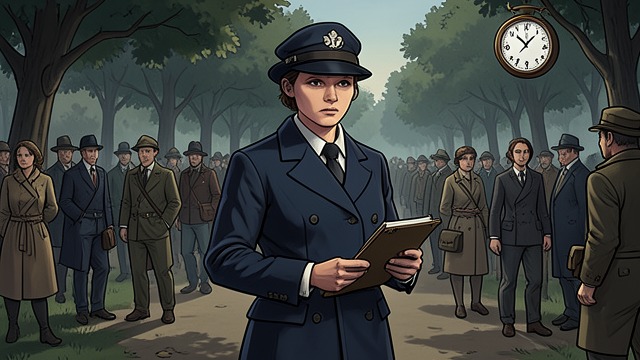
Hundreds of people may have been at Worsley Golf Course, while witnesses, workers, CCTV owners, and potential suspects all require follow-up. Teams also need to search the woods and protect the crime scene.
Joanne cannot interview everyone at once. She assigns parallel work and depends on analysts to turn raw information into priorities.
Urgency without a golden hour
The murder is already days old, so the usual first-hours advantage is gone. A new attack or gang retaliation could nevertheless occur at any moment.
The force must distinguish chronological urgency from operational capacity: everything matters, but not everything can be done immediately.
Remote Expertise, Local Shortages

Remote Expertise, Local Shortages
Specialist support is scarce
Joanne draws on the National Crime Agency, the Anti-Kidnap and Extortion Unit, and Porton Down because the local team lacks some specialist capabilities.
Each request requires coordination, authorisation, transport, or a careful handover. The resource may exist somewhere in government without being immediately accessible to the people facing the emergency.
A chain of dependencies
The pellet must travel by motorcycle relay to reach the laboratory. The ricin antidote must be located and delivered before a victim’s treatment window closes.
The delays expose the distance between specialist knowledge and practical use. Lives depend on getting through institutional processes quickly enough.
Exhaustion Becomes a Risk

Exhaustion Becomes a Risk
Long shifts accumulate
Joanne works overnight and then travels between Manchester, Merseyside, and Yorkshire. Nick, Carly, and the wider team also stretch their shifts to cover the widening inquiry.
Food, sleep, and ordinary phone calls become difficult to fit into the day. The investigation risks impairing the judgment it depends on.
Small acts of care
Nick sends officers home when they are too tired to drive and makes sure Joanne eats. Carly brings coffee and food during long trips.
Such gestures do not solve the staffing shortage, but they help prevent the team from treating exhaustion as a badge of honour.
Command Must Do More with Less
Command Must Do More with Less
A complex response mobilised
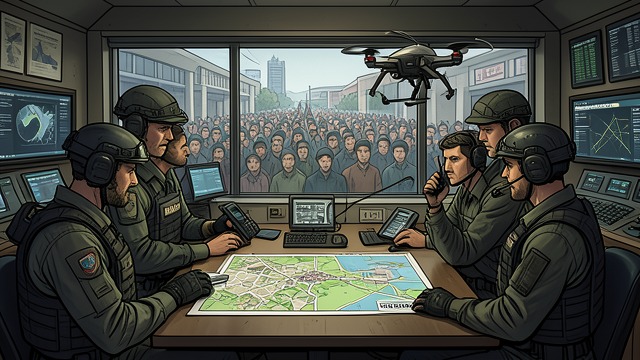
The Trafford Centre operation brings together police command, security staff, firearms officers, medical responders, and drone support. The scale is impressive, but every unit has other calls and limits.
A missing officer, a delayed firearms team, or an unnecessary evacuation could change the outcome. Commanders must use available resources without allowing visible force to create new hazards.
The human cost remains
The operation rescues Françoise but ends with Darren’s death. Afterwards, investigators must support an inquiry and continue work on the unresolved kidnapping.
The system can mobilise rapidly at a climax, yet it cannot undo the accumulated pressure that made ordinary investigation difficult.
Monday, October 16
Tuesday, October 17
Tuesday and Thursday, October 17–19
October 17–21
Sunday, October 22
