
Seeing and Being Seen
Blow OutThis flow explores the novel’s recurring tension between surveillance as protection and surveillance as a means of control.
increasing Bearing strength in each event
 decreasing
Bearing strength in each eventdecreasingA Golf Course in Plain Sight
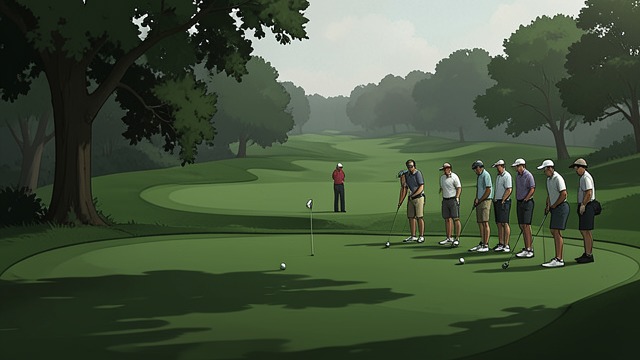
A Golf Course in Plain Sight
The attacker watches
Ronnie plays golf in a public setting where many people can observe him without appearing unusual. The shooter uses cover, distance, and the group’s attention to the ball.
The attack succeeds because visibility is not the same as recognition. People may be present and still fail to notice the one detail that matters.
A routine becomes vulnerable
Ronnie’s schedule is either known or carefully anticipated. The course gives the attacker a predictable moment and multiple routes away.
The setting turns ordinary leisure into a security weakness without making every golfer a suspect.
Phones Track Families
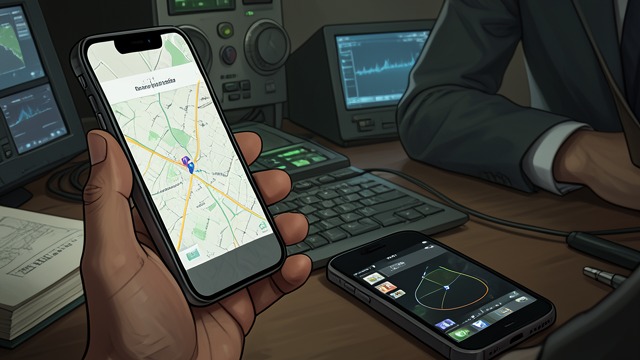
Phones Track Families
A parent’s tracker
Ryan Walsh tracks Melissa through her phone, using technology as a form of parental protection. Melissa knows about the tracking and sometimes leaves her phone elsewhere to preserve independence.
When she is abducted, the device gives Ryan a location but cannot tell him what has happened. The phone is then discarded, turning a protective tool into a temporary clue.
The limits of a signal
Police recover the phone, yet its last location does not reveal where Melissa is held. Digital traces narrow a search but do not replace physical investigation.
The episode raises a quiet question about privacy: the same surveillance that may protect a child can also be experienced as control.
Covert Watching and Performance

Covert Watching and Performance
Police surveillance expands
Investigators monitor the O’Neill family and use specialist phone surveillance with judicial approval. Those being watched may know or suspect the monitoring and adjust their behaviour accordingly.
Steven Yates and Jason O’Neill discuss apparently ordinary subjects while police listen. Surveillance produces information, but the information may be staged for the listeners.
The watcher can be watched
The police must consider whether a suspect is using another phone or manipulating visible evidence. Surveillance is not a transparent window; it is an interaction between people who know observation is possible.
The novel treats intelligence as fallible and dependent on interpretation.
Cameras Follow the Killer

Cameras Follow the Killer
A vehicle appears on screen
Traffic and private cameras place a Nissan Micra near two crime scenes. Its registration leads investigators to Jordan Springer, whose identity has been misused.
The car is visible, but its driver’s face is concealed. Surveillance gives a link to movement rather than a direct identification.
A garage off the record
Further analysis points to a lock-up in Crumpsall, where the Micra and workshop are found. The investigative picture is built from timestamps, locations, witness accounts, and physical searches.
The case shows how modern monitoring can narrow a search without eliminating the need for human reasoning.
A City Watched in Real Time
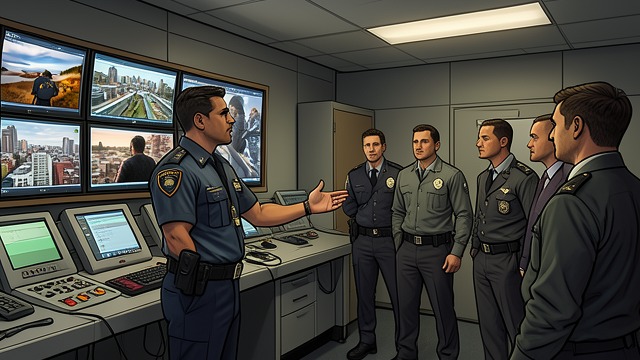
A City Watched in Real Time
Screens and command
At Trafford Centre, CCTV operators watch entrances, corridors, roads, and parking areas. Live images help police find Henry and identify Darren in the trees.
The screens make rapid coordination possible, but they cannot tell the officers exactly what Darren intends or guarantee that the camera view captures every movement.
Protection without omniscience
Joanne uses the live picture to direct units and decide against an unnecessary evacuation. When the hostage becomes visible, she leaves the control room to act on what she can see in person.
The climax balances surveillance technology with human judgment, showing that neither alone can secure everyone.
Friday, October 13
Tuesday, October 17
October 18–21
Friday and Saturday, October 20–21
Sunday afternoon, October 22
