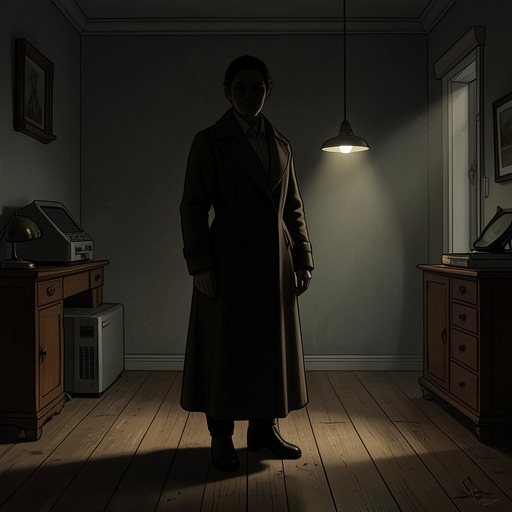
Aaron Teesdale
Blow OutAaron Teesdale is a former soldier whose wife’s death, and his conviction that the inquest failed her, place him among the possible suspects considered during the investigation. His story links private bereavement to unresolved public decisions: although he believed his wife had been murdered, the jury returned an accidental-death verdict, and the evidence presented does not establish that his grievance connects him to the other victims.
Identity and Background
In spring 2011, Teesdale’s wife was killed outside the primary school attended by their children. The driver, described as a pensioner, had struck her in a hit-and-run and surrendered to police that same afternoon. Teesdale was serving in Helmand Province, Afghanistan, when it happened; when asked where, he named Sangin. He was flown home on compassionate leave.
The couple had children, who, according to the account later given to investigators, were being cared for by their mother’s parents. The family’s circumstances place the loss not only within Teesdale’s bereavement but within the disruption of a household whose father was serving overseas and whose children had lost their mother.
The Inquest and Its Aftermath
Evidence from other mothers, the school crossing patrol worker, and police informed the jury’s finding of accidental death. Teesdale, distraught, had to be restrained in court. Outside, he threatened the coroner and witnesses, then made an official complaint that came to nothing. The account also says he later suffered a breakdown and was discharged from the army on medical grounds.
Teesdale continued to reject the finding. When Jo Stuart questioned him years later, he argued that the coroner should have directed the jury toward manslaughter. He described his wife’s death not as an accident but as murder, insisting that she had been killed deliberately. His desk-thumping emphasis made clear that the verdict remained, for him, an active grievance rather than a closed legal matter.
The coroner later recalled that Teesdale had been subject to an injunction, which ended direct contact between them. A newspaper article from a couple of years earlier had nevertheless brought him back to her attention: it interviewed him about what he presented as a grave miscarriage of justice and the effect it had had on his life. The passage offers no further details of the injunction or the article, but both indicate that the dispute and his public account of it continued beyond the inquest.
Suspected Connection to the Attacks
Teesdale enters the investigation after Heather Rand, herself a target of an attack, recalls the earlier case and acknowledges that the family’s sense of injustice can endure and deepen. She admits that the verdict should, at minimum, have been causing death by careless driving. Her own misgivings complicate the investigators’ reading of Teesdale: the suspicion arises not simply from his anger, but from the possibility that the process had left a genuine wrong unresolved.
Nick Carter considers Teesdale a leading possibility and wonders what he did while serving in Helmand, speculating that he might have been a sniper. Jo Stuart cautions against moving ahead of the evidence: at that point, she sees no connection between Teesdale’s grievance and the other victims. Nick floats the possibility of vigilante action, but this remains conjecture, not an established account of Teesdale’s conduct or motive. The investigation has already been told that the poisoner intended a prolonged and painful death, yet the supplied evidence does not attribute those attacks to Teesdale.
Interview and Narrative Role
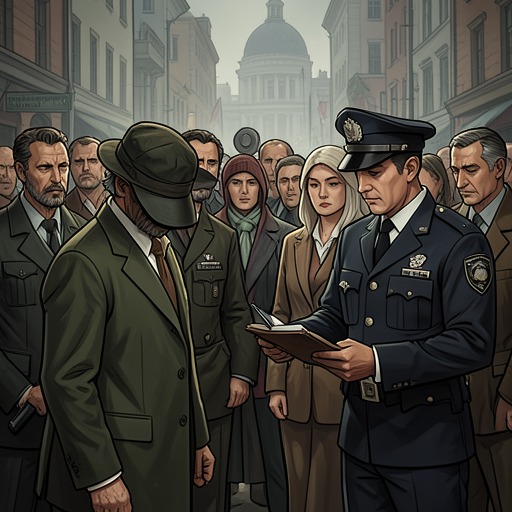
Teesdale is summoned to meet the detectives at the office, where he initially holds the door open in the hope that the interview can take place elsewhere. Jo Stuart says they must proceed there for the time being. The brief exchange establishes the encounter as an official interview, but the available account does not document its full course or its outcome.
His role in the investigation is therefore defined by a tension between credible personal injury and unproven suspicion. The story supplies a concrete history of bereavement, an angry response to a verdict he considered inadequate, and later publicity about his sense of injustice. It also preserves Jo Stuart’s insistence on separating that history from the attacks until evidence connects them. Teesdale’s grievance makes him narratively significant as a possible explanation, but not, on the evidence given, as the identified perpetrator.