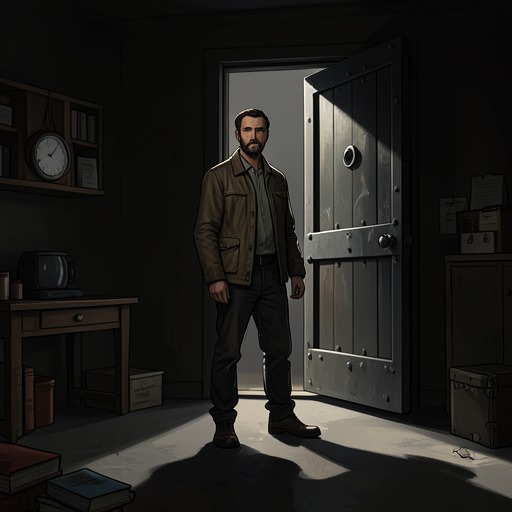
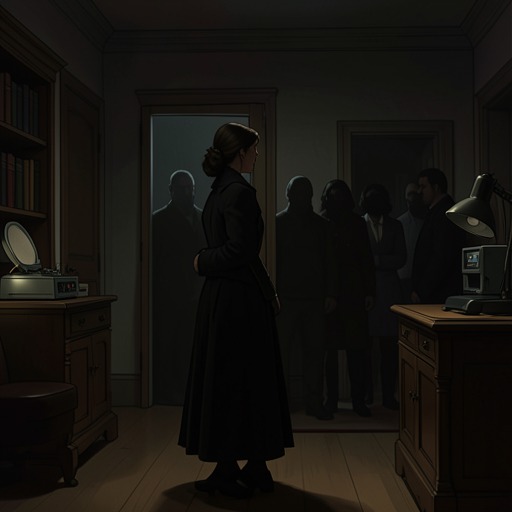
James Clements—Helen Wilkins
Blow OutJames Clements—Helen Wilkins is a marriage defined and ultimately ended by bereavement. After their daughter Elaine died, James and Helen grieved in sharply different ways: Helen tried to keep caring for their surviving son, Darren, while James became consumed by blame and anger. Their separation was not simply a divorce, but the culmination of a household in which grief had made shared life unbearable and left the family facing the loss in different ways.
Marriage Under the Weight of Grief
Helen explains that grief affected each person differently. She initially withdrew into herself and describes herself as being in denial, but she also had Darren to care for and a husband who, in her view, could not look after himself. She frames the practical demands on her as part of her response: as a wife and mother, she felt she could not retreat into self-pity or devote herself to a campaign for justice.
Her account does not present James’s fury as simple indifference or malice. Helen says she did not blame him for it: she understood his anger as a way of shifting blame and avoiding his own feelings of guilt, especially the overwhelming sense that he had failed in his duty to protect Elaine. The difference between them lay not in whether Elaine mattered, but in how each lived with the loss and what each could bear from the other.
Separation and Divorce
Helen says there was nothing she or anyone else could do to persuade James to stop looking for someone to blame. In time, she says, his self-loathing, anger, and frustration became impossible to live with, not only for her but also for Darren. She told James to leave. He went upstairs, packed a couple of bags, and left; Helen believed he was relieved.
The house itself had become inseparable from the circumstances of Elaine’s death. James found it impossible to live where she had died, to sleep beside the bedroom where he had discovered her in a pool of sick, or to live so close to two people who did not feel grief as he did. The marriage first became a separation and then a divorce. James moved out in December 2012, exactly two years to the day after Elaine died; the divorce became final the following September.
After leaving, James initially rented a flat in town. When the family home was sold and he had enough money to buy a property outright, he moved to a terraced house in Rusholme. Helen also could not bear to remain in the house, and she thought it would be unhealthy for Darren to stay there. She gave James £40,000 from the sale, although this was not part of the divorce settlement; she says she felt sorry for him and had money of her own from her parents.
Estrangement and Its Aftermath
The divorce did not lead to a continuing relationship between James and Helen. Helen says they did not really stay in touch, and stresses that this distance was his choice. She believed that seeing her and Darren was too painful for him because they reminded him of what had happened. Her understanding of his withdrawal sits alongside her own decision that she would not have allowed Darren to see James after James’s breakdown.
Helen learned of that breakdown through one of James’s work colleagues, who called to tell her that James had developed severe depression. He was hospitalised for a time and never returned to work. The account therefore extends the consequences of the marriage’s collapse beyond the divorce itself: the couple’s separation left little contact, while James’s illness and Helen’s concern for Darren further complicated any possibility of renewed family ties.
Meaning of the Relationship
The marriage’s end is presented through Helen’s measured recollection rather than as a contest over who grieved correctly. Her account holds two realities together: James’s anger was connected to guilt and an intolerable home filled with reminders of Elaine, while his conduct also became unlivable for Helen and their son. Helen’s sympathy for him survives the separation—visible in the money she gave him from the house sale—but does not erase the boundaries she set to protect Darren.
The dates and objects of departure make the rupture concrete: two bags packed upstairs, a move on the anniversary of Elaine’s death, a sold home, and £40,000 passed to an estranged husband. The marriage ends not with reconciliation but with divorce, distance, and James’s later severe depression. Helen’s account makes their different experiences of grief the force that reshaped the family and made a shared home, and ultimately a shared life, impossible.