Nexus House
Blow OutNexus House is the Greater Manchester Police base from which Joanne Stuart leads the investigation into the murder of Ronnie O’Neill and coordinates work on the ricin attacks and the search for Melissa Walsh. Its concentration of specialist teams, forensic services and incident-command facilities makes it a hub for the novel’s investigations, but its empty desks and continual dependence on outside agencies expose the limits of institutional capacity as well as its value.
Setting and Facilities
Nexus House stands on an industrial estate only yards from the M60 motorway. From outside, it resembles an ordinary brick-and-glass office block; inside, it houses three Greater Manchester Police teams: the Serious Crime Division, the Economic Crime Unit and the Cold Case Unit. Forensic Services is based there too, theoretically allowing crime-scene samples to be processed more quickly. The building had opened less than two years before Joanne Stuart arrived, shortly after her secondment to the National Crime Agency.
The site’s plain exterior and dense operational interior establish a contrast between an unremarkable workplace and the serious, interdependent work conducted within it. The motorway’s proximity also becomes part of the investigators’ practical geography: the building is a base they repeatedly return to while travelling between scenes, hospitals and command meetings across the region.
The Investigation’s New Headquarters
After Helen Gates arranged Stuart’s secondment to Greater Manchester Police to head the Ronnie O’Neill murder investigation, she was assigned to work from Nexus House with Syndicate One. Nick Carter was to serve as her deputy. The move was prompted by both the case’s possible national significance and the force’s strained resources. Following the Manchester Arena bombing, detectives had been transferred to Serious and Organised Crime and Counter Terrorism Command; the pressure on frontline staffing was already compounded by continuing cuts.
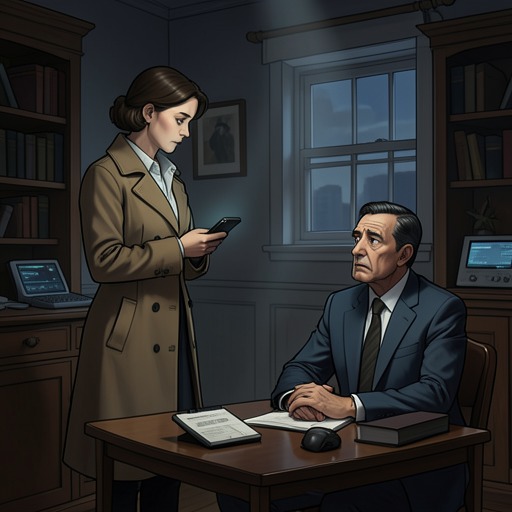
Stuart arrived apprehensive about joining a close-knit team as its newly appointed leader. She worried that she might have to establish her authority as well as direct a difficult investigation. At reception, staff verified that Gates had told them to expect her, registered her details and car registration, and issued a temporary pass before escorting her to a major incident room on the second floor.
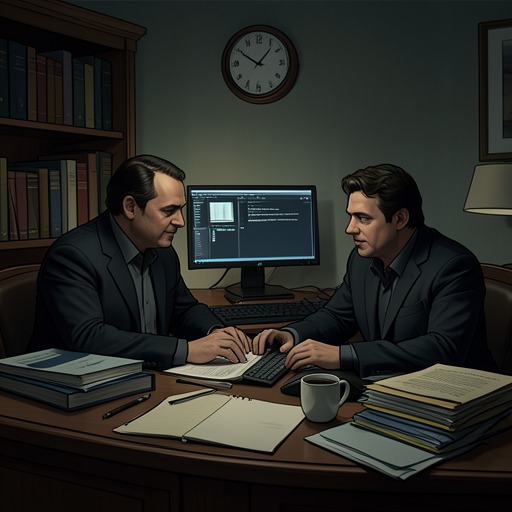
The room was familiar rather than new and polished: it recalled the major incident room at Central Park and Longsight. Rows of desks and monitors filled the space. Standing whiteboards and interactive screens compensated for the lack of wall space, while numerous unoccupied desks offered a visible reminder of the gradual depletion of staff. Stuart recognised members of the team, including intelligence analyst Duggie Wallace, crime-scene investigator Jack Benson and Detective Constable Jimmy Hulme. Their presence, along with office manager Ged and Detective Chief Inspector Gordon Holmes, suggested that the team she had worked alongside on Operation Hound had gathered there.
A Working Hub Under Pressure
Nexus House is not simply an address for the investigation; it is where field findings return to be assessed and where the team’s changing picture of the case is assembled. After work at Worsley Golf Course, Stuart returned to the building as Benson’s forensic team searched the seventh-hole tee and the suspected firing position. They looked for small traces—a broken branch, disturbed undergrowth, footprints or cloth caught on thorns—that might place the attacker at the scene. The search translated the urgency of a poison-pellet attack into patient, methodical work conducted from the headquarters and out in the field.
The building also provides the setting for briefings and exchanges as evidence develops. When Nick Carter arrived with news from the pathologist, Professor James Flatman, the team was assembled there to hear him. Later, after Stuart returned to Manchester following a visit connected with the investigation, she brought Carter up to date at Nexus House and shared news in person rather than over the phone. These returns give the base a recurring role as the point at which dispersed information is brought back into the investigative team.
That role does not mean the building can supply every capability the case requires. Stuart sought specialist assistance from the Anti-Kidnap and Extortion Unit when the search for Melissa Walsh raised kidnapping concerns. She also had to work through the availability of ricin antidote: a batch of twelve had been sent to a toxicologist at Manchester Royal Infirmary, while the antidote delivered from Porton Down was later urgently requested for a live patient. Nexus House connects decisions and people, but expertise and treatment remain distributed among specialist agencies, laboratories and hospitals.
Command, Communication and Coordination
The wider operation makes Nexus House one node in a changing command network. During the Trafford Centre threat response, an operational pod there was designated as Silver Command, alongside Gold Command at Greater Manchester Police Headquarters and Bronze Command at the site. The pod contained three workstations arranged in a horseshoe, each with a keyboard, computer and CCTV monitors, plus headsets and printed operational keywords. Its staff monitored access control, CCTV and detection alarms, and the information could be shared among the commands and relevant stakeholders, including police specialist units, fire and emergency medical services and, if required, special forces. The personnel at the site also deployed their own front-line security teams under Stuart’s direction.
This equipment and division of responsibilities show how Nexus House could participate in large-scale coordination without itself being the scene of the threat. Yet command arrangements did not settle every question of authority or proportionality. Stuart objected to treating a known threat involving one suspect and one or possibly two targets as if it were automatically a full-scale terrorist incident. Although the incident was designated an emergency, she considered whether evacuation might endanger the public more than a coordinated stop-and-search operation: panic could alert the suspect and cause crush injuries. The rules, the classification of the incident and the operational judgment all had to be managed alongside the physical search.
Narrative Significance
Nexus House embodies both the reach and the constraints of contemporary police work in the novel. It brings serious-crime investigators, forensic services and intelligence work together under one roof, and its screens and command links let information circulate across a complex operation. But the sparsely occupied incident room, the force’s depleted staffing, and the need to rely on national agencies and medical institutions prevent the building from becoming a symbol of effortless institutional power.
Its recurring appearances provide a practical rhythm to the investigations: teams leave to search, interview or respond, then return to brief colleagues and revise their understanding. In that pattern, Nexus House is less a self-sufficient solution than a coordinating centre—valuable precisely because the work and the resources it needs are spread across people and institutions that must act together.