Sarah Weston
Blow OutSarah Weston is a senior police officer and a trusted mentor and friend to Joanne Stuart. During the ricin-pellet investigation, her professional experience makes her a potential target as well as a source of insight: the attacker later lists her among his intended victims. Her decision to stay in a hotel and keep a low profile helps keep her safe, but her failure to inform colleagues where she is turns a sensible precaution into a source of anxiety for the team.
Identity and professional background
When Joanne Stuart learns that Sarah is the person in danger, the news carries more weight than a routine operational update. Sarah had been both a mentor and a friend during the time they served on DCI Caton’s team, despite their difference in rank. By the time of the ricin attacks, Sarah is working with the Child Exploitation and Online Protection Command, a role that takes her away from the Manchester investigation and places her in a different professional setting.
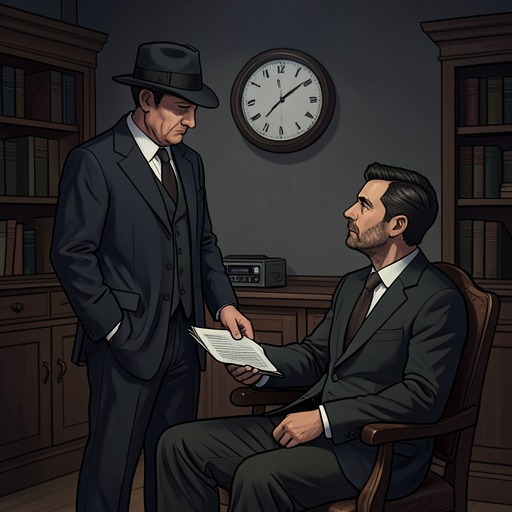
Her current work involves preparing written material of the kind she is accustomed to producing. When Jo gives her a one-page warning, Sarah recognizes the format from her own role and asks how reliable the intelligence is. The question shows her assessing the threat professionally even as she receives it personally. Her absence from the news is explained by a specific circumstance: she has spent the week in Brussels at an international symposium on child protection.
Warning and response
Jo explains the danger of the ricin-pellet attacker, and Sarah initially responds with a light observation that avoiding golf courses and parks should keep her safe. Jo rejects that reassurance. The attacker knows the police are looking for him, she explains, and may therefore take greater risks, pursue everyone on his list before he is caught, or change his method. The warning shifts the conversation from general risk to an immediate need for caution.
Sarah understands the possibility of escalation, particularly if the attacker learns that one of his victims survived. She also questions Jo’s certainty that the son, rather than the father, is responsible. Sarah can understand how the father’s loss and sense of injustice might have made him volatile; her response distinguishes a plausible explanation of volatility from proof of who is carrying out the attacks. Jo answers that Heather Rand, the latest victim, had identified the same combination of grief and injustice. Sarah then agrees that the coroner made the right decision, adding that the people involved had all made the right call.
Place on the attacker’s list
The threat becomes concrete when Jo finds the handwritten list in the second of two open pages of a notebook. Four names have been crossed out: O’Neill, Grimshaw, Dewlay, and Rand. Three more names, apparently added later, are ACC Helen Gates, DI Joanne Stuart, and Eric Manson. Sarah is not among the names Jo sees there, and Jo specifically wonders why neither Henry Mwamba nor Sarah appears on the list.
That omission complicates the team’s understanding of the threat. Sarah has been warned and is being treated as someone at risk, but the notebook does not confirm that she is one of the attacker’s named targets. The list is evidence of an evolving selection of victims, not a complete explanation of everyone the police must protect. Sarah’s danger therefore remains a matter for assessment rather than a fact established by the notebook.
Professional judgment, distance, and outcome
Jo advises Sarah not to go home while she is in the area. Sarah clarifies that home is London now and that she and her partner have separated; Jo responds with sympathy. The exchange adds a personal circumstance to the operational warning, without making the separation a cause of Sarah’s choices. The advice is practical: she should avoid returning to a predictable home location while the threat remains active.
Later, Gordon reports that Sarah has followed Jo’s advice by staying in a hotel and keeping her head down. She has not, however, told the investigation team or her colleagues where she is. Gordon says that this omission would have spared them worry, and plans to give her an earful when they next meet. His comment confirms both that Sarah is safe and that her precaution has carried a cost for those trying to protect her. The hotel provides distance from danger; her silence leaves that distance difficult for the team to manage.
Narrative role
Sarah’s appearances connect the investigation’s public danger to the working relationships within the police team. She is not merely a name on a potential-threat list: her history with Jo makes the warning personally charged, while her professional role gives her a measured perspective on intelligence and responsibility. Her questioning of the evidence prevents the team’s certainty from seeming automatic, and her agreement about the coroner’s decision places her among those who have had to make difficult judgments amid grief and injustice.
Her temporary absence also exposes a practical tension in police protection. Staying out of sight can reduce an individual’s exposure, but failing to share a location makes coordination harder and intensifies colleagues’ concern. Sarah’s survival is reassuring, yet it does not erase the uncertainty of the list or settle who else may be at risk; instead, it underscores why warnings, communication, and evidence must be handled together.