
The Hidden Valley Painting
BluebeardThis thread traces the making, concealment, and public discovery of Rabo’s final monumental painting about the human wreckage left by war.
increasing Bearing strength in each event
 decreasing
Bearing strength in each eventdecreasingThe Blank Canvases
A White Beginning
The Returned Panels
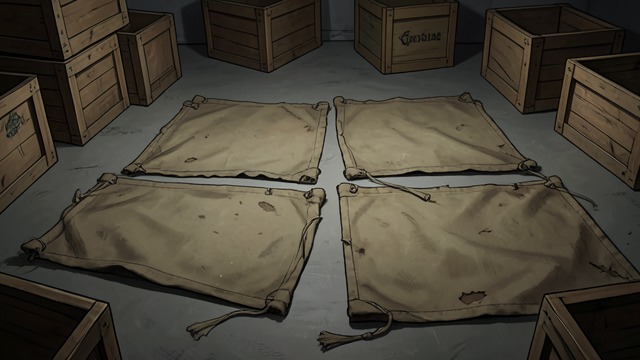
The eight panels once used for “Windsor Blue Number Seventeen” return to Rabo after years entombed beneath the former GEFFCo building. Their blank, restored surfaces confront him with the failure that defined his reputation.
A New Attempt
Rather than discard them, he installs them in the potato barn and buys fresh materials. He calls the project an exorcism, though he cannot fully explain what it is meant to repair.
Six Months of Painting
A Valley in Paint
The Work in Secret
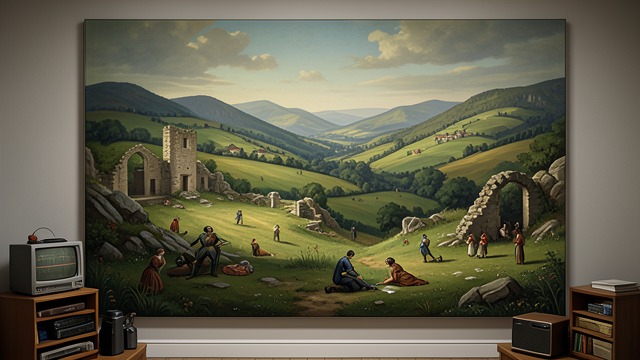
Rabo paints the entire long surface with minute figures gathered in a European valley at war’s end. He invents a history for each person, filling the composition with prisoners, soldiers, civilians, and survivors.
A Changed Purpose
The work does not resemble the abstract canvases that made him famous or infamous. It turns his remembered glimpse of liberation into an immense human scene, giving shape to lives that conventional victory narratives might overlook.
The Public Attraction
From Secret to Encounter
Opening the Doors
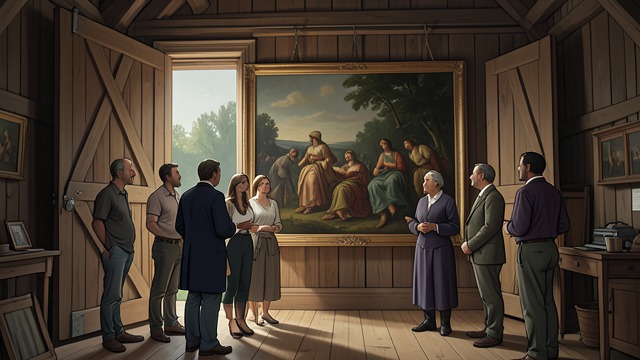
Rabo removes the spikes and opens the barn to visitors. The painting becomes a crowded public attraction, although he dismisses it as a World’s Fair or Disneyland rather than claiming the standing of a solemn masterpiece.
Shared Interpretation
Visitors invent or request stories about the figures, while Rabo gradually stops serving as their guide. The work’s reach no longer depends on his private explanations, and its moral force comes from many individual lives assembled together.
After Edith dies, shortly before Rabo’s final six months of painting
The six months after Edith’s death
After Circe sees the painting, near the novel’s ending
