
The Painter’s War-Hatred
BluebeardThis thread traces Rabo’s changing understanding of war, from youthful patriotic service to a painting that confronts the survivors left behind.
increasing Bearing strength in each event
 decreasing
Bearing strength in each eventdecreasingA Nation Tired of War
Before the Next War
Public Distrust
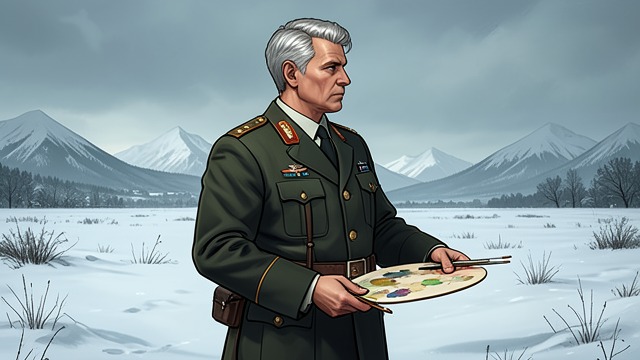
Rabo remembers a period when Americans boasted of a small military and condemned weapons makers as merchants of death. His recollection contrasts that mood with later celebrations of military power.
A Warning Ignored
Arnold Coates warns that Europe’s artistic sophistication does not prevent renewed violence. Rabo later sees how quickly a generation’s aversion to war can be displaced by stories that make combat seem like a necessary passage into manhood.
Camouflage as Art
Illusion at the Front
Artists in Uniform
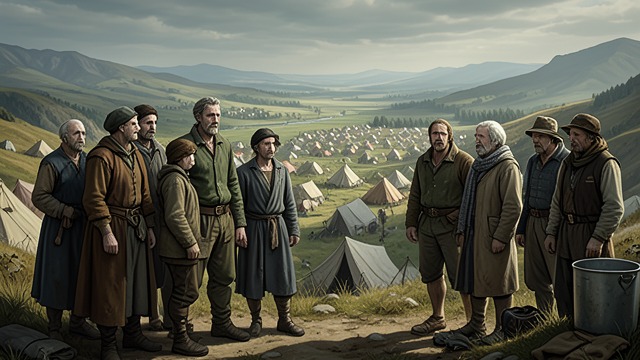
Rabo leads a platoon of artists who use visual deception for military camouflage. Their skill makes them effective at manipulating what an enemy believes it sees.
Art’s Double Use
Camouflage can save lives, yet it also shows how artistic perception may serve institutions of violence. Rabo’s later work inherits both the technical discipline and the moral unease of this wartime practice.
The Survivor’s Crowd
Beyond Victory
The Captive Valley
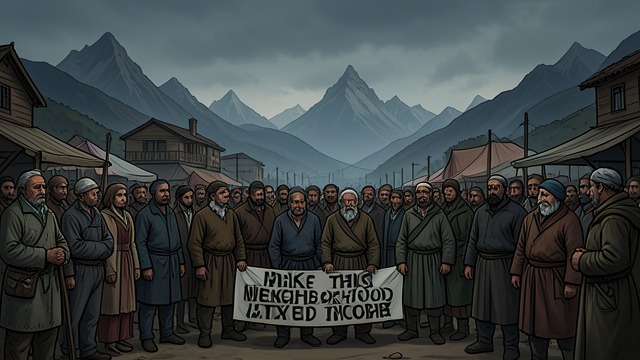
Rabo paints not triumphant armies but people displaced by the war and its systems of imprisonment. The crowded valley refuses the idea that a ceasefire instantly returns the world to innocence.
An Unfinished Judgment
The painting includes enemies, victims, bystanders, and people whose next danger is unclear. Its moral attention falls on survival itself, rather than on a simple division between heroic victors and defeated villains.
During Rabo’s youth in the 1930s
During Rabo’s United States Army service before and during the war
After the war, in Rabo’s final barn painting
