
What Makes a Painting Matter
BluebeardThis thread follows the novel’s competing accounts of artistic value, from technical accuracy to abstraction, communication, and emotional attention.
increasing Bearing strength in each event
 decreasing
Bearing strength in each eventdecreasingGregory’s Realism
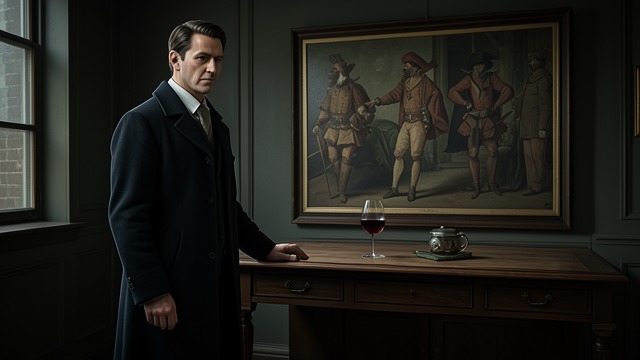
Exactness as Authority
A World Rendered Precisely
Dan Gregory trains Rabo to observe materials, objects, and historical details with extraordinary care. His illustrations make surfaces persuasive and appear to preserve moments in time.
Realism’s Limit
Rabo later argues that Gregory’s work can freeze a moment like taxidermy, avoiding the flow from birth to death. The critique acknowledges Gregory’s skill while questioning what technical exactness leaves out.
The Abstract Group
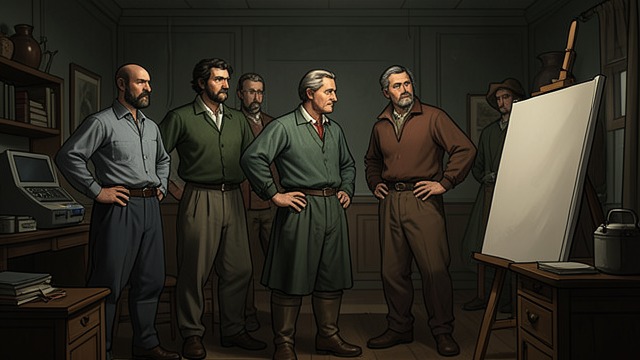
Pictures About Themselves
A New Practice
Rabo’s circle develops paintings that are not illustrations of recognizable subjects. Their work treats the act and material of painting as its own subject, resisting the demand to tell a conventional story.
A Question of Meaning
Circe challenges the claim that pictures need not communicate, while Rabo defends their autonomy. Their disagreement raises whether a work can be meaningful through experience rather than reference.
A Crowd Looks Closely
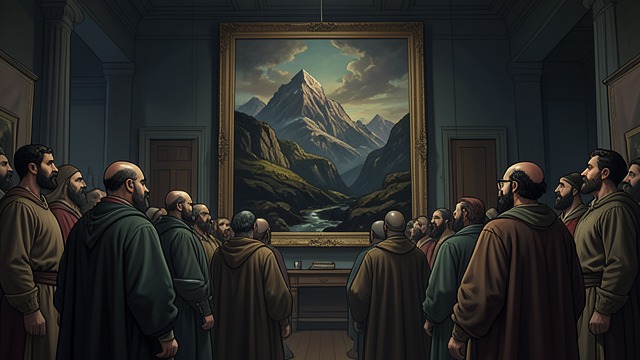
Art Beyond Credentials
Lay Viewers Respond
Visitors spend time with the immense wartime composition, searching out small figures and asking what they mean. Rabo calls it a tourist attraction, but its scale and human stories hold public attention.
Meaning in Encounter
The painting’s value does not depend on a critic’s approval or a single correct interpretation. Its viewers complete the experience by looking, asking, and making connections of their own.
Rabo’s apprenticeship in the early 1930s
The postwar years in New York City
After the barn painting opens to visitors
