
Art’s End and Beginning
BluebeardThis thread traces Marilee’s argument that artistic culture should end its celebration of human power, and Rabo’s eventual creation of a work that confronts that claim.
increasing Bearing strength in each event
 decreasing
Bearing strength in each eventdecreasingA Demand for an Ending
Art Under Accusation
Men’s Cultural Legacy
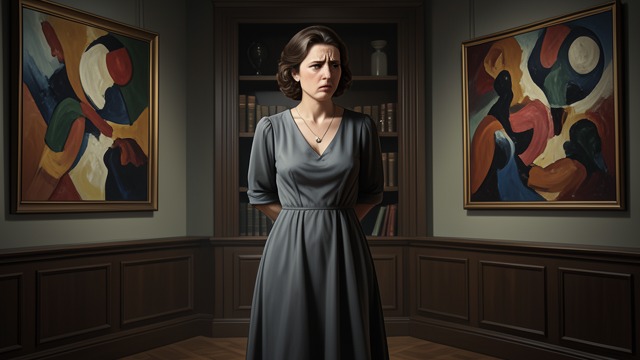
Marilee argues that art and history have often turned violence into spectacle, encouraging men to imagine themselves as powerful gods. She proposes that male-made art should declare its makers too horrible for the world they inhabit.
A Radical Refusal
Her position makes artistic achievement answerable to the suffering it may beautify or ignore. Rather than praising art as an automatic good, she asks whether culture can become an accomplice to destruction.
A Collection of Endings
Abstract Art for a Rotunda
A Commission Without Sight
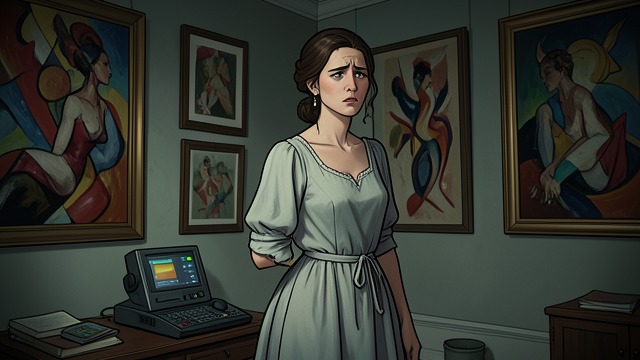
Marilee orders ten paintings by American abstract artists for her palace, intending to place them where the walls will offer no easy encouragement to men. She imagines abstraction as a possible visual declaration of refusal.
The Failed Claim to Nothing
Later, she tells Rabo that she can still identify chaos in every canvas. Their exchange acknowledges that pictures cannot entirely escape the histories and meanings viewers bring to them.
A Painting of the Aftermath
Ending Through Attention
Survivors, Not Heroes
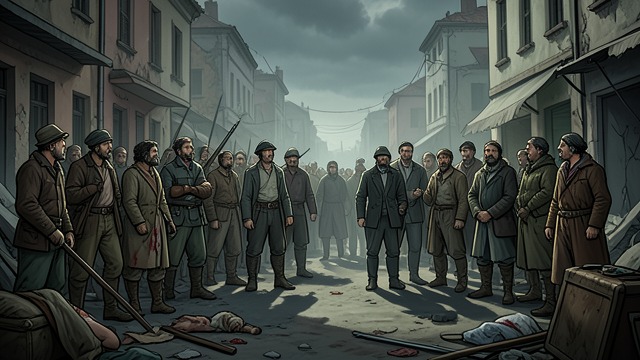
Rabo’s monumental image depicts a mass of people after the war, including victims, compromised soldiers, and civilians. It does not present a clean victory or a stable moral order.
A Continuing Human Task
The work is not simply an announcement that art has ended. It makes looking at damaged people an obligation, turning the possibility of an ending into a reason to attend to those who remain.
During Rabo and Marilee’s 1950 reunion in Florence
After the 1950 reunion, when Marilee orders paintings
After Edith’s death, with the completed work revealed near the ending
