
The Value of Ordinary Work
BluebeardThis thread follows the novel’s recurring comparison between celebrated art and practical labor, from shoemaking and domestic care to the work of making a painting.
increasing Bearing strength in each event
 decreasing
Bearing strength in each eventdecreasingThe Cobblers’ Children
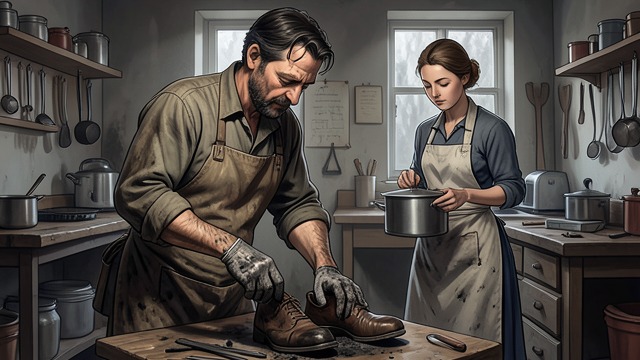
Craft and Survival
A Family Trade
Rabo’s father is a cobbler, and Rabo learns the craft as a boy. The work is practical and necessary, unlike the uncertain social value of painting.
A Literary Echo
Paul’s Hessian ancestor was also a cobbler, linking two families through ordinary work rather than artistic prestige. The recurring trade complicates the assumption that meaningful life belongs only to famous creators.
Edith’s Domestic Art
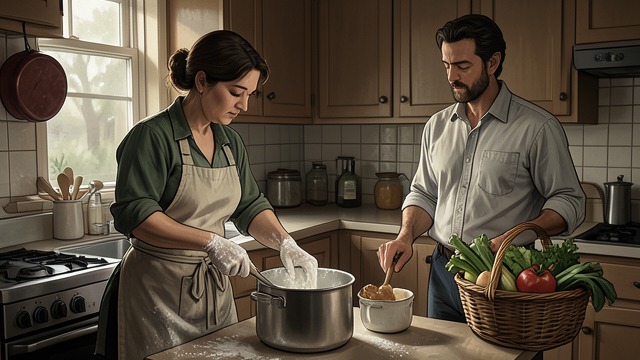
Care as Creation
Work in the Household
Edith cooks, gardens, shops, cares for animals, and helps transform her inherited house into a home for art and guests. Her labor is hands-on and collaborative rather than presented as a public masterpiece.
A Life Made Livable
Rabo depends on this work even when he does not fully understand its value. The novel places domestic care beside painting as an activity capable of shaping a world for others.
The Painter’s Physical Labor

The Body Makes the Picture
Work Beyond Intention
Rabo’s hand and body produce a monumental image whose meaning he cannot fully explain in advance. The painting emerges through sustained physical labor, not through a complete intellectual plan.
Recognition of the Meat
Circe’s request that he thank his body acknowledges the material effort behind the work. The scene joins art to the ordinary fact of bodily persistence.
Rabo’s childhood and family history
During Rabo and Edith’s marriage
During the six months Rabo paints the final barn work
