Family and Parent-Child Relationship Taboo
Brave New WorldFamily and Parent-Child Relationship Taboo is a core social norm of the World State: family bonds, parenthood, and exclusive domestic attachments have been stripped of ordinary legitimacy and recast as sources of embarrassment or disgust. The taboo is reinforced by artificial reproduction, childhood conditioning, and the maxim that everyone belongs to everyone else; when Linda calls the Director John’s father, the society’s response exposes the human cost of making kinship unsayable.
Social Foundations
The taboo rests on a society that has displaced natural birth with controlled production. The Director teaches that a single treated egg can multiply into as many as ninety-six embryos, while the preferred average is seventy-two; the resulting groups of standardized people are presented as instruments of social stability. Rather than welcoming children into households, the World State manufactures and conditions them for predetermined social roles. Biological kinship is consequently detached from the everyday care and identity associated with family life.
This system’s rejection of the family is also expressed as a rejection of exclusive attachment. The Director sets family, monogamy, and romance against the State’s desired order, describing them as forces that narrow impulse and energy. He invokes the hypnopaedic maxim “But every one belongs to every one else,” which the students accept as self-evident after more than sixty-two thousand repetitions during sleep. The slogan does more than endorse sexual availability: it opposes the idea that a person belongs within a lasting, particular bond.
Conditioning and Everyday Language
The norm is taught before children can assess it. A recorded lesson contrasts the castes’ clothing and supposed abilities, teaching children to prefer their own rank and avoid those below it. Alongside these lessons, nursery voices repeat that children love flying and new clothes, while old clothes are to be discarded because “Ending is better than mending.” The same educational machinery that aligns desire with consumption and caste hierarchy helps make inherited family ties—and the continuity they imply—feel alien to the World State’s habits.
The method is captured by the Director’s comparison of repeated suggestions to drops of sealing wax: they adhere and build up until the child’s mind is made from them. These messages do not remain childhood recitations; they become the material from which adults judge and desire. The family taboo therefore operates less as a prohibition enforced in a single encounter than as a manufactured common sense. Its apparent naturalness is the effect of relentless repetition.
The Director’s Secret and Its Exposure
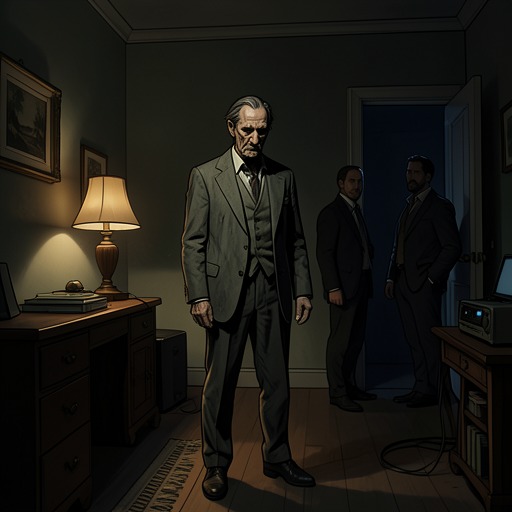
The Director’s own history briefly reveals the contradiction beneath that common sense. Recalling a holiday in New Mexico, he tells Bernard that the woman accompanying him disappeared during a storm after they had ridden in the mountains. He searched for her, returned to the rest-house, and never found her; he later admitted that he still dreamed of searching for her. The recollection is unusually emotional for him, and, when he recognizes that he has disclosed it, he turns on Bernard and warns him about his conduct. His private memory of a lost relationship stands uneasily beside the impersonal doctrine he represents.
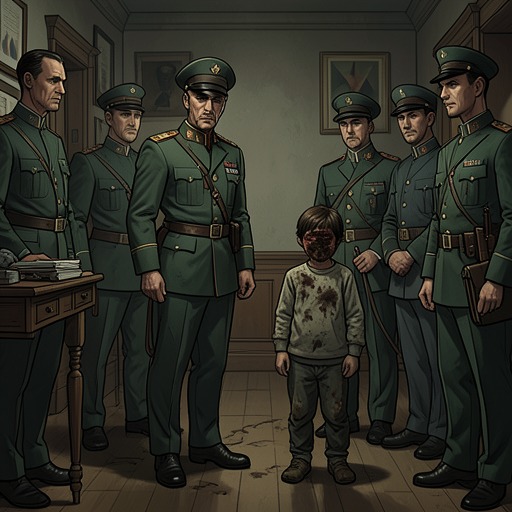
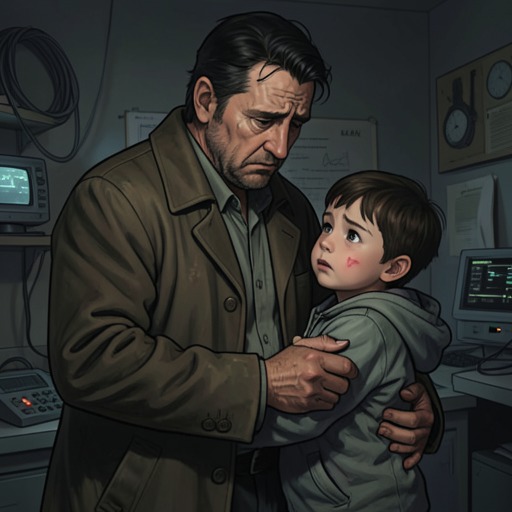
The concealed history becomes public when Linda recognizes the Director and tells him that he made her have a baby. She calls for John, who enters and addresses the Director as his father. The word produces laughter among the assembled workers, but the response does not make the relationship less real: it marks the relationship’s exposure as a breach of social decorum. Linda’s attempt to explain herself is overwhelmed by the crowd’s reaction, while the Director is left humiliated and leaves the Centre.
Consequences and Significance
The aftermath reveals that the stigma falls unevenly. The upper-caste public is eager to see John, whose identification of the Director as his father is treated as an irresistible spectacle. Linda, by contrast, attracts little interest: to call oneself a mother is considered obscene, and her appearance becomes another reason for others to avoid her. The society can turn a parent-child bond into entertainment when it exposes a powerful man, while denying the mother ordinary social recognition.
Linda’s return to the World State also brings her back to soma. She seeks to make its holiday continuous, and Dr. Shaw eventually allows her to take as much as twenty grammes a day. This outcome links the repudiation of family to the society’s broader means of managing distress: rather than making room for the painful history of motherhood, the system offers escape from consciousness of it.
Mustapha Mond later gives the taboo its political rationale. He describes a population without mothers, fathers, spouses, children, or lovers capable of strong attachment, and argues that this condition supports a stable, happy society. Yet John remembers the repeated faces of the identical Bokanovsky groups, including the twins gathered around Linda’s deathbed. His response sets the system’s promise of stability against the human losses it produces. The taboo is thus both a lesson in what cannot be acknowledged and a mechanism for preventing the particular loyalties, griefs, and responsibilities that might unsettle the World State.