Fordian religion
Brave New WorldFordian religion is the World State’s industrial creed, making production, social stability, and collective ritual serve as substitutes for older religious and historical traditions. Its signs and ceremonies honor Ford, while its everyday teachings train citizens to accept the social order as natural, desirable, and beyond dispute.
Ford as sacred authority
The creed centers on Ford and the T-shaped mark associated with his first Model T. In a lesson on sleep-teaching, the Director links the discovery of hypnopaedia to the period shortly after Ford’s first car reached the market; as he invokes the milestone, he makes a T on his stomach, and the students reverently copy the gesture. Industrial history thus becomes sacred chronology, and the bodily sign becomes a small act of collective worship.
Mustapha Mond reinforces the creed’s hostility to the past through Ford’s saying, “History is bunk.” He describes history as dust brushed away, naming lost cities, religious figures, works of literature, and music as remnants the present has swept aside. The dismissal is not merely an opinion about historical study: it marks the culture’s deliberate break with alternative sources of authority and meaning.
Ritual and collective belonging
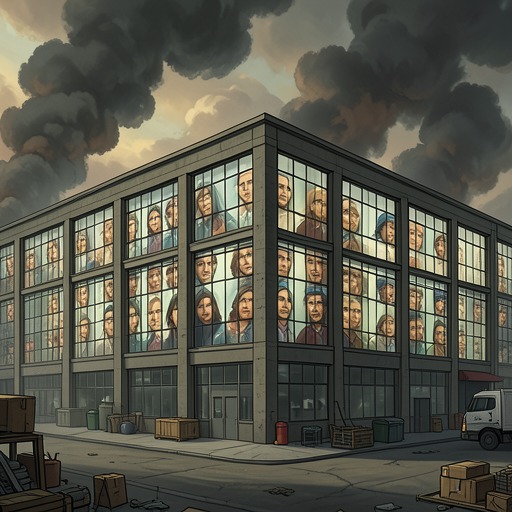
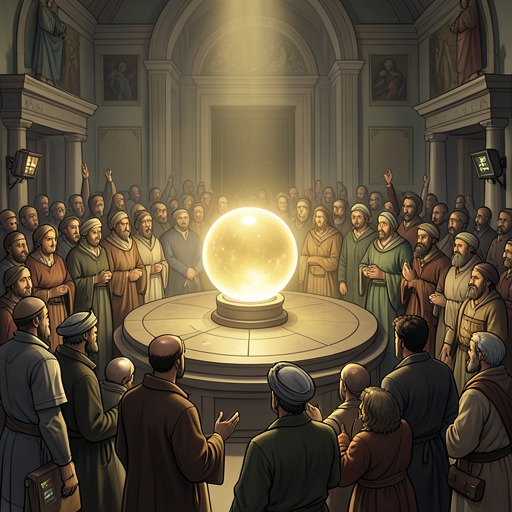
The religion’s institutions are woven into public life. The World State holds Ford’s Day celebrations, Community Sings, and Solidarity Services; the Fordson Community Singery gives the new faith an imposing architectural and ceremonial presence. Its great white structure stands on Ludgate Hill, marked by crimson Ts at the corners of its helicopter platform, while golden trumpets sound synthetic music. The scale and staging make communal worship an organized spectacle rather than a private practice.
The creed also supplies an emotional vocabulary for solidarity. Its hypnopaedic proverb “But every one belongs to every one else” is presented as a shared certainty, reinforced by more than sixty-two thousand repetitions in the dark. The line joins social conformity to a religious-sounding principle: repeated instruction does not leave the saying as an argument to consider, but makes it seem self-evident.
Doctrine in daily life
Fordian teaching supports the World State’s preference for stability over intense personal feeling. The Controller declares, “Stability,” and explains that civilization depends on social stability, which in turn depends on individual stability. His account compares society to machinery that must keep turning and requires steady, obedient workers to tend it. Industrial production therefore supplies both the creed’s central image and its political justification.
The state’s conditioning practices carry that doctrine into childhood. A recorded class-consciousness lesson teaches children to value their own caste, disparage others, and take pleasure in consumer goods. Another repeated lesson tells them that old clothes are objectionable and that “Ending is better than mending.” The sayings make social hierarchy and continual consumption feel like personal preferences rather than instructions from the state. The Director’s image of suggestions accumulating like sealing wax on rock captures how these lessons become part of the mind that judges and desires.
The same ideal of managed contentment extends to work and leisure. Mustapha Mond recalls that a four-hour working day in Ireland produced unrest and increased soma consumption, not greater happiness; the state consequently resists excessive leisure and changes that might disturb stability. Its public assurances that everyone is happy accompany a life organized around work, soma, games, and entertainment. Fordian religion thus sanctifies not only production itself but the regulated routines that keep production and social order continuous.
Meaning and limits
The creed’s authority rests on the fusion of ritual, education, and ordinary habits. Ford’s T is enacted by students; the Controller’s historical maxim dismisses inherited traditions; and slogans learned in childhood guide attitudes toward caste, consumption, and relationships. Together these practices make the state’s values appear both sacred and practical, sustained through common assent as much as official power.
The novel also exposes the cost of this arrangement by contrasting stability with art and passionate attachment. Mustapha Mond concedes that Shakespearean tragedy is better than the feelies, but argues that tragedy requires social instability, which the World State will not permit. Fordian religion is therefore not simply a ceremonial decoration on an otherwise secular society: it gives spiritual authority to a system that trades historical memory, demanding art, and strong personal bonds for managed happiness and an unbroken social machine.