Linda
Brave New WorldLinda is John’s mother and a Beta whose life crosses the engineered order of the World State with the very different conditions of Malpais. Her pregnancy, which she says occurred despite her Malthusian Drill, turns her into a social outcast in both places: in Malpais she endures hardship and isolation, while in London motherhood itself makes her an object of public disgust. Her return brings her back to soma, but not to a restored life. The drug becomes a lasting escape and hastens her death, while John’s memories of her preserve a more intimate, complicated history than either society allows.
Identity and Background
Before her disappearance, Linda belonged to the World State’s Beta caste and had been conditioned to treat pregnancy as shameful and practically impossible. In Malpais, she explains that she had followed the prescribed Malthusian Drill, yet became pregnant all the same; there was no Abortion Centre nearby. Her account captures the collision between a society organized around controlled reproduction and a place where the consequences of pregnancy could not be removed by its institutions.
Linda tells John that she came to the Reservation from the Other Place with the man who was his father. After she fell and injured her head while walking in the mountains, hunters from Malpais found her and brought her to the pueblo. The man, Tomakin, never returned. John learns his father’s name from her account, and the disclosure later identifies Tomakin as the Director of Hatcheries and Conditioning. John was therefore born in Malpais to a woman who remained an outsider there and was regarded as an embarrassment by the society from which she had come.
Life in Malpais and John’s Childhood
Linda’s memories of the World State give John his first extended picture of another kind of life. She describes flying, music from a box, games, plentiful food and drink, lights controlled by a switch, and houses rising high above the ground. She also recalls a society in which people were rarely alone and happiness seemed to be available every day. To John, these stories make the Other Place vivid and alluring, even though the life his mother actually lives in Malpais is marked by exclusion and difficulty.
John’s memories also reveal the cost of Linda’s circumstances at home. At times she remained in bed for days, sad or unable to care for him; at other times, after drinking what Pope brought her, she laughed and slept. John remembers her sometimes forgetting to wash him and there being nothing to eat but cold tortillas. His childhood is not reduced to neglect, however: he remembers her telling him about the Other Place, and later recalls the beauty of her singing and the nursery rhymes she taught him. Their bond holds together affection, deprivation, and the stories through which Linda gave her son an imagined world beyond Malpais.
Return to London and Public Exposure
When Bernard brings Linda and John to London, Linda’s appearance and her status as a mother provoke a response that exposes the limits of the World State’s tolerance. In the Fertilizing Room, she recognizes the Director as Tomakin and addresses him by name. Her reunion with him becomes an involuntary public revelation: when she says that he made her have a baby, the room falls silent, and John enters and calls the Director his father. The crowd then laughs at the disclosure. The scene forces a private history into public view, but the laughter turns it into entertainment rather than allowing Linda or John to control its meaning.
The consequences fall differently on mother and son. The Director resigns and never returns to the Centre, while London’s upper-caste public becomes eager to see John. Linda attracts no comparable curiosity. People regard motherhood as obscene, and dismiss her in part because she is visibly older and physically changed. The sharp contrast makes her return less a homecoming than a renewed exposure: John becomes a spectacle, while Linda is rejected as an unpleasant reminder of the bodily life her former society has suppressed.
Soma, Decline, and Death
Back in London, Linda finds that soma offers the escape mescal and peyotl never could. Those substances had brought sickness and shame; soma lets her prolong her holiday without an unpleasant return to ordinary consciousness. She presses for increasingly large and frequent doses. Dr. Shaw initially resists, then permits her to take as much as twenty grammes a day, while warning Bernard that the amount may paralyze her respiratory centre within a month or two. Linda’s pursuit of relief thus becomes inseparable from the physical danger her doctor foresees.
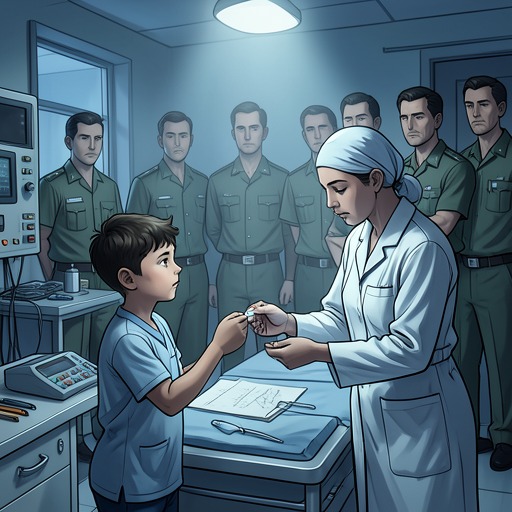
John objects to the arrangement but eventually gives in. Linda spends her remaining time in a small room on the thirty-seventh floor of Bernard’s apartment house, in bed with the radio and television on, a patchouli tap dripping, and soma tablets within reach. Her surroundings and the drug carry her into an imagined holiday far removed from John, although her accounts of Malpais and the Other Place remain part of his memory. When John visits her at the hospital, he takes her hand and whispers her name; she recognizes him, squeezes his hand, and smiles before falling asleep. He watches her and remembers the young woman who had sung to him in childhood.
The end comes during another visit, as Linda’s breathing fails. John calls out to her and shakes her in his distress; she recognizes him but perceives him through the altered world of her soma holiday. She dies after struggling to breathe. Her death leaves John grieving not only the mother before him, but also the remembered voice and care that survive in contrast to her final isolation. The scene brings the consequences of soma into intimate focus: what had offered Linda a refuge also kept her apart from her son as her life ended.
Narrative and Thematic Significance
Linda’s history links the novel’s systems of reproduction and social conditioning to their consequences for an individual life. The World State can produce large, standardized populations through controlled reproduction, and its citizens treat natural motherhood as abhorrent; Linda’s pregnancy exposes what that order cannot comfortably accommodate. Her story also shows that her exclusion is not a simple choice between two cultures. She is separated from the World State in Malpais, then returned to a society that has no place for the mother she has become.
Her relationship with soma further complicates the World State’s promise of happiness. The drug does relieve Linda from the distress she associates with her life, but the relief is purchased through withdrawal from the people around her and an ever more dangerous dependence. John’s recollections complicate any single judgment of her: they include hardship and absence, but also the stories, songs, and affection that shaped his childhood. Linda’s role is therefore both personal and structural. Through her, the novel makes the costs of treating reproduction, aging, distress, and human attachment as problems to be managed visible in one life and one mother-son bond.