Lower-Caste Conditioning to Dislike Nature
Brave New WorldLower-Caste Conditioning to Dislike Nature is a policy that makes lower-caste people hate books and the countryside while directing them toward forms of recreation that require transport and manufactured equipment. It reveals how the World State engineers not only labor and consumption but also the feelings that make its economic arrangements seem natural: a walk among flowers is made repellent, while costly sports remain attractive.
Policy and Economic Rationale
The policy is explained after a student questions why Delta children must be conditioned to fear flowers as well as books. The Director says the aversion has an economic purpose. About a century earlier, Gammas, Deltas, and Epsilons had been taught to enjoy flowers and wild nature, encouraging them to travel into the countryside. They consumed transport, but little else: primroses and landscapes were free, and love of nature did not keep factories operating.
The state therefore separates the desire to travel from enjoyment of the destination. Lower-caste people are conditioned to dislike the country, yet remain eager to go there; their recreational activity is redirected toward country sports that require elaborate apparatus. The result is a paired demand for transport and manufactured goods, replacing an unprofitable pleasure with consumption that serves industrial production.
Conditioning and Its Wider System
The policy operates through reflex rather than argument. The Director describes children as being made to scream at the sight of a rose, and says their responses are conditioned so firmly that they will remain safe from books and botany throughout their lives. The lesson’s practical force lies in making alternatives difficult to desire, not merely forbidding them by rule.
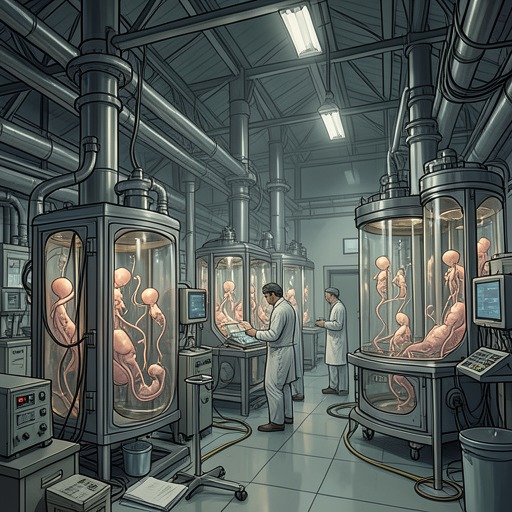
This conditioning belongs to a broader system that sorts people and anticipates economic needs. In the Social Predestination Room, workers transfer heredity, fertilization dates, and Bokanovsky Group membership from test-tubes to bottles; an extensive card-index is updated and coordinated so that predicted numbers and qualities can be matched to demand. The policy toward nature follows the same governing logic: populations are shaped in advance so that their inclinations fit assigned social and productive functions.
From Repeated Lessons to Common Sense
The novel places this aversion alongside other lessons that make social hierarchy and consumption feel self-evident. In the nursery, children hear that Alpha children wear grey, Deltas khaki, and Epsilons black, with each caste described through rehearsed judgments of ability and worth. Repetition is compared to drops of liquid sealing-wax that adhere to and gradually cover rock; the Director explains that the accumulated suggestions become the child’s mind, including the mind that later judges and decides.
The same method promotes habitual consumption. Children are taught to love flying and new clothes, and to reject old clothes because “Ending is better than mending.” The nature policy extends this manufacture of preference outdoors: children do not simply learn which products to buy, but acquire dislikes and enthusiasms that channel where they go and what activities they pursue. In this system, economic demands are installed as personal taste.
Stability and the Cost of Choice
The policy’s treatment of nature reflects the World State’s larger suspicion of unplanned desire. Its economic design does not seek the least effort or the greatest freedom from work; Mustapha Mond explains that lower-caste labor is kept in place partly because excessive leisure has previously produced unrest and greater soma consumption. Likewise, food could be synthesized, but a third of the population is kept on the land because agricultural production takes longer and helps preserve stability. New inventions and discoveries may be restricted when change threatens that stability.
The countryside is thus neither simply preserved as a refuge nor eliminated as an economic space. Lower-caste people are steered into it under conditions designed to make the visit commercially productive and to prevent nature itself from becoming a sufficient pleasure. The policy’s defining contradiction is deliberate: people must be made to go where they have been taught not to want to be, so that their leisure continues to sustain the system that has shaped them.