Soma
Brave New WorldSoma is the World State’s sanctioned means of withdrawing from distress: a drug that offers an apparently effortless holiday from reality and, in doing so, helps make social stability feel like personal happiness. Its effects recur across ordinary leisure, Bernard’s moments of doubt, Lenina’s encounters with Malpais, Linda’s final years, and John’s revolt. The same tablets that soothe individuals also prevent grief, discomfort, and dissent from developing into sustained challenges to the system.
Identity and Social Function
Soma is presented as a drug that can be taken when someone wants to leave unpleasant reality behind and return without a hangover. Henry Foster recommends it to a glum Bernard, describing its appeal through the promise of escape; Bernard refuses the offered tablets. That refusal establishes the tension between Soma as a routine remedy and Bernard’s reluctance to use it in that moment.
The drug is not merely private medicine. In the World State, its availability helps ensure that difficult feelings are quickly managed rather than endured. Bernard privately resents a society that leaves little time for reflection: when a rare opening in its stream of work and amusement appears, Soma is there to close it. The drug thus belongs to the same pattern as the constant diversions around it, turning emotional unease into a temporary interruption instead of a reason to question social arrangements.
Routine Use and Escapes from Reality
Soma accompanies leisure as an ordinary part of social life. After dinner, Lenina takes two half-gramme tablets and Henry takes three before they go to the Westminster Abbey Cabaret. Later, a second dose taken before closing time separates them from awareness of the night outside. Lenina still follows the required contraceptive precautions, which years of sleep teaching and Malthusian drill have made automatic. The episode places Soma alongside entertainment and trained routine: the drug alters their experience, while the rules governing their behavior continue without conscious effort.
The contrast is sharper when Bernard tries to find solitude and understanding with Lenina. At sea, he wants them to feel more together away from a crowd, but she cannot understand why he does not take Soma when troubling ideas arise. She urges him toward the drug’s cheerful escape; he eventually agrees to return rather than find the connection he sought. In this exchange, Soma is not just a substance but Lenina’s ready answer to Bernard’s wish to remain with an uncomfortable feeling.
When the threats of transfer to Iceland become real, Bernard’s imagined courage gives way to fear. Lenina recites a familiar sleep-teaching rhyme about taking a gramme to live in the present, and persuades him to swallow four tablets. Within minutes, his attention has shifted away from the troubles he had been confronting. The episode gives Soma a concrete role in the change: the drug does not resolve Bernard’s danger, but it alters how fully he faces it.
Malpais and the Limits of Relief
At Malpais, Lenina’s reliance on Soma is exposed by its absence. After witnessing unfamiliar customs and the ordeal of a boy in the pueblo, she wants the drug, but she and Bernard have left their supplies at the rest-house. Without that familiar refuge, she must face the events directly; she repeatedly wishes she had Soma. The contrast between the drug’s usual availability and this unplanned deprivation makes her distress visible without turning it into a considered rejection of the World State’s habits.
Back at the rest-house, Lenina takes six half-gramme tablets and settles into an eighteen-hour Soma holiday. Bernard, by contrast, remains awake, thinking through the night and forming a plan. Their different responses mark a recurring contrast: Lenina seeks to leave the day behind, while Bernard’s wakefulness lets him act on what has happened.
Linda and the Cost of Continuous Use
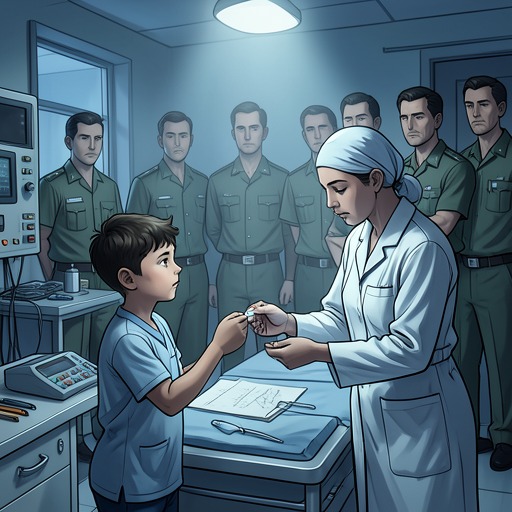
For Linda, returning to civilization means access to Soma and to repeated holidays from awareness. She seeks larger and more frequent doses, and Dr. Shaw eventually allows her to take as much as twenty grammes a day. He warns Bernard that the amount may paralyze her respiratory centre within a month or two. The relief she pursues therefore has a physical cost, even as the people around her find her conveniently removed from their attention while she is on holiday.
John objects that the drug is shortening Linda’s life. Dr. Shaw answers that it may take years from her lifespan while giving her vast stretches of experience outside ordinary time; each holiday, he explains, is a portion of what earlier people called eternity. John begins to understand the explanation, but the exchange does not erase the consequence: Soma offers Linda escape at the cost of time she might otherwise have lived. Her case makes the World State’s valuation of comfort concrete, placing subjective duration against bodily survival.
Revolt and the Meaning of Happiness
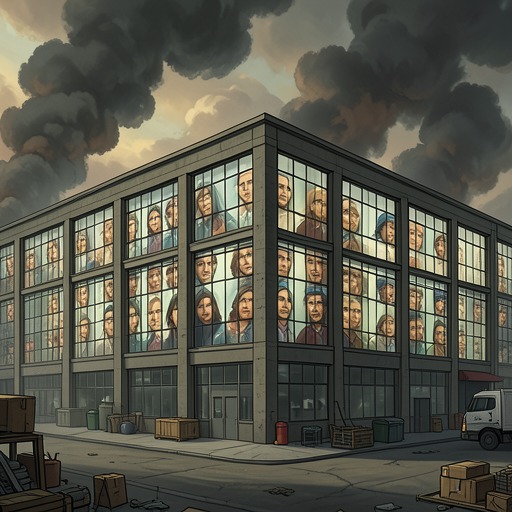
At the hospital, John turns his opposition to Soma into action. He urges the Delta workers to want freedom, then throws their pill-boxes of tablets out of a window. Helmholtz joins him, helping to throw away the supply as the crowd reacts with anger. When the cash-box is empty, John declares that the workers are free. The scene makes the drug’s institutional importance unmistakable: its distribution is bound to public order, and destroying it provokes a confrontation rather than simply ending a private habit.
Mustapha Mond later supplies the clearest account of Soma’s political and moral function. He argues that in a properly organized society there is little room for heroism, divided loyalties, or resistance, and that Soma can calm anger, reconcile enemies, and make people patient. In his formulation it offers “Christianity without tears”: virtue without the painful effort traditionally required to achieve it. John challenges that bargain, insisting that tears matter and invoking the possibility that suffering and calm belong together. Their disagreement frames Soma as more than a convenience. It is a means of making happiness compatible with the suppression of hardship, while John insists that a life without suffering also excludes forms of courage and feeling that he considers necessary.