The trade-off between high art and happiness
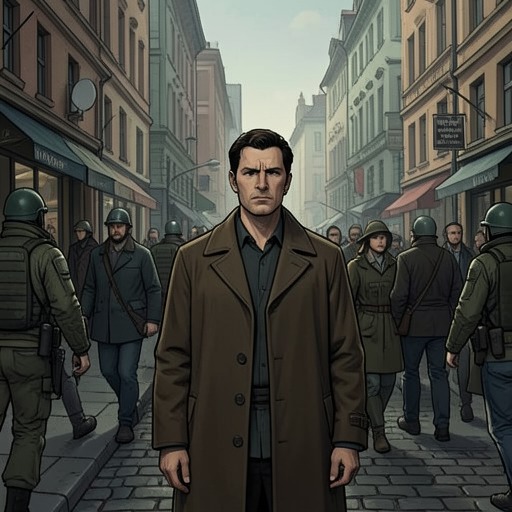
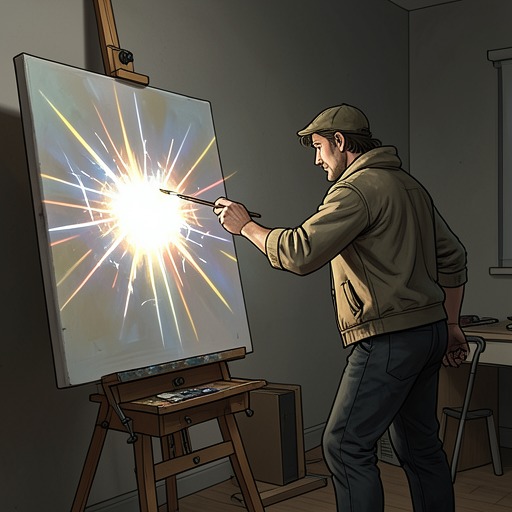
Brave New WorldThe trade-off between high art and happiness is a governing bargain in the World State: social stability and agreeable sensation take precedence over art grounded in passion, conflict, and loss. Mustapha Mond explains the bargain to John by arguing that tragedy depends on conditions the state has deliberately eliminated. The debate exposes the cost of a happiness secured by preventing people from wanting, loving, or suffering too deeply: high art is sacrificed along with the instability that gives it dramatic force.
Stability and the Conditions of Tragedy
Mond argues that tragedies cannot be made without social instability. In the World State, people are provided with what they want and conditioned not to want what they cannot have; illness, fear of death, old age, and intensely binding family or romantic attachments have been minimized or removed. If anything goes wrong, soma offers relief. These arrangements produce social order, but they also suppress the conflicts from which tragic action arises.
The same logic governs the state’s response to heroic and noble conduct. Mond says that such conduct requires circumstances such as war, divided loyalties, temptation, or something precious to love and defend. Because the World State prevents those circumstances, it also deprives people of the opportunities that could make heroism meaningful. Stability is therefore not merely a background condition for its culture: it reshapes the range of human experience that culture can represent.
Art Replaced by Managed Sensation
Mond concedes that Othello is better than the feelies, but insists that this is the price of stability. The state has given up high art in favor of the feelies and the scent organ, whose effects are agreeable sensations for their audiences. Their limited meaning is part of the distinction: they provide immediate pleasure rather than tragic understanding.
The exchange does not mean that the World State lacks technical ingenuity. Mond describes its cultural production as a feat of making works of art from almost nothing but pure sensation, just as manufacturing flivvers uses a minimum of steel. Helmholtz Watson, an Emotional Engineer, recognizes the achievement while judging the result empty: writing becomes difficult when there is nothing to say. The contrast is between sophisticated means and restricted subject matter. The society can engineer effects, but it has narrowed the emotional and social realities from which consequential art might be made.
Shakespeare as a Measure of What Has Been Lost
John’s experience of Shakespeare gives the disagreement a concrete human measure. When he reads a passage aloud, its language carries for him an emotional and imaginative force that exceeds its unfamiliar words. Later, as he reads Romeo and Juliet to Helmholtz Watson, the lovers’ intense attachment first seems puzzling to Helmholtz; the play’s verbal construction then impresses him as exceptional emotional engineering. The scene’s feelings are strange to him, even as its craft is unmistakable.
The reading is also vulnerable to the assumptions of the World State. Bernard Marx interrupts a poem with the observation that it resembles a Solidarity Service hymn, repeatedly defiling what John and Helmholtz value. The episode shows how state culture can make even inherited poetry seem reducible to familiar propaganda, while the friends’ different responses reveal that recognizing a work’s craft does not require sharing the life it portrays.
Happiness, Suffering, and the Price of Choice
Mond’s defense extends beyond entertainment. He argues that soma can calm anger, reconcile enemies, and make people patient without the moral struggle that once required prolonged effort. He calls this “Christianity without tears.” John objects that the tears matter: without suffering, danger, and resistance, the emotional conditions associated with moral endurance and tragic art disappear as well. Their dispute is thus about more than which cultural products people prefer; it concerns whether comfort can substitute for experiences that carry difficulty and meaning.
The earlier account of the four-hour working day in Ireland supplies a practical example of Mond’s argument. The experiment produced unrest and increased soma consumption rather than greater happiness, he says, because people found the additional leisure difficult to bear. The state consequently rejects shorter hours and unused labor-saving inventions, reasoning that excessive leisure threatens contentment and that change threatens stability. In this system, even apparent improvements are judged by whether they preserve the approved social equilibrium.
The argument culminates when John insists that he wants poetry, danger, freedom, goodness, and sin rather than comfort. Mond identifies this demand as a claim to unhappiness, and John accepts the consequences, including the right to grow old, become ill, lack necessities, and endure fear and pain. The exchange makes explicit what the bargain has concealed: World State happiness is secured by limiting not only suffering but also the freedom to choose difficult experience. High art stands on the same side of that choice as tragedy, passion, and individual liberty.