Belonging and finding one's place
Breakfast at Tiffany'sBelonging and finding one's place gives shape to Holly Golightly’s changing understanding of home, attachment, and independence. She first treats belonging as something she cannot claim for herself or her cat; later, the loss of the cat exposes a bond she had denied, while the narrator’s eventual discovery of him offers a small, tangible image of arrival. Holly’s own destination remains open: she imagines a future elsewhere, loves New York City without feeling it is hers, and never sends the address that might let the narrator find her.
A Place That Feels Safe
Holly’s account begins with the cat she has been carrying. She calls him a poor creature without a name, but says she has no right to name him because he will have to wait until he belongs to somebody. She describes them as having taken up together by the river, not belonging to one another because both are independent. The missing name is therefore more than an inconvenience: to Holly, naming would presume a bond and a place that neither has yet secured.
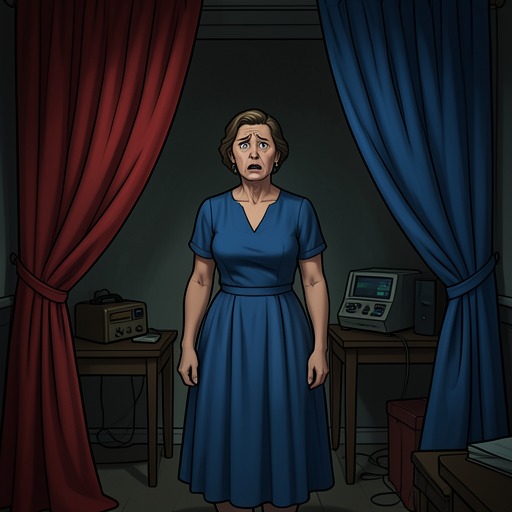
She describes the place she is seeking less as a particular address than as a feeling. She does not want to own anything until she knows she has found where she and her possessions belong together. She says she knows what that feeling is like, and compares it to Tiffany & Co.—not because she cares about jewelry, but because the store’s quietness, dignified appearance, and reassuring atmosphere calm her when she is distressed. A taxi ride there helps more than drinks, aspirin, or marijuana. Tiffany & Co. is a refuge she can visit, but not a home she can inhabit.
That distinction gives her fantasy a practical edge. Holly says that if she could find a real-life place that made her feel as Tiffany & Co. does, she would buy furniture and give the cat a name. In her imagination, naming and furnishing follow the discovery of a place of mutual belonging; neither is a substitute for it. The home she wants would make possessions and people feel connected to her without turning connection into ownership.
Futures Imagined Elsewhere
Holly’s ideas of belonging extend beyond the city and the apartment she presently occupies. She briefly imagines that, after the war, she and Fred might go to Mexico, where she has seen a place near the sea and believes horses could be raised. The possibility joins a specific landscape to her brother’s skill with horses, but remains an imagined future rather than a settled plan.
Later, during the last weeks before the narrator’s birthday, Holly imagines a ship returning her to New York City years in the future with nine Brazilian children. She declares her love for the city while acknowledging that it is not hers in the way a tree, street, or house might be: she longs for something that belongs to her because she belongs to it. The image makes belonging reciprocal. A place cannot become fully hers merely because she loves it; she wants a connection in which the place also claims her.
The narrator hears this future as a departure that leaves him behind. As Holly pictures herself returning by ship, he imagines himself as a tugboat stranded in dry dock while she sails toward a secure destination. Their contrasting images register different stakes in the same idea: Holly imagines that she will eventually find a place and life of her own, while the narrator feels excluded from the future she describes. The fantasy does not resolve where Holly belongs; it makes the desire for such a place more explicit.
The Cat and the Recognition of Attachment
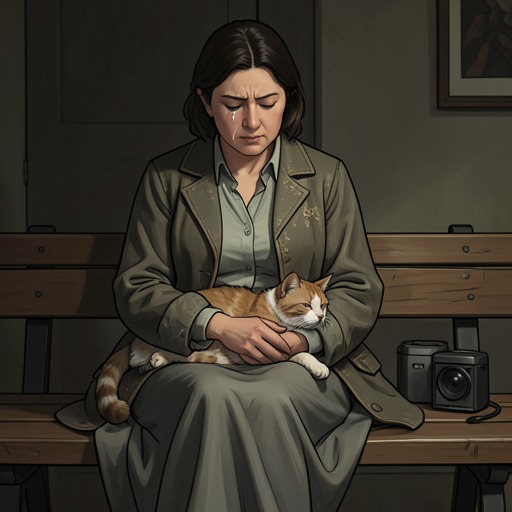
After Holly leaves the cat at a street corner, the narrator runs after her. The cat is gone, and Holly searches up and down the block, calling for him. When a boy offers her another cat for money, she looks past him and grips the narrator’s arm to remain standing. At this moment, she admits that she and the missing animal did belong to one another and that he was hers. Her earlier language of two independents has collapsed under the pressure of losing him.
The reversal does not simply replace independence with ownership. Holly’s realization comes as grief and fear, not as a triumphant claim. She says she is scared by the prospect of not knowing what is hers until she has thrown it away, and identifies this loss as more frightening than the “mean reds” she had previously described. The cat has made a relationship visible precisely when she can no longer find him. Her recognition shows that belonging may exist before she can accept or name it.
The narrator answers with a promise: he will return and find the cat, and will take care of him. This commitment becomes a practical counterpart to Holly’s belated recognition. While Holly leaves, the narrator assumes responsibility for the animal she had called independent of her, making care—not possession—the act through which a bond is maintained after separation.
Departure and an Uncertain Home
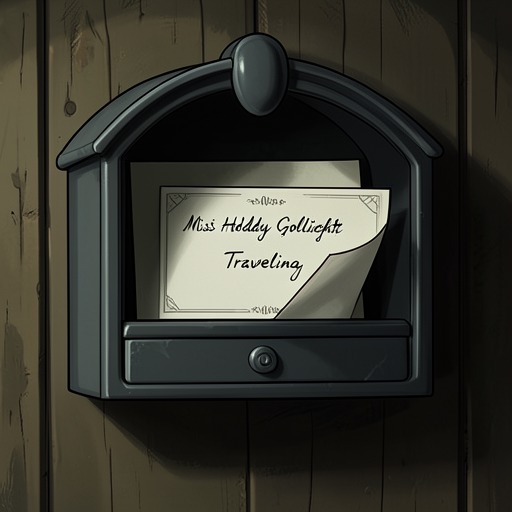
Holly does not give the narrator a lasting address. A postcard arrives in spring from South America: she reports that Brazil was unpleasant and Buenos Aires was the best, says she is joined to a wealthy man, and explains that because he has a wife and seven children she is looking for somewhere to live. She promises to send an address when she knows it herself, but none arrives. The postcard records movement and a possible attachment, not the establishment of a home.
The narrator nevertheless keeps his promise. After weeks of searching through Spanish Harlem and pursuing several false sightings of striped fur, he sees the cat on a cold, sunny winter Sunday. The animal sits in the window of a warm-looking room, framed by clean lace curtains and surrounded by potted plants. The narrator is certain the cat now has a name and has reached somewhere he belongs. This conclusion is an inference from the settled scene, not news supplied by Holly: she has not returned to confirm it.
The ending places the cat’s apparent arrival beside Holly’s unresolved wandering. The narrator hopes she, too, has found a place where she belongs, but the hope remains just that; her missing address leaves the question unanswered. The contrast completes the idea’s movement through the story: Holly first refuses to name a bond, then recognizes it when it is lost; the narrator honors that recognition by finding and caring for the cat, while Holly’s own destination stays beyond his reach.