Holly Golightly and Doc Golightly
Breakfast at Tiffany'sHolly Golightly and Doc Golightly’s marriage is at once a refuge formed around a vulnerable child and a bond Holly ultimately refuses to make her home. Doc remembers her as Lulamae Barnes, the nearly fourteen-year-old he married after taking her in; Holly remembers his sweetness and the confidence he gave her, but does not go back with him when he finds her in New York City. Their reunion turns a hidden childhood marriage into a tender, painful encounter with the limits of love as a claim on another person’s life.
Identity and the childhood marriage
When the narrator recognizes Doc as Holly’s father, Doc corrects the assumption: she was Lulamae Barnes until she married him, and he is her husband. A horse doctor and farmer near Tulip, Texas, he has spent five years looking for her. The old name is not merely a family label; it takes the New York woman back to a marriage made when she was still a child and to a household Doc believes remains her rightful home.
Doc describes that household as an act of rescue and adoption as much as marriage. Lulamae and her brother Fred had been found stealing milk and turkey eggs after losing their parents and being sent among unkind people. Doc says he married her in December 1938, when she was going on fourteen, and that she promised to be his wife and the mother of his children. The children were not hers by birth: their own mother had died on Independence Day in 1936. Doc presents the promise as one Lulamae understood, while the circumstances he recounts make plain how young she was.
In Doc’s telling, the family gave the two children food, safety, and a place in the household. Lulamae, once thin and neglected, grew plump; Fred, whom Doc praises as a fine boy and skilled with horses, remained with the family until the Army took him. Doc insists that the household had not driven her away: his daughters did the housework, and Lulamae could tend to her appearance, read magazines, and enjoy the ease of home. His account is affectionate, but it also measures her freedom against the security and care he believes the family provided.
Care, attachment, and the road away
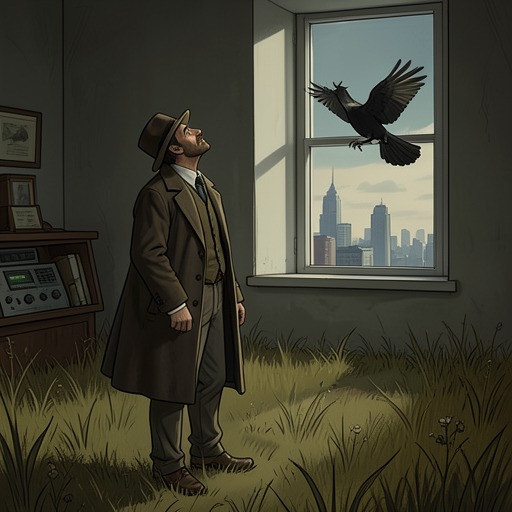
Doc recalls courting Lulamae through small acts of attention: picking flowers, teaching her guitar, and taming a crow to say her name. He remembers her as lively and talkative, and says that looking at her brought him to tears. When he proposed, he cried; she accepted, telling him she had never been married before. Doc’s memory makes the marriage emotionally real to him, even as the age at which it began complicates his conviction that she knew what she was promising.
The contrast at the heart of their relationship is that Doc’s care gives Lulamae safety without making her feel able to stay. He believes she was happy and that she had no cause to leave his household. Yet he also recounts how she began walking farther from home, first a mile and then two, until one day she kept going. The magazines that arrived at the farm become, in his explanation, an image of dreams encountered at a distance: he thinks their show-off pictures and imagined possibilities started her down the road. His story can account for her departure without fully comprehending it.
The crow carries that separation beyond the family’s immediate history. After Lulamae leaves, the bird Doc gave her flies away, but its call continues through the yard, garden, and woods all summer, repeating her name. The memory concentrates Doc’s grief into an unanswered summons: he has searched for years, while the sound of the name persists in the landscape of the home she left.
Reunion in New York City
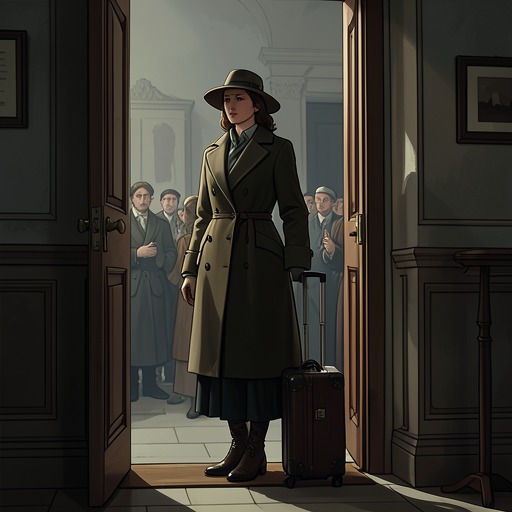
Fred’s letter gives Doc Holly’s address, and Doc travels by Greyhound to find her. He does not want to surprise or frighten her, so he asks the narrator to let her know he is there. The request shows how much the reunion means to him and how carefully he approaches it: he is hopeful she wants to come home, but waits rather than forcing the encounter.
Holly discovers the truth and runs into the hall calling for Fred, the brother whose letter has brought Doc to her. When Doc comes up the stairs, she first backs away with a look of disappointment and does not seem to recognize him. He greets her as Lulamae and remarks that she is again as skinny and wild-eyed as when he first saw her. Holly touches his chin and beard stubble as if testing that he is real, then greets him gently and kisses his cheek. Doc lifts her in a crushing embrace, laughing with relief. The reunion confirms affection and recognition, but it does not resolve what either of them will do next.
Love and the refusal to return
The next morning, Holly explains that she never divorced Doc because she had been only fourteen and believes the marriage could not have been legal. She says she loves him and that he truly loves her, defending the sweetness she knows in him against the narrator’s judgment of his appearance. What she values most is the confidence he could give to birds, children, and fragile things; anyone who has given a person confidence, she says, is owed a great deal. Her gratitude is not a promise to resume the marriage. It is her recognition of what Doc gave her, spoken alongside her insistence that she is no longer the girl he married.
Their night together ends not with a return to Texas but with a conversation at a bus station. Doc thinks until the last minute that Holly will go with him; she keeps telling him that she is not fourteen anymore and is not Lulamae. Then she recognizes the continuity beneath that declaration: she still feels like the girl stealing turkey eggs and running through a brier patch, though she now calls the feeling the mean reds. The childhood name remains part of her, but it cannot simply be used to restore the life she left.
Holly frames the parting through Doc’s habit of bringing home wild animals, including an injured hawk and a full-grown bobcat with a broken leg. Her warning never to love a wild thing turns the animals into a figure for a love that cannot safely be treated as possession: care may help a creature grow strong enough to leave. Doc understands what she means, she says; they shake hands, hold on to one another, and he wishes her luck. She imagines him already on his way toward the Blue Mountains, while she remains in the city. The affection is mutual, the farewell deliberate, and the hoped-for restoration of the family home does not happen.
Significance of the bond
The marriage brings two meanings of home into direct conflict. For Doc, home is the household that rescued Lulamae, welcomed her as his wife and the mother of his children, and still waits for her return. For Holly, his care is real and remembered, but it cannot erase the self that walked away or turn an earlier promise into a present choice. The relationship is therefore neither exposed as false nor fulfilled by reunion: its tenderness survives precisely as something that cannot compel her to stay.
The episode also makes identity a matter of both history and refusal. Doc calls her Lulamae, the child he married; the New York woman answers as Holly, acknowledges that the child remains within her, and declines to live as if nothing has changed. Her account of the wild thing and Doc’s own memories of the crow’s unanswered call give the parting its recurring image: love can offer shelter and confidence, yet the loved person may still travel beyond the shelter. Doc leaves with his hope unanswered, while Holly’s gratitude and affection remain intact.