Holly Golightly turns down the Hollywood screen test
Breakfast at Tiffany'sHolly Golightly’s refusal of a screen test for The Story of Dr. Wassell is a decisive break with the Hollywood career that agent O. J. Berman had been arranging for her. She leaves for New York rather than attend the test, telling Berman she does not want the part; his account frames the choice both as a squandered opportunity and as evidence that Holly will not pursue a future defined for her by others.
The Opportunity Berman Built
Berman says he first noticed Holly at Santa Anita Park, where she spent time around the racetrack. After learning that she was living with a jockey, he intervened because she was fifteen, then began developing her professionally. He recalls her distinctive accent and thick glasses, and says French lessons helped her learn to imitate English. His account describes an effort to shape her into a marketable performer, modeled on Margaret Sullavan, while retaining qualities that had attracted industry interest.
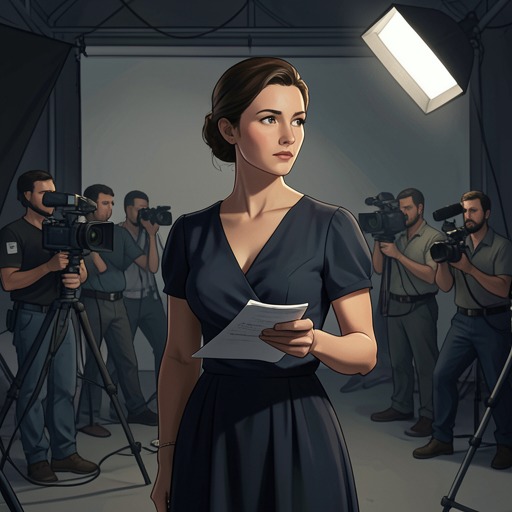
By Berman’s telling, the plan had begun to succeed. Holly had drawn the interest of influential people, and Benny Polan, whom Berman calls a respected man, wanted to marry her. The screen test was to be for the role of one of the nurses in The Story of Dr. Wassell, a film associated in Berman’s account with Cecil B. DeMille and Gary Cooper. He presents the test as the next step in a carefully assembled opportunity, not as a vague possibility.
The Refusal
Berman recounts that he called Holly the day before the scheduled test and discovered she was in New York. He urged her to return to California, but she said she had never been to New York and did not want the part. When he asked what she did want, she answered that she would tell him once she found out. The exchange places her immediate wish to see a new city against the career opportunity Berman believed she should seize.
Her explanation also distinguishes wanting success from merely being offered it: as Berman reports it, Holly says a person has to want a role in order to do it well, and she does not want this one. She gives no definite alternative ambition. The refusal is therefore both a clear rejection of the test and an unresolved declaration of independence from a plan whose destination she cannot name.
Berman’s Judgment and the Aftermath
Berman interprets the choice as a serious professional loss. He argues that Holly might have advanced in Hollywood, but that leaving such an opportunity meant she could not simply return to it; he compares her prospects with those of Luise Rainer and stresses that Holly had not yet become a star. His certainty is grounded in his own investment as her agent: he points to himself as the person who had been promoting her and describes the refusal as a sudden collapse of the arrangement.
The account is filtered through Berman’s frustration rather than offered as an independent assessment of Holly’s prospects. He calls her decision foolish and imagines a future of unstable work and unsuitable attachments, but those predictions are his, not outcomes established by the episode. What the refusal does establish is narrower and more consequential: Holly gives up a specific test for a prominent film while choosing, for the moment, the freedom to leave the future undecided. In the narrator’s account, Berman’s story makes the distance between a career others can design for Holly and a life she is willing to choose for herself unmistakable.