Holly Golightly's reunion and parting with Doc Golightly
Breakfast at Tiffany'sHolly Golightly's reunion with Doc Golightly is a moment of recognition that ends not in reconciliation but in parting. Doc arrives in New York City believing that Holly regrets leaving her husband and children and wants to come home; Holly greets him with affection, then refuses the return he imagines. Their encounter exposes the distance between the girl Doc remembers and the woman who has made a life elsewhere, while showing that affection can survive without undoing that change.
The Search and the Meeting
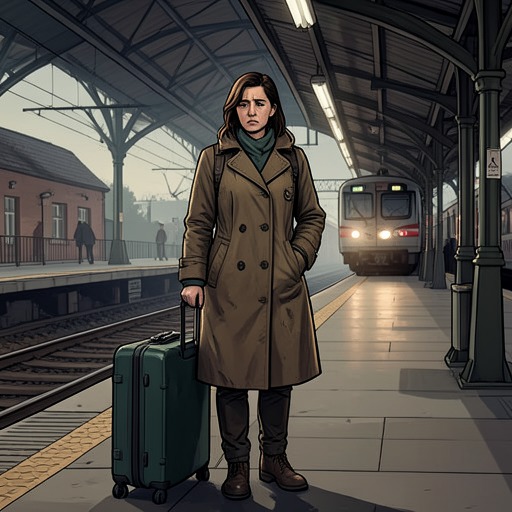
Doc tells the narrator that Fred had been writing to him and had recently sent Holly's address. He has come to New York City because he believes she is sorry for leaving and wants to go home. His hope is earnest enough that, rather than surprise or frighten her, he asks the narrator to let her know he is there. The narrator warns him that Holly, or Lulamae, will have changed, and Doc quietly prepares to wait, brushing his sleeves and tightening his tie.
Holly answers the door alone, dressed for an evening out in white satin dancing pumps and wearing plenty of perfume. She assumes the narrator has come to see her and says there is no time to make up before leaving. The narrator addresses her as Lulamae and suggests she may not be around the next day. Holly immediately removes her dark glasses and asks where he is; the news has turned her attention from her plans to the man waiting below.
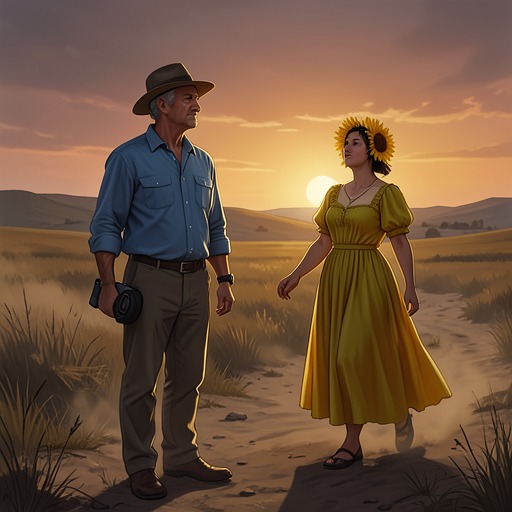
She runs into the hall calling for Fred, mistaking the approaching reunion for a chance to see her brother. Doc climbs the stairs, and Holly backs away—not in fear, but as if withdrawing into disappointment. He appears shy and unsure that she recognizes him. His first concern is how thin she looks, and he recalls her as wild around the eyes when he first saw her. For a moment, recognition is uncertain: Holly gazes at him as if she cannot place him.
Recognition and Affection
Holly touches Doc's face, testing the reality of his chin and beard stubble, then greets him gently and kisses his cheek. She repeats the greeting happily as he lifts her in a crushing embrace. Doc's relieved laughter breaks through his shyness. The physical encounter makes their bond immediate and undeniable, even though it cannot erase the years or make Holly the child he remembers.
The reunion also reveals that the marriage has never been formally ended. The next morning, Holly emphatically explains that she never divorced Doc: she was only fourteen, and she doubts the marriage could have been legal. At Joe Bell's bar, she tells the narrator that Doc truly loves her and that she loves him. Her defense of him is specific: she remembers his sweetness and the confidence he could give to birds, children, and other fragile creatures. She says she has always remembered him in her prayers, and objects when the narrator seems to smirk at the admission.
A Night Together, a Refusal to Return
Holly says she and Doc spent the rest of the night roaming around a bus station. He believed until the last minute that she would leave with him, although she kept telling him that she was no longer fourteen and no longer Lulamae. Her refusal is not a denial of their affection. It is a boundary between the person Doc hopes to bring home and the person Holly understands herself to be now.
The distinction does not feel simple to Holly. She admits that the painful part was realizing, while they stood together, that she is still in some sense the girl who stole turkey eggs and ran through a briar patch. What has changed is the name she gives her fear: now she calls it the mean reds. The comparison lets her acknowledge a continuing restlessness without treating it as proof that she should return to her childhood life.
Holly frames Doc's mistake through his history of bringing home injured or wild animals, including a hawk with a hurt wing and a bobcat with a broken leg. She says that loving a wild thing does not keep it in place: it grows stronger, then runs or flies farther away. Her counsel to Joe Bell, not to love a wild thing, translates the pattern of her own departure into an image of attachment and freedom. It also gives Doc's loving care its due without implying that care entitles him to reclaim her.
Parting and Significance
Holly says she explained her decision carefully enough for Doc to understand. They shook hands, held on to each other, and he wished her luck. As she speaks, she estimates that he must already be in the Blue Mountains. The parting is therefore both affectionate and final in its immediate outcome: Doc goes on his way, while Holly stays behind.
She raises her glass to wish Doc luck and warns against mistaking the sky for a place to live. The image completes the wild-thing story she has told: freedom may mean escape and distance, but the sky is empty, vague, and a country where things disappear. Her farewell holds both sides of the reunion together. Holly will not return to the life Doc offers, yet she does not dismiss his love; she leaves with his wish for her future and her own clear-eyed account of what separation costs.